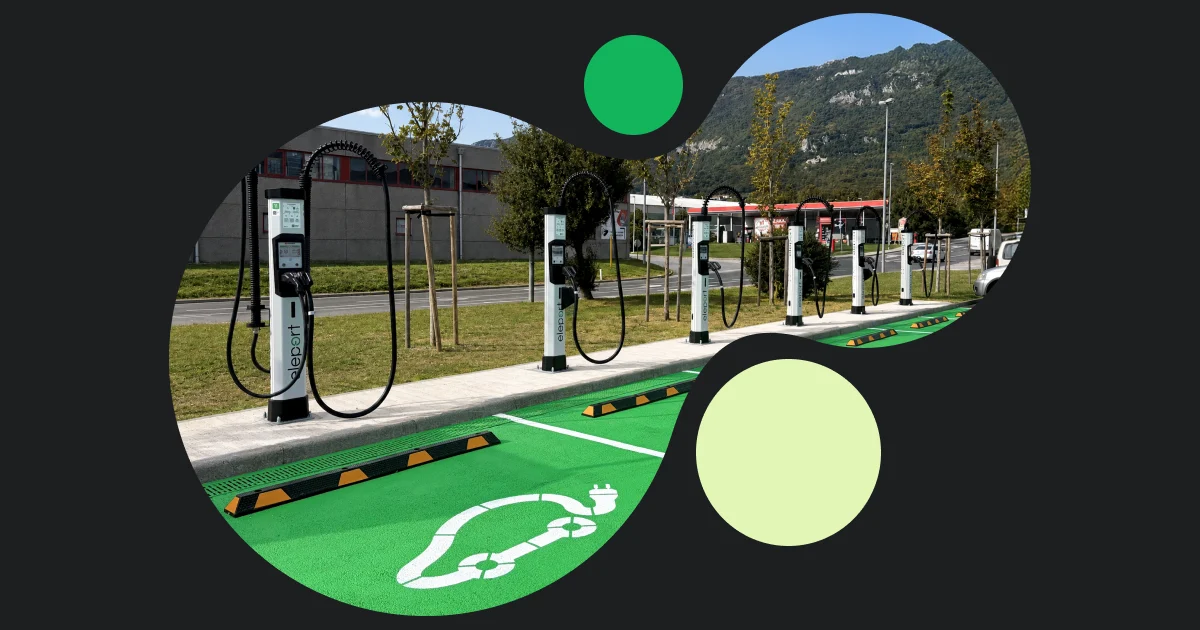
If you’ve charged an EV in public, you’ve probably had at least one “why won’t the app work?” moment. We at Eleport are proud of our great uptime, but every software – or even the phone – can have glitches.
The causes of the failure can be anywhere from roaming not syncing to the station having poor connectivity. Maybe your phone battery was at 2%, and the charger demanded an update.
That’s where an RFID card still earns its keep. It’s great for redundancy, and often also for a quick tap-and-go charging.
Across Europe, EV charging is getting simpler. But it’s not universally simple yet. Most drivers end up using a mix of tools: an app for visibility or EV route planning, a payment method for ad-hoc charging, and a tap-to-authorise option for quick, repeatable starts. This article focuses on that last one: tapping the charger with a card or chip for charging.
What is RFID Card, and What Does it Actually Do?
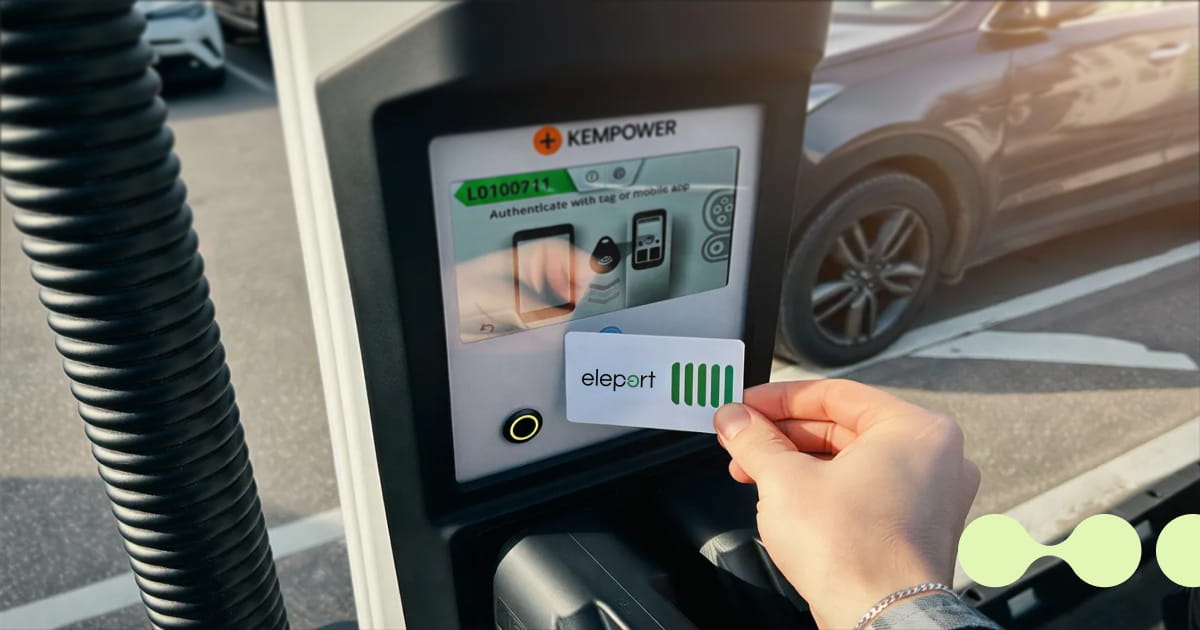
So what is an RFID card, and is it the same thing as a charging card?
In public EV charging, an RFID card is a tap-to-authorise credential: it identifies your account so the charger can start a session and send the billing record to the right provider. In everyday charging language, that’s exactly why people call it a charging card, it’s the card you tap to begin charging. The card doesn’t store your payment details, rather it stores an ID that your provider uses for authorisation and invoicing.
Here’s what typically happens when you tap:
- The charger reads a unique ID from the card or chip.
- The charger’s software checks whether that ID is authorised.
- If authorised, the charger starts the session and logs it to your account.
- Your provider invoices you according to your tariff.
The key difference here to what is RFID card: it doesn’t “store your payment details.” It stores an ID that links the session to the right contract or account. This means nobody who finds your lost card can use it for payment, at least not elsewhere.
Why RFID Still Matters (even if you mostly use apps)
Apps are useful… until they become the slowest part of the experience.
Here are a few benefits of the charge cards or chips over the apps:
Speed at the charger: you just tap, plug in, walk away. No station search. No login. No waiting for a spinner to finish loading a map tile. If you have that card ready, not lost between all the other stuff in your car, that is (we know how it goes).
Redundancy: for when conditions aren’t ideal. If there’s a weak mobile signal, backend software hiccups of the charger, app crashes, a dead phone… public charging has plenty of edge cases. A tap-to-authorise flow reduces the number of things that can go wrong.
Shared cars and fleets: if multiple people drive the same car, a physical access method can be easier than managing one person’s app login. For fleets, assigning access per driver (or per vehicle) can simplify cost tracking.
CPO vs eMSP: Why Your Card Works Here but Not There
Most confusion we’ve seen happen around RFID cards comes from who issued it.
First off, the terms: a CPO (charge point operator) runs the chargers.
An eMSP (mobility service provider) sells you access (often across many CPOs) and bills you.
So the same-looking card can behave very differently:
- A CPO-issued card might work only on that CPO’s network.
- An eMSP-issued card might work across many networks through roaming agreements.
This is also why “universal” claims about these platforms don’t always match real world. Coverage depends on commercial roaming relationships, technical integrations, and whether the charger is online when you attempt to start. It also varies significantly from country to country.
What is Roaming for EV Charging?
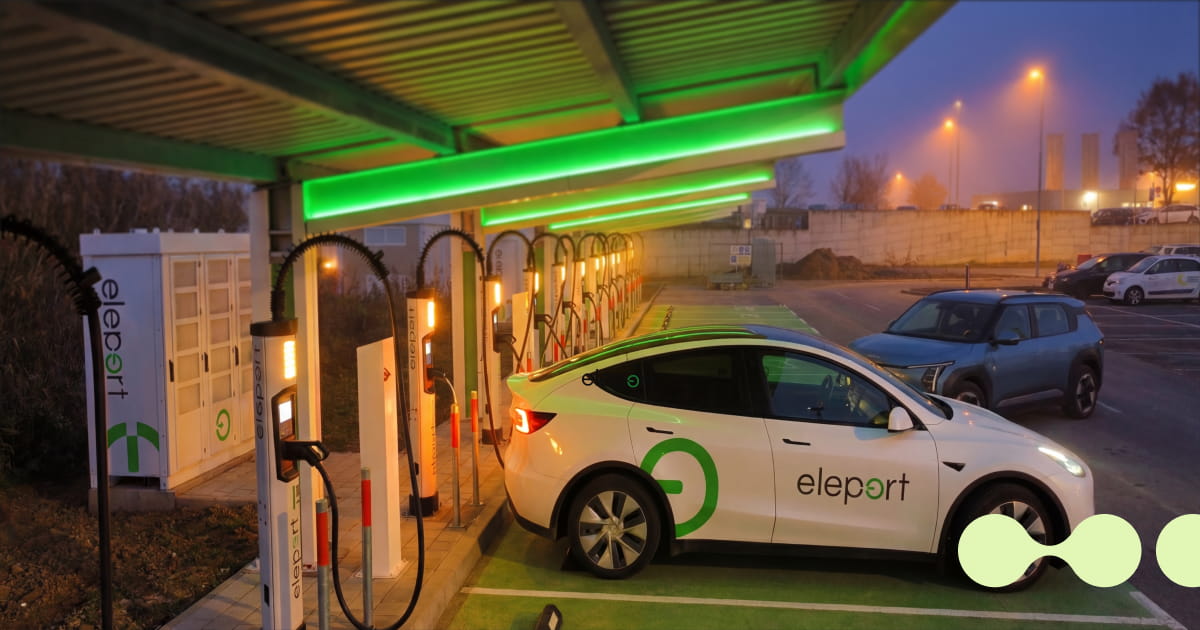
Roaming is the plumbing that allows “my account” to be recognised on “someone else’s charger.”
When you tap the card at the charger, the charger’s backend may need to ask: Does this ID belong to a partner service provider, and is it allowed here? If the answer is yes, the session is authorised, you start charging, and are billed back through your provider.
Roaming is powerful because who wants all those charge cards and apps anyway… but it also adds a potential failure mode, since it relies on the cooperation and connection of the eMSP and the charger from the CPO. That’s not a reason to avoid roaming. It’s a reason to carry at least one backup method (an app or a second access option), especially on long trips.
Does an RFID card work on all public chargers, or only on one network?
Not automatically. Sometimes an RFID card is issued by a single charge point operator (CPO) and mainly works on that operator’s chargers. Others are issued by an e-mobility service provider (eMSP) and can work across multiple networks through roaming agreements. In the real world, “coverage” depends on those roaming partnerships and whether the charger is online and able to validate your card at that moment.
RFID vs apps vs bank card payments
There are three common ways to start a charging session today, and each has a “best use case.”
- Tap-to-authorise access (RFID card or chip)
For frequent drivers, the RFID card EV charging is popular because it’s the lowest-friction repeatable flow. You’re not “paying at the charger” each time, instead you’re authorising access to your account.
This is also where pricing can be more predictable (depending on your provider), and invoicing is usually cleaner.
- App-based charging
Apps are best when you want information and control, like:
- availability and stall status
- pricing breakdowns
- remote stop
- receipts and session history
Eleport charging app has been designed to work seamlessly and give you all the info you need about the charging, along with easy payment and tracking the charge status while charging. Apps are also a common fallback when an access tap fails.
- Tap-to-pay (bank cards / phone wallets)
Contactless payments are ideal for ad-hoc charging: no account required, no onboarding, no roaming setup. You just arrive, tap your bank card or Apple Pay, etc., and you’re good to go.
But the real world still varies: not every site supports it (yet), pricing presentation can differ by operator, and some stations handle ad-hoc flows better than others. The charging operators also often offer discounts when using their apps or becoming a member, something you can’t access with a simple bank card tap.
With the bank card, you’ll also nearly always see a prepayment charged on your card, often around €30 or so, which is how the charging operator defends itself against bad actors that would charge without enough funds on their bank account (yes, charging fraud is a real thing). After your session is done, the surplus from your charge session is refunded to your bank account.
AFIR Regulation is Pushing Contactless Bank Card Payments into All New Fast Chargers in Europe
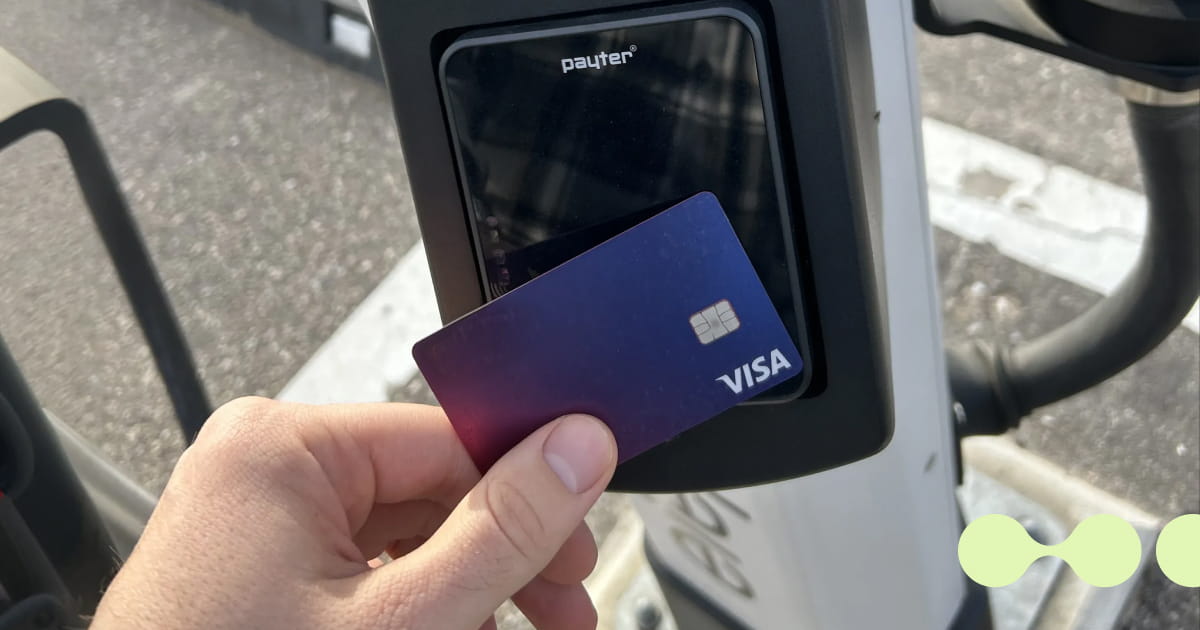
Card payments are becoming more common in Europe, and, in addition to the actual customer demand for it, the AFIR regulation adopted EU-wide is a big reason.
AFIR requires ad-hoc charging access (meaning anyone needs to be able to just arrive at the charger and charge without hassle), and pushes operators toward accepting widely used payment instruments, with debit/credit cards explicitly highlighted in the EU guidance.
For newly installed public DC fast chargers (often discussed as ≥50 kW), AFIR-linked guidance means that it is now required to have card payment availability at the fast chargers.
There are also widely referenced transition timelines toward 2027 for broader availability/retrofits for existing fast chargers.
What does that mean for you as an EV driver:
- You should see more “tap-to-pay” card terminals at high-power charging sites over time.
- Ad-hoc charging should become easier for tourists, occasional EV drivers, and anyone who doesn’t want another account. Removes some of the need for roaming apps.
Are RFID Cards Going to Stay in Use in Today’s App-Filled World?
Probably, yes. But more as a “part of the stack” than the only default, as it was before.
Even if every fast charger had flawless card payment tomorrow, RFID-style access would still be useful for:
- Business charging + invoices: many drivers want clean receipts and predictable billing.
- Roaming convenience: one provider relationship, broad coverage, one billing stream.
- Fleet control: assigning access per vehicle/driver and mapping costs to cost centres.
- Backup logic: terminals fail, connectivity fails, payment UX fails.
So for the future, you can expect a mix of bank card payment availability, Plug & Charge, and Autocharge support, which removes both needs, and RFID cards for backup or for fleets.
That’s why the RFID card EV charging still makes sense for regular public charging users — and why many frequent travellers keep a second RFID card for EV charging as a backup.
Plug & Charge: the Long-Term “it should just work” Path
Plug & Charge and Autocharge features are the cleanest charging experience when everything lines up: plug in, authentication happens automatically, the billing happens in the background.
Basically, it means the charger recognizes your unique car right at the ‘handshake’, when you plug in.
Until it’s consistent across networks, a simple tap-to-authorise option stays relevant.
NFC vs RFID: a Quick Clarification
What’s the difference between NFC and RFID card for EV charging?
RFID is a broad technology family used for identification, and many charge cards use RFID to authenticate your charging account. NFC is a specific type of short-range RFID technology commonly used for contactless payments (bank cards and phone wallets). In charging terms, an RFID card usually authorises access to an account, while NFC payments usually mean paying ad-hoc at the charger: similar tap motion, different purpose behind the scenes.
What to Check Before Choosing an RFID Charge Card Option
If you’re picking a provider, focus on the stuff that prevents headaches:
- Coverage of the EV chargers where you actually drive (home + your common long routes). The Eleport charging network is built to give you a wide coverage for all of Central and Eastern European countries.
- Tariff clarity (watch for session fees, time components, roaming markups)
- Receipts and invoicing (especially for business use)
- Support quality (failed sessions happen; resolution speed matters)
This is where the second EV fast charge card (or a bank card fallback) can be worth it on long trips.
Which Way Will They Charge for a Charge in the Future?
RFID EV charging started out as the only viable option for early adopters, and has now become all about reducing friction in the messy middle if other modes fail. Card payments are becoming more common, and Plug & Charge will keep expanding, reducing the need. But for frequent drivers, roaming-heavy travel, and fleets, RFID-style access is still a practical tool to keep in the car.