


Europe had yet another record year in EV sales in full year of 2025, showing a 29,7% EV sales growth year-over-year from 2024. For EV sales Europe 2026 it is all looking to be continuing in this fast pace for EV adoption, and we can expect at least every 5th car sold in Europe to be fully electric today.
But what exactly are these every-fifth person choosing when it comes to battery electric cars?
We looked into the best-selling electric car list for the full year of 2025 and compared them to give you a more informed choice when choosing your next EV in 2026.
The top 5 best electric cars 2026 in Europe based on sales
Here are the best electric cars sold in Europe, in terms of the most chosen EVs by the people themselves, visible in the sales numbers, per José Pontes’ research at CleanTechnica for the full year of 2025:
- Tesla Model Y: 151 016
- Škoda Elroq: 94 154
- Renault 5 (including Alpine A290): 92 221
- Tesla Model 3: 85 935
- Volkswagen ID.4: 83 332
Notably, the Tesla Model 3, which has historically been the second spot right after the Model Y, has now fallen to the 4th place, with 85 935 sales for 2025. Looking at the numbers, however, the whole top 10 is quite a close race, if not considering the domination of Model Y at the top.
Do sales immediately tell us which one is the best electric car? Likely not.
But seeing which ones are the most popular electric cars gives us an idea of what others look for – and also what you’ll see more of around you on the streets.
In this article, we’ll take a look at what these five tell us about where the European EV market is at right now, and how these most popular electric cars compare with each other on the metrics that actually matter for potential new EV owners.
1. Tesla Model Y – still the best-selling electric car, for a reason
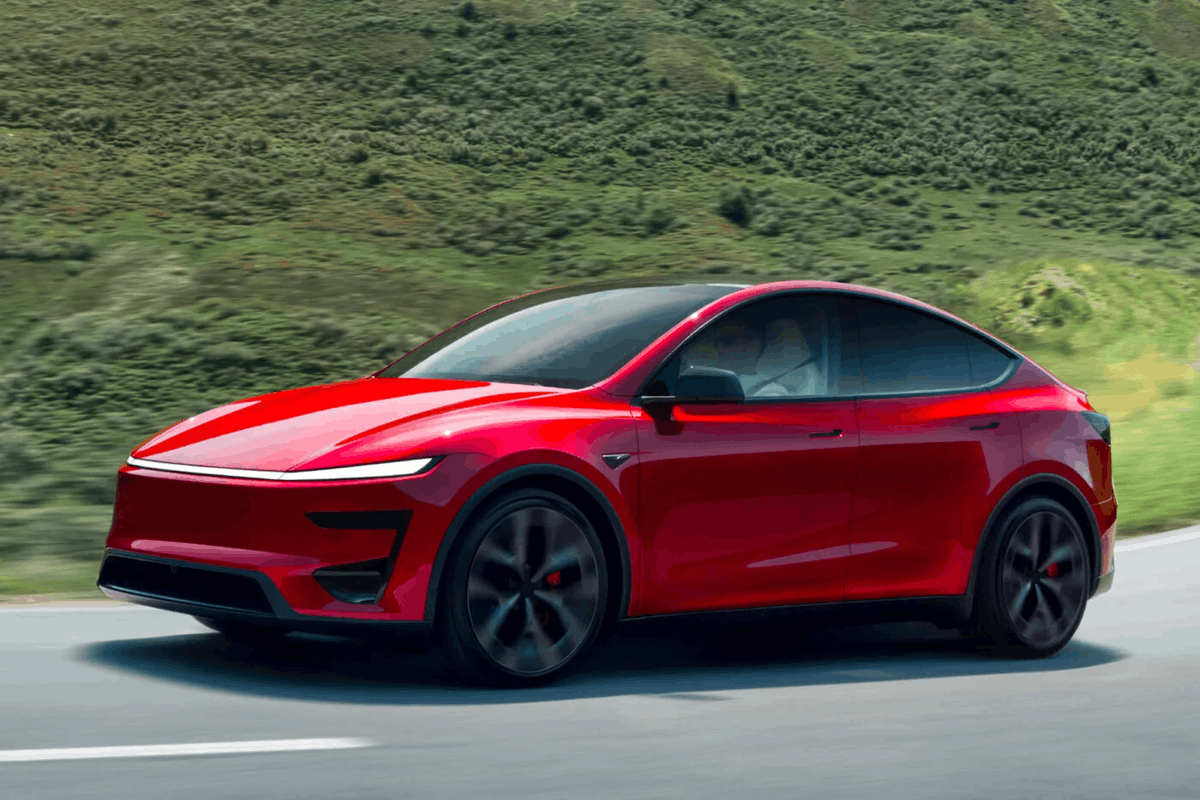
The Model Y is a clear first among the most popular electric cars in Europe, with no competition coming even close so far. It is not a new vehicle, albeit it feels like one after the refreshed design and features from earlier this year. Of course, it also gets updated over-the-air often, adding more and more new software features. Even though the sales for the model have decreased year-over-year and the rest of the EV market has grown, it is still topping the charts in Europe, just like in most of the rest of the world.
This wasn’t the first year Model Y took the top spot, either – it achieved the same for 2024, 2023, and 2022. That’s because Model Y started sales in August 2021. It has also gone as far as becoming the best-selling vehicle of any fuel type, not just best selling electric car, in Europe for two years recently.
This was the first year in a while where Tesla was not taking the dual win in Europe with Model 3 following its larger sibling.
Now, why exactly is Model Y still the best-selling electric car in Europe?
This is basically the European mainstream bullseye: a family crossover that nails the stuff people actually care about. Space? Big boot and a frunk. Quality? Simple design, but it still feels premium. Running costs? Efficient. And then there’s the real edge: solid software, the Supercharger network, and a price that stays in the reasonable zone.
The Model Y is also not aimed at the €25k–€35k segment, the European carmakers are obsessing over these days. It’s competing above that, but it can still undercut the typical new-car price level seen in Europe’s biggest markets, which sits around the €50k mark.
Tesla is one of the few carmakers that earns a real profit from each EV they sell, and not playing in the cheapest EV price range while being one of the best electric cars 2026 in terms of sales certainly helps that.
Model Y in a snapshot
Earlier last year, Tesla effectively re-centered the European Model Y range around the “Juniper” update: the refreshed car arrived first (new front light bar + a subtler, indirect rear light bar, plus a bunch of under-the-skin tweaks), and only after that did Tesla roll out the Performance and Standard variants.
For a “reference” configuration, we’re using the Model Y Premium RWD (previously branded Long Range RWD). It’s a sensible proxy for the core of Model Y demand, and it is very likely one of the biggest volume trims.
- Price starts at in Germany: €49 990
- Battery: 75 kWh usable, NCM chemistry
- Range: 603 km (WLTP)
- Efficiency: 14,2 kWh / 100km (per WLTP)
- Charging (DC): fast charging up to 250 kW DC; typical 10–80% time would be in ~27 minutes
- Charging (AC): 11 kW as standard everywhere
- 0–100 km/h: 5,6 seconds
- Drive: Rear Wheel Drive, but there is an AWD available starting at €52 990
If sales are the true indicator, then Model Y being at the top places it as the best electric car in Europe in 2026.
The new versions: Model Y (Standard) and Model Y Performance
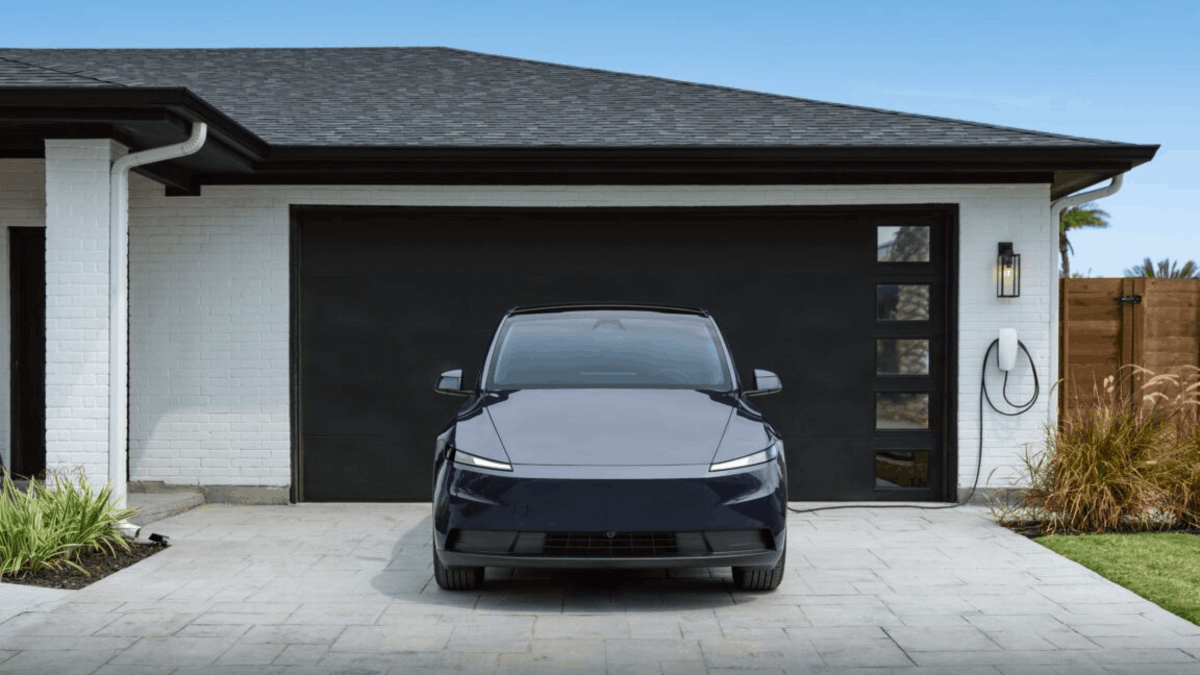
Just earlier last year, Tesla released the Model Y Standard – now called just “Model Y” while the rest of the models got the designation “Premium” – to reduce the price of the already best-selling electric car for the buyers.
It’s pared back a bunch of features and tweaked the look, but the fundamentals don’t really move: strong efficiency, solid range, and the same “it just works” software experience. In most of Europe, the Model Y Standard starts at €39 990, packs a 60 kWh usable LFP battery, and is rated at 534 km WLTP. On DC fast charging, it peaks at around 175 kW.
If you’re looking for the best electric cars 2026 that is a compact SUV, it’s most likely you’ll find it on the Model Y line – at least that’s what the numbers tell us.
Tesla also refreshed the Model Y Performance recently. In Germany, it starts around €62 970, comes with a ~79 kWh usable NCM pack, and is rated for about 580 km of WLTP range. It does 0–100 km/h in 3,8 seconds, runs dual-motor AWD, and can hit roughly 250 kW peak on DC fast charging.
What the Model Y actually gets right for the win
It gives you long-distance confidence
Road-tripping is where the Model Y continues to earn its reputation. Even the cheaper, previously called the Standard version, holds up well on charging behaviour, and the bigger-battery trims still sit near the top of Europe’s long-range pack among the best electric cars 2026. Charging isn’t as fast as the newcomers to the market (at up to 250kW), but good enough to never really worry about it.
Software + the Tesla stack
Ask EV owners what separates the best electric cars 2026 from the rest, and you’ll hear the same answer over and over these days. It’s software.
Tesla’s Over-the-Air (OTA) updates, tight app integration, and the Supercharger network still feel a huge step ahead of most legacy brands. Tesla was early to the idea of a truly software-defined car… and the industry still hasn’t fully caught up. A few brands (mostly newer players, with a lot of the momentum coming out of China) are finally closing the gap, but it remains a real differentiator.
That’s one of the key reasons the Model Y keeps showing up as one of Europe’s most popular EVs: the car is just smart. Take the latest 2026 early spring update, for example, which gave most European Teslas, again just pushed to the cars over the air, the possibility of talking to the Grok AI assistant in the car to plan the navigation. Just tell it you’re hungry for a burger, then want to hit the gym, and then pick up kids from school (in whichever order), and it’ll plan your route seamlessly. And soon, it’ll just drive you through the route itself as well, because something important is coming:
Wildcard: Tesla Full Self-Driving In Europe Is Launching
Europe still can’t buy Tesla’s Full Self-Driving feature set in the way some other markets can, but it matters as a long-term signal. Tesla is already running a “Supervised” version elsewhere, and in Europe, the main blocker is regulation, which is about to shift right as you read this in early 2026.
Tesla’s FSD (Supervised) is being tested right now with Dutch authorities, with a tentative approval in late March, which, if it gets through and goes well, will mean a quick European-wide rollout for the system to all capable Teslas. Tesla is already hosting ride-alongs in many European countries to give potential customers and existing owners a taste of what the vehicle can actually do once the regulations allow it.
Plenty of automakers lean on partners for autonomy tech; very few have gone as aggressively in-house as Tesla has. Whether you think that’s bold or reckless, it’s a different approach.
Resale value and, well, everyone knows this car
The Model Y is everywhere. And yes, that sounds boring. But ubiquity has an upside: residual values feel less like a coin flip, and servicing doesn’t feel like you’re buying into a niche experiment. Familiarity reduces the perceived risk.
None of this makes the Model Y perfect. The minimalist interior is either “clean and calming” or can instead be about “where did my buttons go?” depending on the person. Ride comfort can swing from totally fine to slightly harsh, depending on what you’re used to, which version of the Model Y you have, and how you drive. And while ~250 kW peak charging is still solid, Tesla is no longer the outright leader — some rivals have pushed well beyond that.
One more factor (fair or not): for some buyers, opinions about Tesla’s CEO influence the decision. Either way, the good news is that in 2026, the market is stacked with strong alternatives if you’re thinking past the Model Y.
Here’s the surprising #2 this year:
2. Škoda Elroq – the surprising newcomer
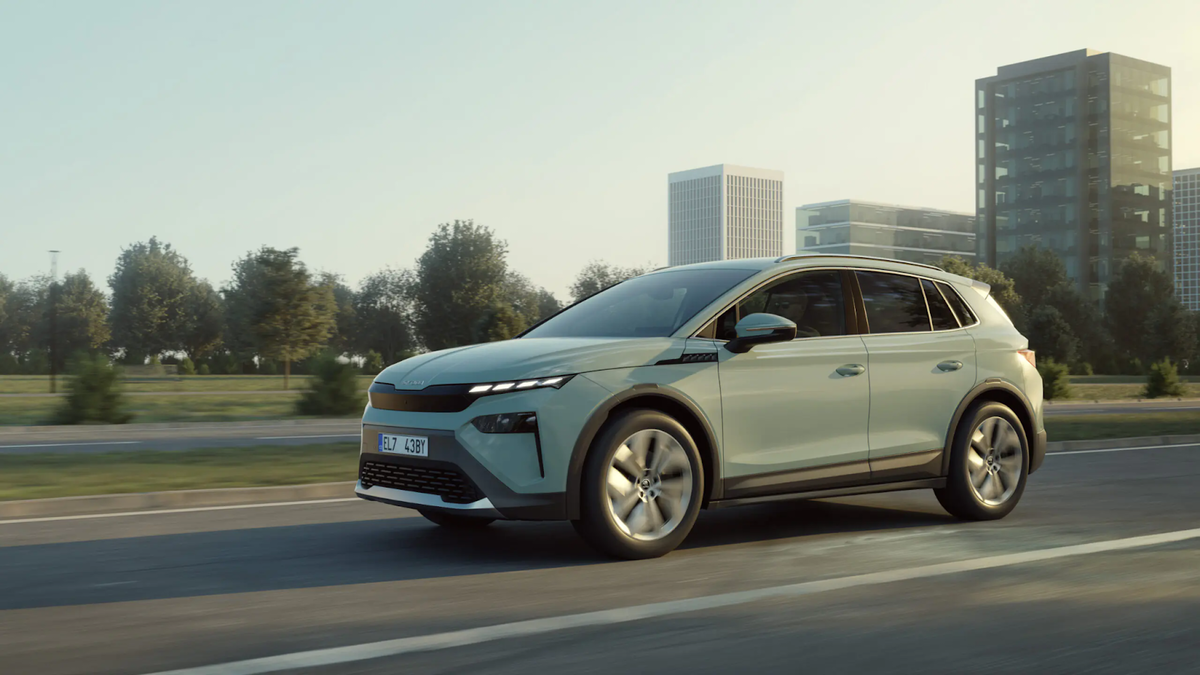
The “surprise” factor is pretty simple: Elroq only really began selling in November 2024, yet it climbed absurdly fast, topping the monthly charts in October last year and by the end of it, already managed to land as the second best-selling electric car for the full year. Sales in 2026 have continued at an equally fast pace in Europe.
Elroq also isn’t Škoda’s first serious swing at an EV. The slightly larger Enyaq got there first, built on the same MEB platform, and it already proved that Škoda can build a mass-market EV that Europeans actually buy in big numbers. Elroq just took it to the next level, becoming nearly the best-selling electric car for all of Europe!
In size, Elroq sits just under the Model Y, but inside, it doesn’t feel far off. It’s a practical family EV with a more conservative exterior, real physical controls (if that matters to you), and an interior that looks and behaves like a normal ICE-era Škoda/VW. Which, to be honest, is exactly the point for a lot of buyers.
Škoda Elroq in a snapshot
What are the best electric cars under €40k in 2026? A rather common question in the local Facebook groups. This is where the Elroq gets mentioned pretty quickly.
Škoda’s lineup is essentially built around three battery-driven versions: Elroq 50, 60, and 85.
- Starting price: ~€33 900 (Elroq 50) to ~€44 180 (Elroq 85)
- Battery (usable): 52,0 kWh (50), 59 kWh (60), 77 kWh (85) — all NCM
- Range: ~350 km to ~531 km in WLTP, depending on trim
- Efficiency: ~15,2 kWh/100 km (85) to ~15,7 kWh/100 km (60)
- DC fast charging: ~145 kW (50) up to ~175 kW peak (85), and it is Plug & Charge capable
- AC charging: 11 kW
- 0–100 km/h: ~6,6 seconds (85) to ~9,0 seconds (lower trims)
- Drive: mostly RWD, with one special 85 version as AWD
Here’s how Škoda Elroq compares to the Tesla Model Y
On paper, Elroq looks like a very “European take” on the Model Y (even though the Y is also built in Europe now): similar usable battery territory, similar real-world range, and slightly lower headline fast-charging numbers.
In real life, the differences tend to land here:
- Ride comfort: it can feel better for some people, but we’ll trust you’ll feel this one yourself. Before buying either, you should certainly test them both out, as the best electric cars 2026 in Europe would still be the one that fits your daily life best.
- Software: It has improved versus early MEB cars, but it still doesn’t touch Tesla’s software experience.
- Buttons: sounds like a small thing, but there are plenty of buyers who say it is a big deal that Škoda hasn’t shoved everything into the screen.
- Cabin feel: materials and sound insulation are often said to be a bit more “traditional premium” than the Model Y at comparable money (still again, it is subjective).
- Brand familiarity: Škoda has local trust and loyalty in Europe that Tesla can’t fully replicate yet, at least not for people considering switching from ICE vehicles.
One practical thing to keep an eye on with any non-Tesla brand: what’s actually included in the trim and the option packages. A heat pump is the classic example. Depending on the market, two cars with the same sticker price can hide very different “standard equipment” realities, and in the colder climates, you don’t really want to drive without a solid heat pump on board.
Where Škoda really wins is approachability. For many buyers, this is basically an electric Karoq or Kodiaq, with familiar ergonomics, familiar dealer support, and a buying experience they already trust. And for a meaningful slice of Europe, the dealer network isn’t just a nice-to-have. Even in 2026, it is the only way they’ll even consider buying a car.
3. Renault 5 – the futuristic yet retro hatchback
“Futuretro” is what I call this new wave of EV design: it looks like it time-travelled in from the future, but it’s clearly borrowing the best bits from the past.
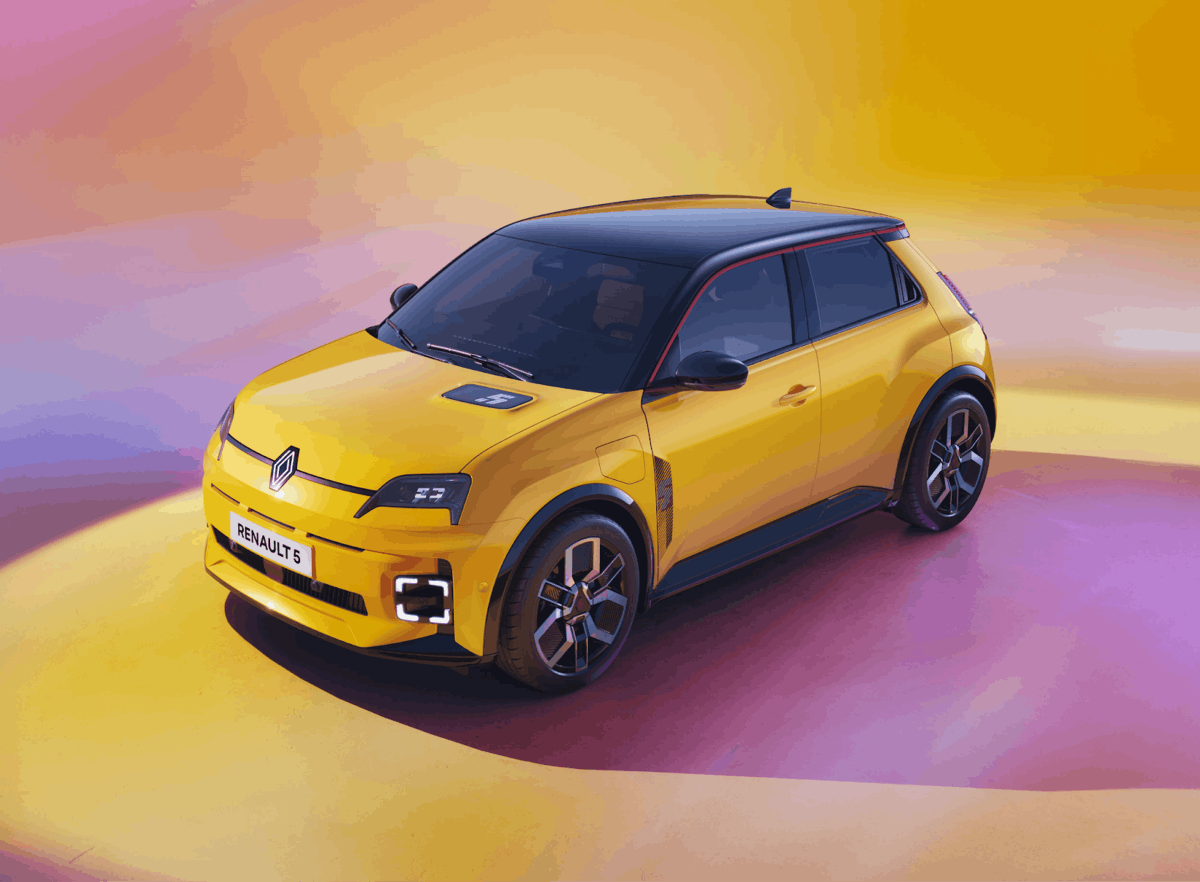
And as more people ask what’s the best small electric car in Europe in 2026, as it is exactly the small EV niche that has also most of the industry attention right now, Renault has done something most brands mess up: it brought back an icon without turning it into a niche nostalgia gadget. As many Europeans now look more specifically for European electric cars, the Renault 5 fits in nicely.
The new electric Renault 5 is a compact hatch that, by the numbers, sits among the strongest electric hatchbacks you can buy right now. It looks playful, it’s priced like a real-world mass-market car… and could look even better if Europe actually follows through on more small-EV support. It also sneaks in properly modern tech like bidirectional charging. For example, there are already more than 50 Renault 5s feeding energy back to the grid via vehicle-to-grid integration in Utrecht, Netherlands. No wonder it’s already become one of Europe’s most popular EVs.
It also matters that this thing feels like it was designed as an EV from day one, not engineered as a half-hearted compliance exercise. You see it in the proportions and packaging: short overhangs, smart use of cabin space, and a driving position that doesn’t feel like a “raised Clio with batteries.”
Renault 5 in a snapshot
- Starting price: ~€25 000 (Comfort Range, 95 hp), ~€30 000 (120 hp), and ~€30k+ (Long Range, 52 kWh, 150 hp)
- Battery: 42 kWh (Comfort Range) or 52 kWh (Long Range)
- Range: ~300–400 km WLTP, depending on trim
- Efficiency: ~14,5 kWh/100 km (WLTP)
- DC fast charging: ~80–100 kW peak; also supports future bidirectional use (V2L + V2G/V2H capability)
- AC charging: 11 kW
- 0–100 km/h: from ~8,0s
- Drivetrain: FWD across the range
Fun fact: yes, Renault really offers a baguette holder as an option, which might be the most French option ever listed on a car.
Why the Renault 5 is among the best electric cars 2026
Price point
This is the simple one. Even the 52 kWh version can undercut a lot of crossovers by €10k+ while still delivering a realistic 300+ km kind of usability. And that ~€25k entry point puts it in best budget EV of 2026 territory in a way most mainstream brands still haven’t matched.
Efficiency
Real-world consumption around or below the 15 kWh/100 km is strong for a hatch that isn’t shaped like a wind tunnel experiment. It’s just a genuinely efficient small car.
Bidirectional charging
On the 52 kWh version, V2L and V2H/V2G support is a real differentiator for buyers thinking about solar, home batteries, or simply using the car as a power source for tools, devices, or weekend gear. The world’s energy systems are becoming smarter, and a V2G-ready EV helps prepare for exactly that.
The compromise is also obvious: this isn’t a long-distance runner. Push past ~110 km/h, and the range falls off faster than it does in bigger, slipperier SUVs, and ~100 kW peak charging means you’re usually looking at something like 35–40 minutes to go from low state-of-charge back to a comfortable buffer. For long-distance runs, this car would feel more like falling back to most ~2018 era EVs, before the latest technical leaps.
But that trade-off fits our reality in Europe: most driving is still short daily trips, and for that, a compact EV makes a lot more sense than hauling around a 2-tonne SUV. And honestly, the Renault 5 also just looks like it’d be fun, which is a quality the EV market sometimes forgets to optimise for.
4. Tesla Model 3 – the upgraded oldtimer EV
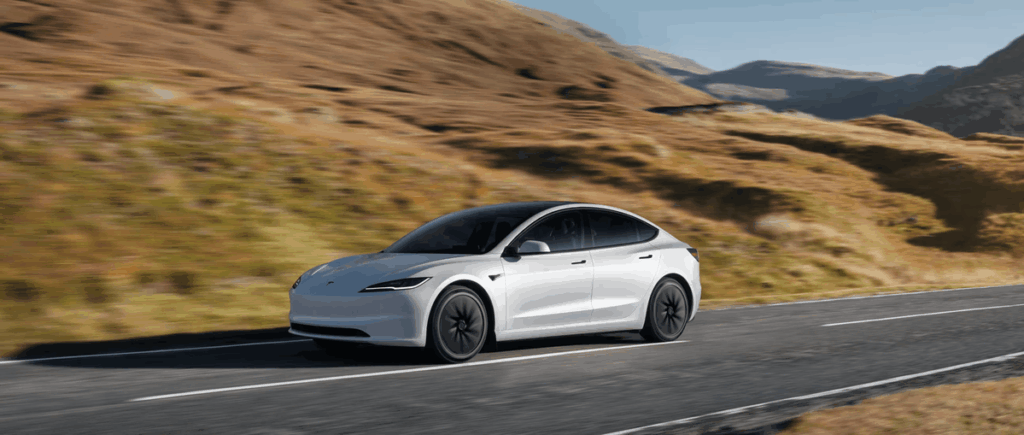
The Tesla Model 3, which has historically been in second spot right after the Model Y, has now fallen to the 4th place. In reality, it was a rather close call, so we’ll see what 2026 brings.
If the Model Y is the default family crossover, the Model 3 is the “I still want a proper car” of EVs: lower, sleeker, and usually more efficient in the real world than most similarly priced SUVs. Sports electric sedan, is what Tesla calls the Model 3.
The refreshed Model 3 “Highland” is finally the version many people had been waiting for – the same core formula (range + efficiency + software), but with a more polished product feel.
For a reference trim, we’ll use the Model 3 Long Range RWD, because it’s the sweet spot if you care about long-distance ability without jumping into AWD money. With the introduction of the “Standard” models, a Model 3 now starts at as low as €36 990 in Germany and most of Europe.
Tesla Model 3 Long Range RWD (Highland) in a snapshot (Germany)
- Starting price (Germany): €44 990
- Usable battery: 79.0 kWh (NMC)
- WLTP range: 750 km
- Fast charging: up to 250 kW, ~10–80% in ~28 min
- AC charging: 11 kW
- 0–100 km/h: 5,2 s, top speed 201 km/h
- Drivetrain: RWD (AWD available for a higher price)
Why the Model 3 keeps selling so well in 2026
It’s simply the non-SUV choice that still works in Europe as the benchmark.
In a market flooded with crossovers, Model 3 is the obvious pick for people who want something lower and more “car-like” — and that usually shows up as better efficiency at motorway speeds. For the maximum effect, of course, the Model 3 Performance version is there to satisfy the appetite.
The Long Range RWD trim is exactly what it sounds like: lots of usable range, and fast charging that’s still competitive. Add the Tesla routing + Supercharger ecosystem, and it’s still one of the least stressful EVs for covering distance.
Software still matters. Same story as Model Y: OTA updates, app integration, navigation + charging planning that’s genuinely good. A lot of brands are improving fast, but Tesla’s “software-first” baseline is still a reason people default to it.
Price laddering widened the funnel. Tesla also pushed a cheaper Model 3 “Standard” for Europe at €36,990 in Germany, which is already being delivered to customers. This should show if Tesla still has some strong sales runway left in Europe.
The compromises (because there always are, even with a Tesla)
Model 3 isn’t the practical king — it’s a sedan, so you’re giving up the easy “throw anything in the back” utility that makes Model Y so dominant. However, the spacious frunk surely helps. And while Tesla charging is still strong, the market’s top end has moved: some newer 800V cars will beat it on peak speeds and sustained curves.
But if you want the Tesla ecosystem with a more efficient, more traditional driving shape, the Model 3 is still one of the cleanest answers on the European electric cars market.
5. Volkswagen ID.4 – the solid choice right in the middle
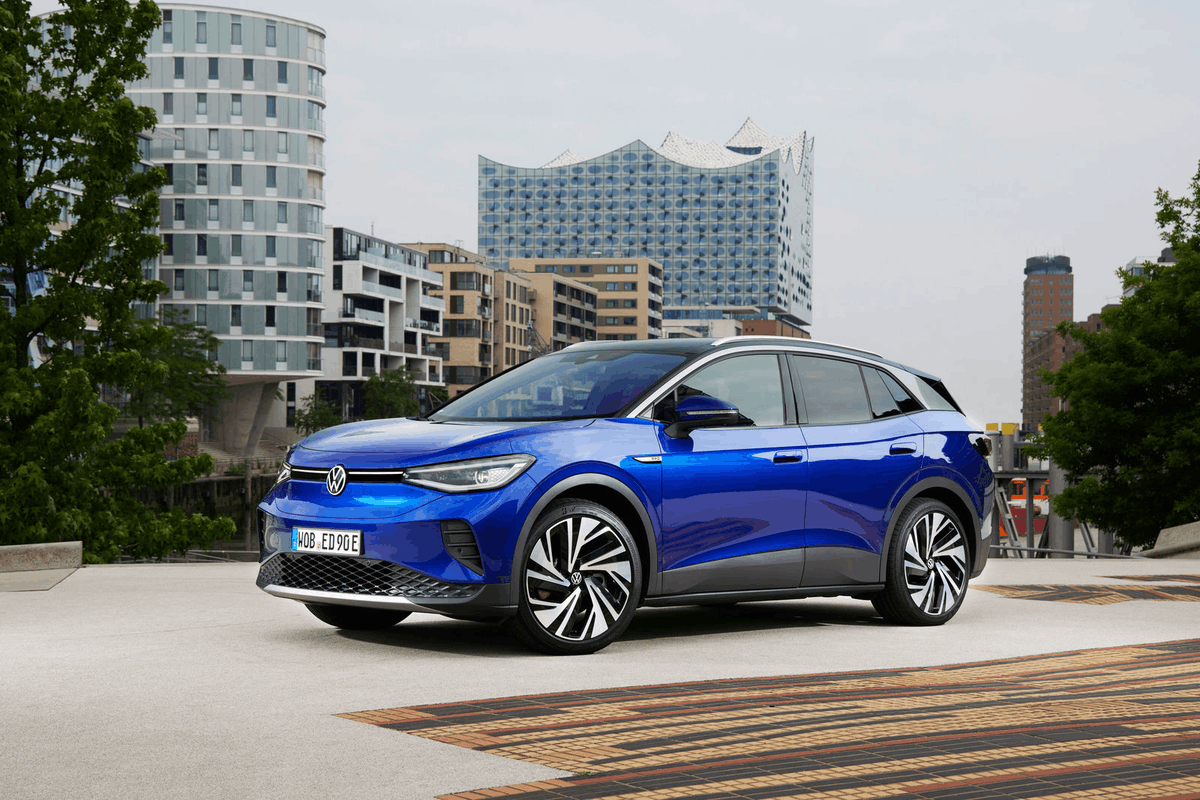
While the ID.3 didn’t fit the top five as it did in the first half of 2025, the ID.4 was a mainstay.
If the Model Y is the default “tech crossover” among European electric cars and the Elroq is the fresh European disruptor, the ID.4 is the quiet workhorse that keeps moving units in the background. It doesn’t win the attention war. It wins the middle of the market: company cars, lease fleets, and families who used to buy something Tiguan-shaped and now want the EV version of “normal”.
VW ID.4 in a snapshot:
- Starting price: from €37 000 for the ID.4 Pure version; ~€46k for the ID.4 Pro version and ~€53k for the sporty GTX
- Battery 52 kWh / 77 kWh / 79 kWh usable, respectively
- Range from 360 km to 570 km, WLTP
- Efficiency from 15,6 kWh / 100km
- DC Fast charging ~145 kW peak for Pure, ~175 kW for Pro. ID.4 also supports bidirectional charging in some regions.
- AC charging at 11 kW
- 0-100 km/h: from 5,4 seconds on GTX, ~9 seconds on Pure
- Drivetrain RWD, except for GTX, which is AWD.
On paper, the ID.4 Pro sits very close to an Elroq 85 — which isn’t exactly shocking when they share the same platform DNA, battery tech, and a lot of the core electrical architecture.
This is where the ID.4 earns its keep
Maturity: It’s been around longer than Elroq, and a lot of the early “MEB growing pains” have been worked through. The product feels more settled now than it did at launch.
Fleet gravity: This is a safe, conservative pick for company-car lists and leasing catalogs. The VW badge still carries real weight in those channels, and that matters more than enthusiasts like to admit.
Comfort-first tuning: Like the Elroq, it’s set up to be comfortable rather than sharp. For most buyers, that’s not a compromise, rather it’s the goal altogether.
The trade-offs? They are predictable. Against a Tesla, the ID.4 tends to feel heavier and a bit less efficient at motorway speeds. Charging is good, but not class-leading. But if you rarely rely on fast charging and you want something familiar, predictable, and “VW-normal,” the ID.4 is an easy choice that won’t surprise you — in either direction.
Now you know the EVs Europeans choose in 2026
What is the best electric car in Europe in 2026? Now that the year 2025 is fully closed, we can answer the “most chosen” part with confidence: Europeans had more EV options than ever, smaller EVs kept pushing into the mainstream, and the Model Y still stayed on top, for the fourth year in a row. The exact order behind it shifts as models refresh, prices move, and supply changes, but the bigger story is clear: the market is no longer “a couple of obvious picks,” it’s a real menu with surprise items added every year.
For fast-charging networks like Eleport, that means we need two-track planning, a problem in a good way. The fresh EV owners will clearly need high-throughput hubs for the road-trip crowd who just want a quick, reliable stop — and also need coverage that works for the growing wave of shorter, cheaper EVs doing short daily driving with occasional longer trips. Our focus here is clear: Eleport’s charging hubs across Central and Eastern Europe are located for maximum convenience, ensuring the EV driver, no matter which battery or fast charging speed, can just plug in and walk away to visit the amenities, be it a special EV charging location or a charging station right next to a large shopping mall.
We’ll keep tracking the sales data and updating our blog here as the market evolves. Here’s one reminder that’s worth repeating: the best electric cars 2026 in Europe aren’t always the most popular ones — the best EV for you is the one that fits your driving, charging access, and budget.