
During the Canadian Automobile Association’s (CAA) on-road test, electric vehicles covered 14% to 39% less distance than their officially published range in real winter conditions. That shortfall is a reminder that the number on the dash is an estimate shaped by conditions. In cold weather, batteries deliver energy less efficiently, heaters consume power, and snow adds resistance. As a result, two drivers can see noticeably different range outcomes on the same day, even in the same model.
To avoid guesswork, we’ll lean on hard, road-tested data. The CAA drove a set of popular models on a real route in sub-zero temperatures and measured what matters for planning. First, the actual distance each car covered before its usable charge was depleted. Second, how much usable range it could recover during a short DC fast-charge stop.
The point is not to scare anyone off winter driving. It’s to replace optimism with numbers and routines. With the right habits, EV range in cold weather stays predictable, and winter trips (EV winter range) become something you manage rather than something that catches you out.
How much does cold weather affect EV range in real driving?
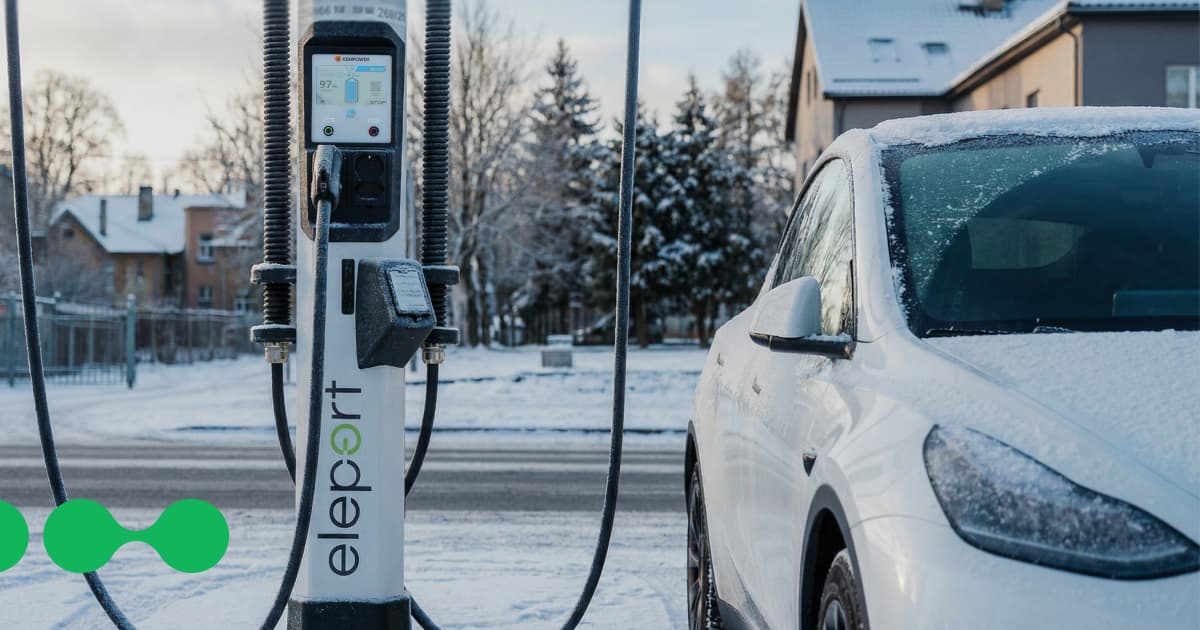
How much does cold weather affect EV range day to day? Enough that planning bands beat a single headline number. Cold-weather range planning comes down to managing variation. Vehicle design, speed, heating use, and road conditions all affect your range, so expect it to shift day to day.
A practical planning band looks like this:
- Best-case (well-optimised vehicle, steady driving): about 10%-20% loss
- Typical case (mixed driving, cabin heat used normally): about 20%-35% loss
- Tough case (short trips, deep freezing temps, lots of heat, snow): about 35%+ loss
For trip planning, plan for about 25% less than the published range and aim to arrive with 10% to 20% charge remaining. That keeps you out of “arrive with minimal charge” territory when conditions change.
With those numbers in mind, let’s look at how the CAA collected its data and why results can differ significantly between models and conditions.
What did the Canadian CAA winter road test actually measure?
CAA’s setup is worth paying attention to because it mirrors how people travel. They drove 14 models that represent a large share of Canadian sales on a real route from Ottawa to Mont Tremblant with temperatures between -7°C and -15°C. Each vehicle was driven until it fully ran out of power, and the results were compared against Canada’s published figures.
Here’s why this matters for EV range in cold weather: official numbers are typically year-round averages, often smoothing out extremes. In stark contrast, CAA measured a true “worst month” scenario, revealing the dramatic seasonal gaps and demonstrating just how large they can be.
Which models held up best, and which struggled most?
This is where the data becomes concrete, since the spread is not subtle. CAA published a chart showing model results, with a few examples illustrating the pattern.
Stronger performers (smaller drop vs official range):
- Chevrolet Silverado EV: -14%
- Polestar 2: -14%
Bigger losses in the same conditions:
- Volvo XC40 Recharge: -39%
- Toyota bZ4X: -37%
- Hyundai IONIQ 5: -36%
The difference between actual and official range is the most important number for your winter route planning.
CAA also noted an important real-life detail: it adjusted its calculations because two vehicles started with less than a full state of charge (Silverado at 73%, F-150 Lightning at 89%). That’s a useful reminder that winter driving often starts from “good enough,” not 100%.
The test shows what happens on the road. The next step is the why, because it turns winter range from a surprise into a set of levers you can control.
Why does an EV lose miles when temperatures drop?
EV range loss in cold weather comes from the same stack of forces: slower battery chemistry, extra heating loads, and higher rolling and aerodynamic demand. Together, those effects reduce how far you can travel on the same usable charge.
- Cold batteries work less efficiently. Chemistry slows, internal resistance rises, and the car may limit power until the pack warms.
- Cabin heat and defrost draw significant power. Unlike an ICE vehicle that can reuse waste heat, an EV must generate heat from stored electricity.
- Thermal management uses extra power. The battery management system may heat the pack to protect performance and longevity. You may also see slightly less usable battery capacity until the pack warms.
- Winter air and roads increase drag. Denser air raises aerodynamic load, while snow and slush increase rolling resistance, so the car uses more energy per kilometre.
You may also notice changes in how the car behaves early in a drive. Regenerative braking can feel weaker because a cold pack may not accept as much energy until it warms.
Is cabin heating really the main culprit?
This is often the biggest swing factor because it is a separate load on top of cold-battery efficiency losses.
In controlled testing conducted by Transport Canada, driving at -7°C reduced range by about 20% compared with 20°C. With maximum cabin heat at -7°C, EV range dropped by roughly another 25% compared with the heat-off run at the same temperature.
In a more severe cold, heating becomes even more dominant. The same report notes that at -18°C to -20°C with maximum cabin heat, total range reduction reached roughly 55% to 60% versus the mild-weather baseline.
That is an extreme setup, but it highlights a practical truth: on short trips, the energy used to heat the cabin can rival the energy used to move the car. To reduce that penalty, start with seat and steering wheel heat, keep the cabin setpoint modest, and preheat while plugged in so the first burst of warmth does not come out of your driving range.
Hardware also changes the outcome. A heat pump usually reduces heating demand compared with resistance heating, though the advantage narrows at very low temperatures. Even in freezing weather, the air conditioner may run briefly to dehumidify the cabin for quick defogging, adding small loads you may not notice.
With the causes clear, we can translate them into realistic driving expectations.
What happens to the electric car range in cold weather on the motorway?
Motorway driving is more predictable than stop-and-go, but it still has traps. This is where many owners first ask: “Does cold weather affect EV range even when I drive normally?” Yes, because steady speed amplifies aerodynamic losses, and dense air plus headwinds can stack quickly.
At a steady speed, higher air resistance and headwinds can raise consumption quickly.
To estimate EV range in winter on a road trip, focus on three variables you can control:
- Speed: Dropping from 120 km/h to 105 km/h often saves more energy than most drivers expect.
- Cabin setpoint: Small reductions plus heated seats can help preserve distance.
- Preconditioning: Warming the cabin and pack while plugged in is one of the highest-impact steps with minimal trade-offs.
If you want a straightforward way to plan:
- Start with your published range.
- Multiply by 0.75 for a conservative winter estimate.
- If roads are snowy or winds are strong, subtract another 5% to 10%.
- Plan fast-charge stops so you arrive with 10% to 20% remaining.
That also explains why some owners report an “unexpectedly good day.” Mild sun, dry roads, and steady speed can keep EV cold weather range closer to the best-case end of the CAA spread.
Now we can focus on what you can do each day to keep results consistent.
What can you do to protect EV winter range on daily commutes?
You don’t need special gadgets to protect EV winter range, but you do need a routine. Think of this as reducing “wasted energy” rather than chasing perfection.
Which habits move the needle the most?
These actions consistently help EV winter range without adding hassle:
- Precondition: while plugged in. Warm the cabin before you unplug. CAA highlights this as a top tip because it preserves stored energy for driving.
- Use the seat and wheel heat first. CAA notes heated seats use less energy than blasting cabin heat.
- Clear snow off the vehicle. It reduces weight and drag, and CAA directly calls out the aerodynamic impact.
- Park sheltered when possible. A garage or even a sunny spot can keep the pack warmer and help EV winter range.
- Drive smoothly for the first 10–15 minutes. Let the pack warm up before heavy acceleration.
If you want a fast checklist for mornings that keeps EV winter range steady, use this:
- Preheat for 10–20 minutes while plugged in.
- Start with seat heat.
- Set the cabin a little cooler than usual.
- Drive gently until the pack warms.
By turning small adjustments into a habit, you take control over EV winter range loss and make every charging stop predictable, no matter the conditions. Consistency empowers you to enjoy stress-free, reliable driving all season.
To further supercharge your confidence through winter, check out our guide: Home EV charging setup and daily schedule—and keep mastering every aspect of cold-weather driving.
How can you charge faster when it’s freezing?
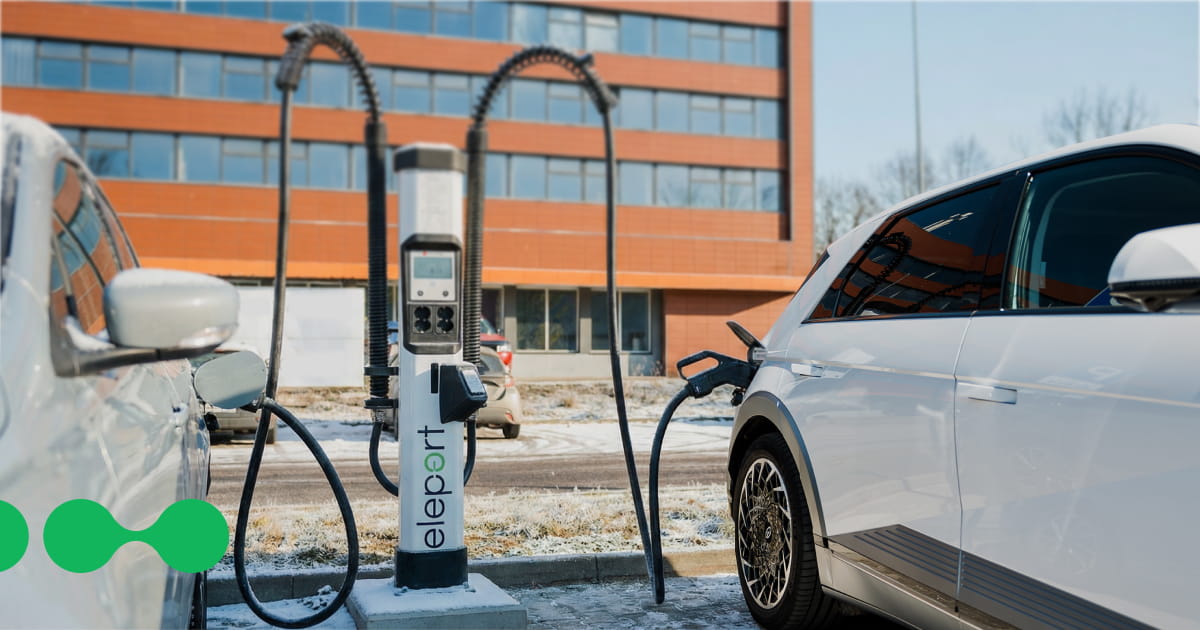
Range is only half the story. Charging speed often becomes the biggest frustration because a cold-soaked pack can accept power slowly until it warms.
CAA tested DC fast charging by measuring the distance added during a 15-minute session. On average, vehicles added about 100 km in 15 minutes, which was about 28% state of charge. The Tesla Model 3 added over 200 km in that same window.
That’s a huge swing in “time-to-continue,” and it explains why two road trips can feel completely different even if both drivers experience similar EV range in cold weather.
What should you do before a fast-charge stop?
Use these steps to protect the EV winter range and speed up charging:
- Navigate to the charger using the car’s built-in route planner. Many vehicles warm the pack automatically when a fast charger is the destination.
- Arrive with a lower state of charge. Fast charging usually peaks at lower percentages before tapering.
- Avoid back-to-back short charging stops. One longer stop often works better than two short stops because the pack stays warm.
If you want more details on why some models cope better, see our Top 10 electric cars for winter guide. For a third-party view, Forbes has also covered how frigid temperatures affect both range and fast-charging expectations.
If your winters regularly reach -30°C, the FAQs below are designed for you. They focus on the questions people ask most often and tie each answer back to trip planning and day-to-day habits.
FAQs
What is the 80% rule for EV?
The “80% rule” means charging to about 80% for daily use to reduce long-term battery wear, since the battery is under more stress at very high states of charge. For road trips, it’s fine to charge higher right before departure if you need an extra buffer, then return to your usual limit afterwards.
Are electric cars good in the winter time?
Yes, as long as you plan around reduced range and slower charging. They often start reliably in freezing conditions, and features like scheduled preheating can make them comfortable. Tires matter more than the powertrain for traction, so invest in proper snow tyres if your area needs them.
How cold is too cold for EV?
There isn’t a single cut-off, but extreme cold reduces usable range and slows DC fast charging. DOE testing summaries show range losses increase as temperatures fall. Below -20°C, plan extra buffer, precondition more often, and navigate to fast chargers so the pack warms en route. Park in a sheltered spot when possible, prioritise reliable high-power sites, and avoid arriving with a cold-soaked pack and a high state of charge.
Do electric cars lose range in cold weather?
Yes. In the CAA road test, vehicles travelled 14% to 39% less than their published range in sub-zero temperatures. The exact loss depends on heating demand, trip length, speed, and how well the vehicle manages pack temperature.
What model is the best for snow?
“Best” depends on your roads, but prioritise: (1) quality winter tyres, (2) stable traction control and AWD where you need it, (3) enough ground clearance for unploughed streets, and (4) predictable fast-charging for longer trips. If range retention matters too, CAA’s winter test showed some models stayed closer to their rated figures in sub-zero conditions, including the Chevrolet Silverado EV and Polestar 2.
Final takeaway. What should you expect day to day?
If you’re still asking how much does cold weather affect EV range, the best answer is a band, not a single number. CAA measured 14% to 39% less distance in sub-zero driving. Build your plans around that band, then use preconditioning and smart heating choices to land on the better end of it. Do that, and EV range in cold weather becomes predictable rather than stressful.