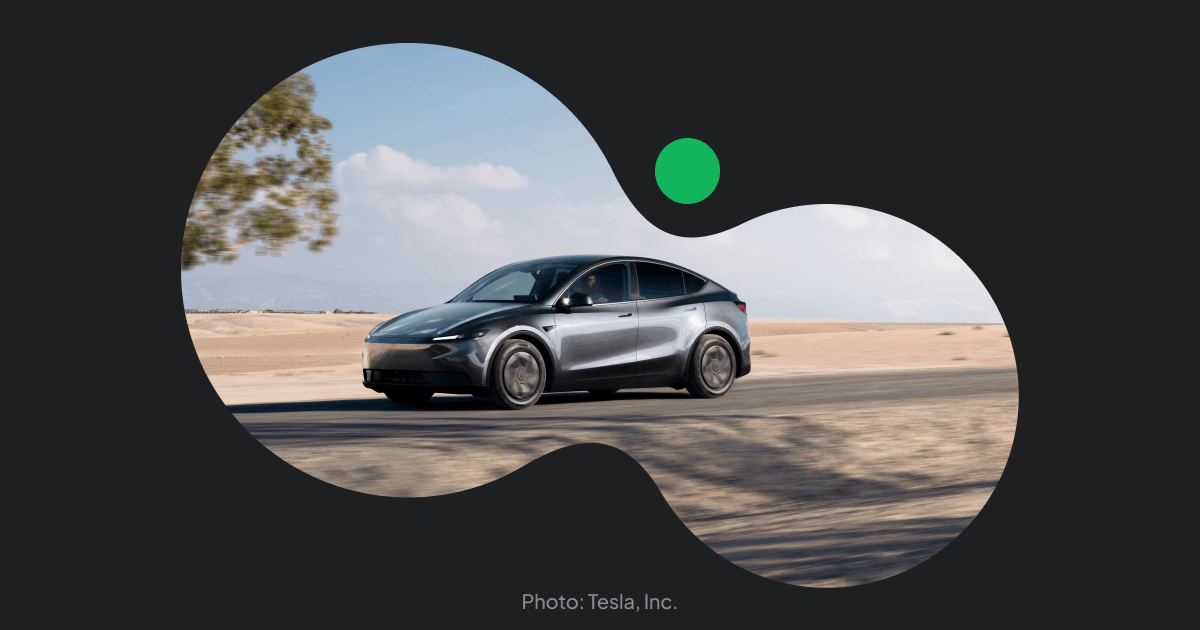


We don’t see robotaxis on the roads nearly anywhere in Europe yet.
But they’re coming.
What has become a somewhat common sight in selected cities in the US and in China is still foreign to us in Europe. But that’s changing, fast. And we’re not talking of sometime-in-2030 fast, we’re talking starting-in-a-few-months 2026 fast.
In this article, we’re not talking about the small-scale pilots that try to validate the autonomous technology here and there. Such programs have been around for a decade or more. We’re talking of the actual efforts of scaling the public service across whole cities and more at once.
From 2026 onward, London, Berlin, Leuven, Munich, Zagreb, and a set of yet unnamed cities will all host real Level 4 autonomous robotaxi deployments. The cities, from the officials down to the operators of charging stations, need to be ready.
We’ll take a look at all the relevant robotaxi industry connections & companies, both foreign and local, and how they will together change the way our streets look yet again.
Wait… what is a robotaxi, exactly?
Robotaxis are not a fancy name for driver assistance in your car. The derivative name gives away the obvious hint – it’s a taxi that drives you around, but is a robot – no driver at the wheel.
This means the car drives you around, with nobody else in the car.
In practice, a robotaxi service looks like this:
- You book a ride through an app.
- The vehicle drives itself, inside a geofenced zone that has been tested and mapped in detail (and is set by local gov permits).
- A remote operations centre monitors the fleet and can help, even take over, when something unusual happens.
Almost all the autonomous taxis deployed in the world today are electric robotaxis. It’s just the logical step in the business model, with the high utilization, higher level of quality systems, and less fuel & maintenance costs involved. Not to mention our cities will be clearly less noisy and the air a lot cleaner.
Global head start for robotaxis
Did I mention that Europe is currently behind, yet?
The most advanced robotaxi operations today are in the United States and China, and are also rapidly progressing to the Middle East. For example, here is Waymo’s current footprint in the US:
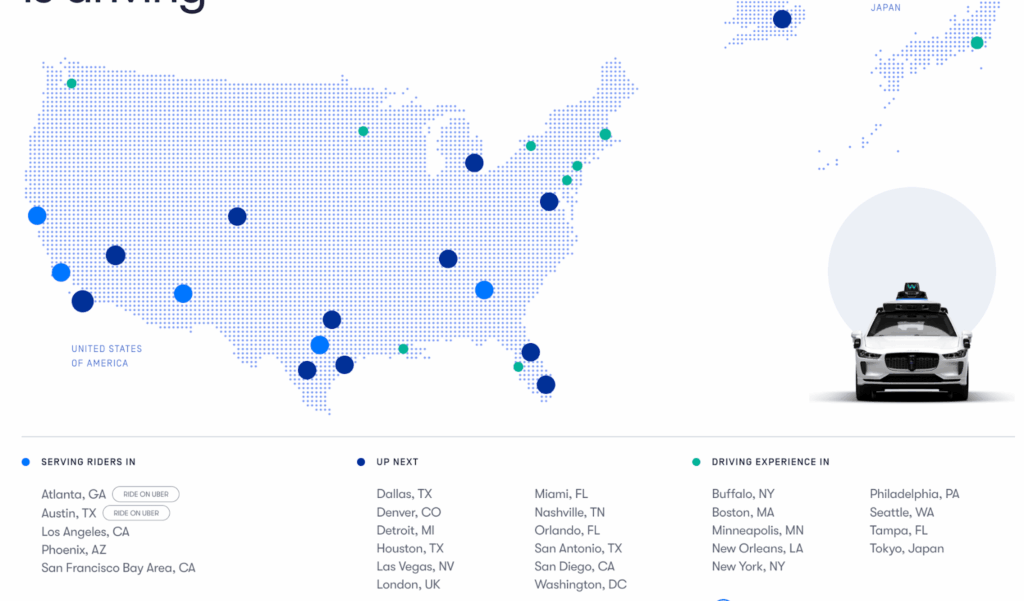
The robotaxi can be hailed in Phoenix, San Francisco, Los Angeles, Atlanta, and Austin, and is in testing in more than ten cities as of now.
Waymo claims it reached 250 000 paid fully driverless trips per week back in April. Today, its fleet – consisting mostly of Jaguar I-Pace electric vehicles that are fitted with the necessary sensors – spans over 2,000 units.
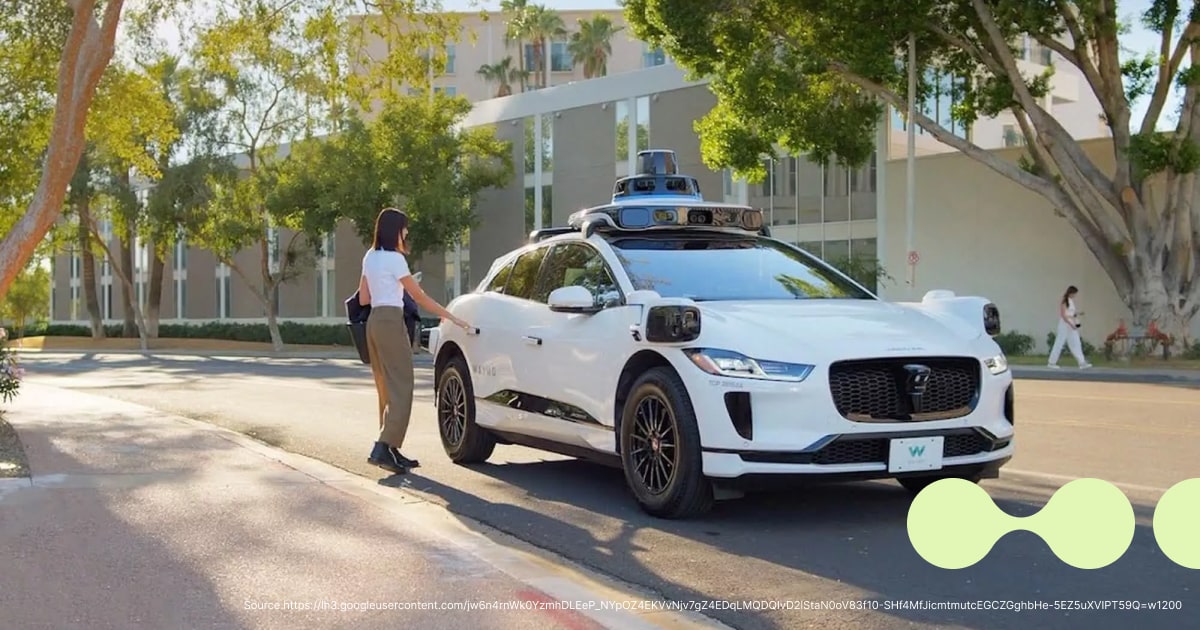
Waymo also has custom Zeekr RT’s on the street now, and has made a deal to fit some Hyundai Ioniq 5s as well. As you can see from the ‘up next’ section of the image, they are about to enter a whole lot more cities.
How the launch process usually works is that first, Waymo announces a city they want to go live in & secures the permits to test, perhaps creating limited ‘driving experiences’ (right side) first to get local gov and people used to the technology.
Then comes the active testing, with Waymo’s own fleet & safety drivers on board. After that, the safety drivers are removed, yet the service is still available for employees.
Finally, given enough confidence has been achieved, and permits are in order, Waymo will launch for the public through its own Waymo app or through one of its ride-hailing partners (such as Uber, a partner it is using less and competing more with these days, or Lyft, where they’ll dually place the robotaxis into service).
As of July 2025, Waymo had surpassed 100 million fully autonomous miles (161 million km), doubling its mileage in six months and currently driving over 2 million miles per week. It has completed over 10 million paid robotaxi rides.
The only other robotaxi maker that comes close in the deployment scale is Baidu’s Apollo Go, in China, which has completed millions of rides across cities like Beijing, Wuhan, Guangzhou, and Shenzhen, and plans to reach 100 cities globally by 2030. Apollo Go also just reached the 250k rides/week milestone last month.
Both Waymo and Baidu will be entering with electric robotaxis in Europe, deployed to service in 2026.
Who will launch the first robotaxis at scale in Europe?
If we look at concrete announcements, the first major wave of robotaxis in Europe is now visible, all clustered around the 2026–2027 window, starting likely with:
London and Waymo, London in 2026
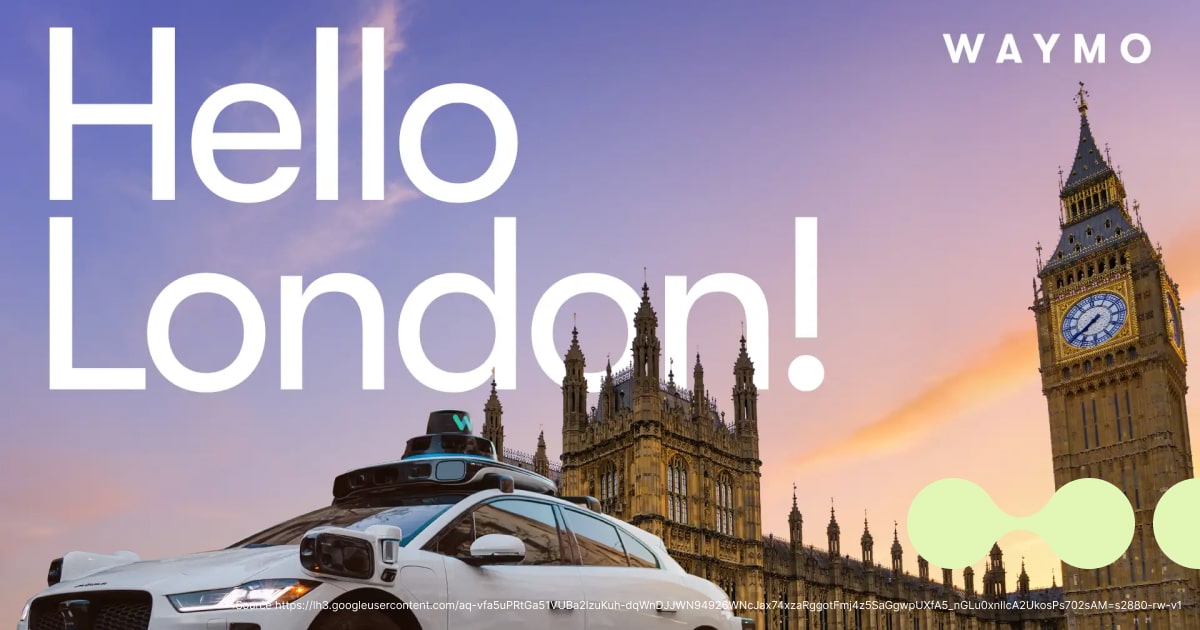
Waymo plans to launch its first international robotaxi service in London in 2026. It has been testing in Tokyo as well, but the London deployment seems closer to launch.
The fleet will use the all-electric Jaguar I Pace vehicles equipped with the Waymo Driver system. Testing with safety drivers starts first, followed by fully driverless rides once regulators are satisfied.
Fleet operations and maintenance, likely including the robotaxi charging, will be handled by Moove, a fleet specialist that has worked in the US before.
If timelines hold, London becomes the first major European city where you can book a fully driverless ride in a real robotaxi, through a dedicated app.
Bolt and Pony.AI, Europe in 2026
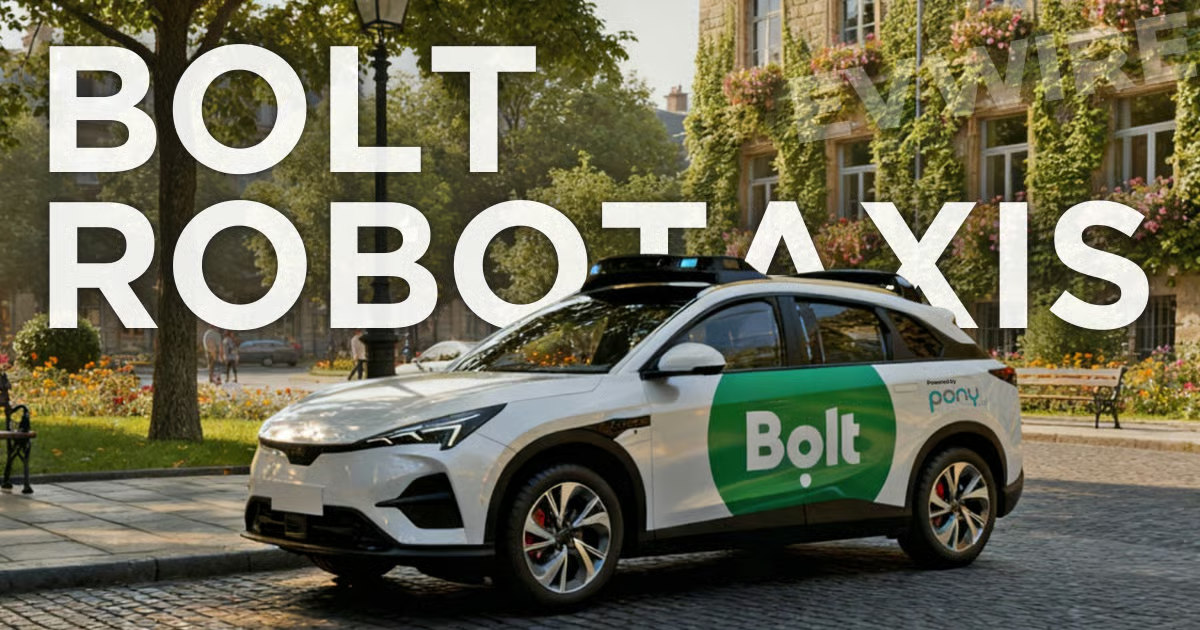
This partnership was announced just in time for our article – the large homegrown ride-hailing platform Bolt has partnered with Pony.AI, a robotaxi player which already has 720 robotaxis operating in large Chinese cities and increasingly also in the Middle East.
The partnership is set to start in Bolt’s ride-hailing platform in 2026 and expand in both EU and non-EU markets.
Markus Villig recognizes how Europe is falling behind in the autonomous vehicles race, as he said to Sifted:
“Self-driving or physical AI in the real world is going to be as revolutionary as AI in the digital world. But the EU is paying zero attention to that at the moment. And it’s a massive risk. About 10% of the EU’s economy is involved in making cars. And if we miss this wave, we’re not going to have our own self-driving car capabilities in Europe. It’s going to be a disaster.”
Lyft and Baidu, UK & Germany in 2026

Lyft and Baidu are preparing a similar move for robotaxis in Europe. In this case, however, both are (seemingly) completely foreign players to Europe – Lyft being the Uber and Bolt-like ride-hailing giant from North America, and Baidu from China. Or… are they?
Lyft made a strategic play entering Europe by acquiring FreeNow, the taxi and e-mobility app from BMW and Mercedes-Benz in April for €175M. This gave it access to millions of ride-hail users over nine European markets, and perhaps even more notably, access to the permits and ways to deal with the robotaxi regulation Europe has set for deploying in these markets.
Lyft and Baidu have announced they will launch Baidu’s RT6 robotaxis (the one it has launched in thousands in China and some in the Middle East) on the Lyft app in Germany and the UK (assuming it’ll be London) in 2026, pending regulatory approval. Then, expanding to ‘thousands of vehicles’ across Europe.
I would also expect the FreeNow app will just be rebranded to Lyft, soon. The Baidu robotaxi is an interesting choice, as it differs significantly from the Waymo vehicle as being a purpose-built robotaxi by Baidu, with a cost of <€30k, as opposed to the estimated cost of a €100k or more for Waymo-fitted Jaguar.
Lyft and Waymo do partner in the US as well, jointly launching a service in Nashville, Tennessee, in 2026.
Uber and Momenta, München in 2026
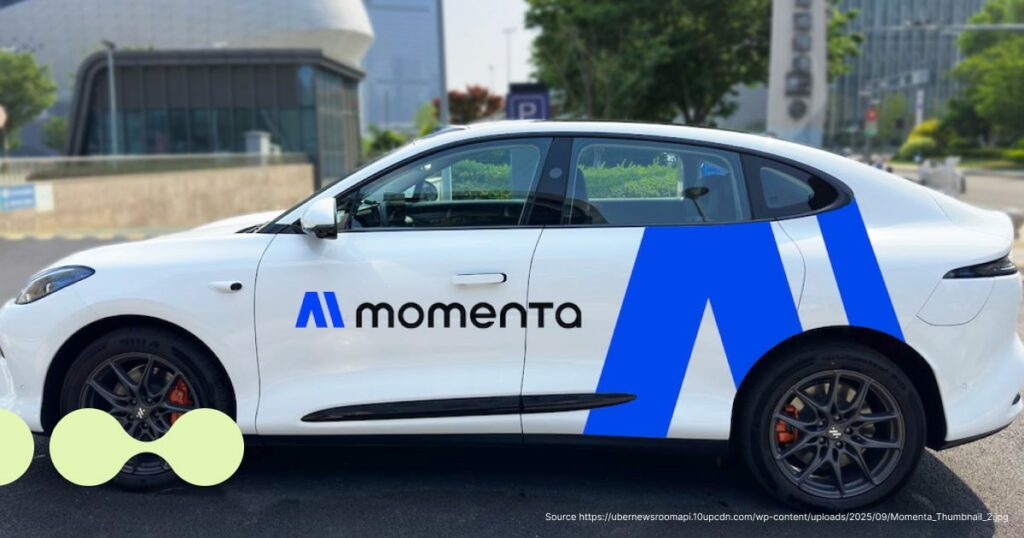
In München, Germany, Uber and another Chinese robotaxi technology provider, Momenta, have announced plans to test the service from 2026, again under tight geofencing and regulatory oversight. However, I already saw Momenta show videos, at the IAA conference in München in September, of testing the vehicles live with IM Motors vehicles in the München downtown area.
Uber and Wayve, London in 2026
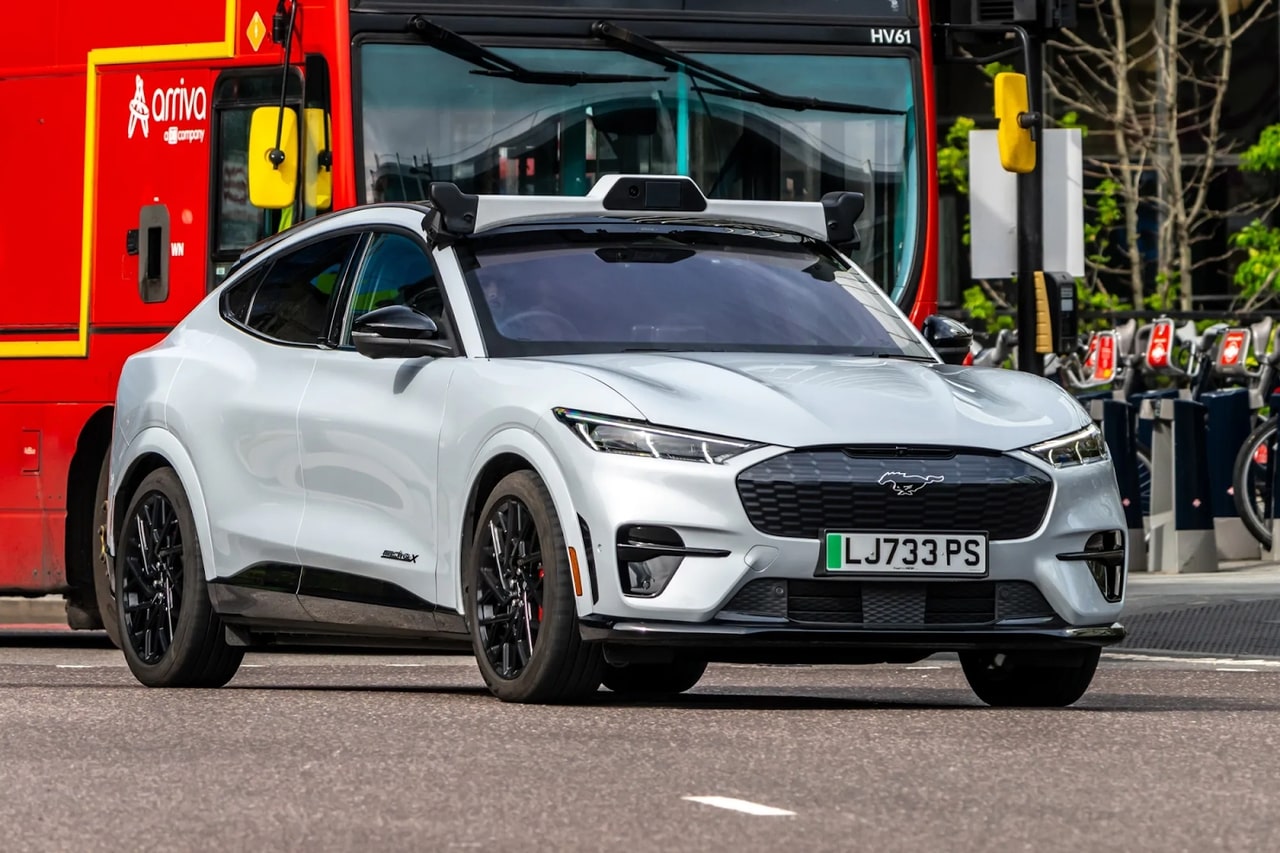
Uber and the European-grown robotaxi technology company Wayve have announced a partnership to launch trials of fully autonomous robotaxis in London starting in spring 2026. Although the vehicle is not confirmed, Wayve has been testing mostly with electric Mustang Mach-E’s so far. This is the first major deployment under their multi-year agreement (Uber is also an investor in Wayve), and will involve integrating Wayve’s AI software into vehicles on the Uber platform.
Observation: ride-hailing apps will gather several robotaxi players on their platform, just like with human drivers
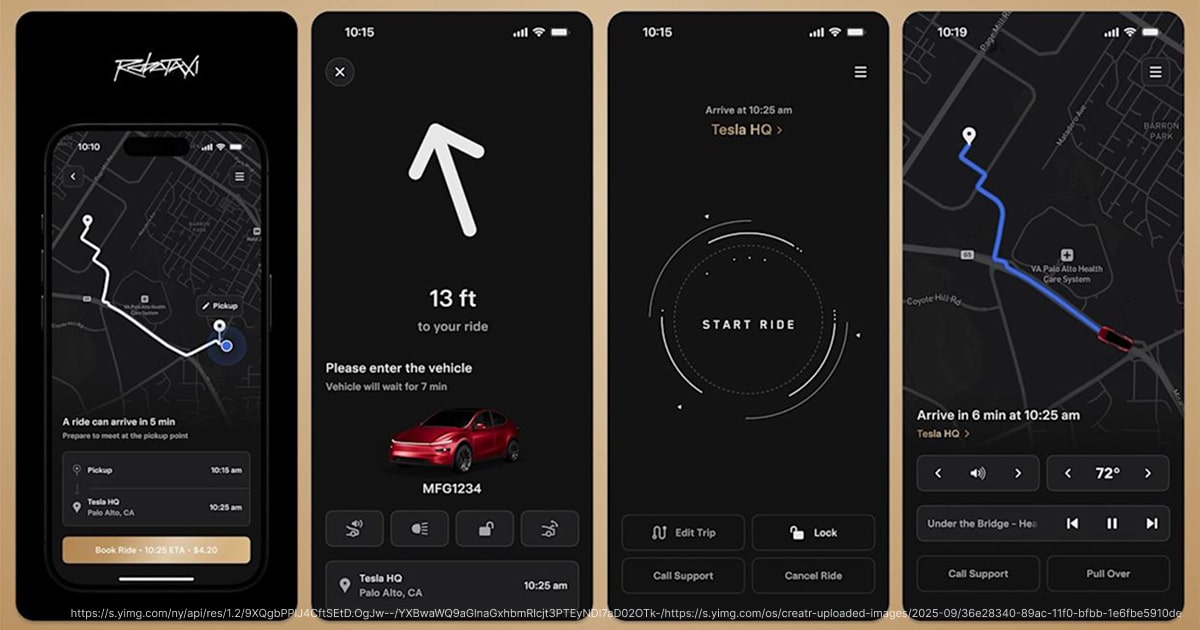
The clear way the robotaxis reaching the masses in European cities will be through the ride-hailing apps they already use (Bolt, Uber, now Lyft) and a few robotaxi pure-play apps (Waymo, Tesla Robotaxi). The former will be the most casual way of introducing the, perhaps slightly surprised, customers to the sudden robotaxi option on their favorite ride-hailing app.
And while the service that the stand-alone players like Waymo and Tesla offer is very clear – the customers will know exactly which type of vehicle and service they get – most ridehailing platforms are doing the same thing they’ve always done: aggregate different providers and mixing the experience for the customers. This means that when using a single ride-hailing app, like Uber, you might get a Wayve robotaxi one time, the Momenta one the next, and perhaps WeRide or someone else on your third ride.
Local pure play: Verne from Rimac, in Zagreb 2026
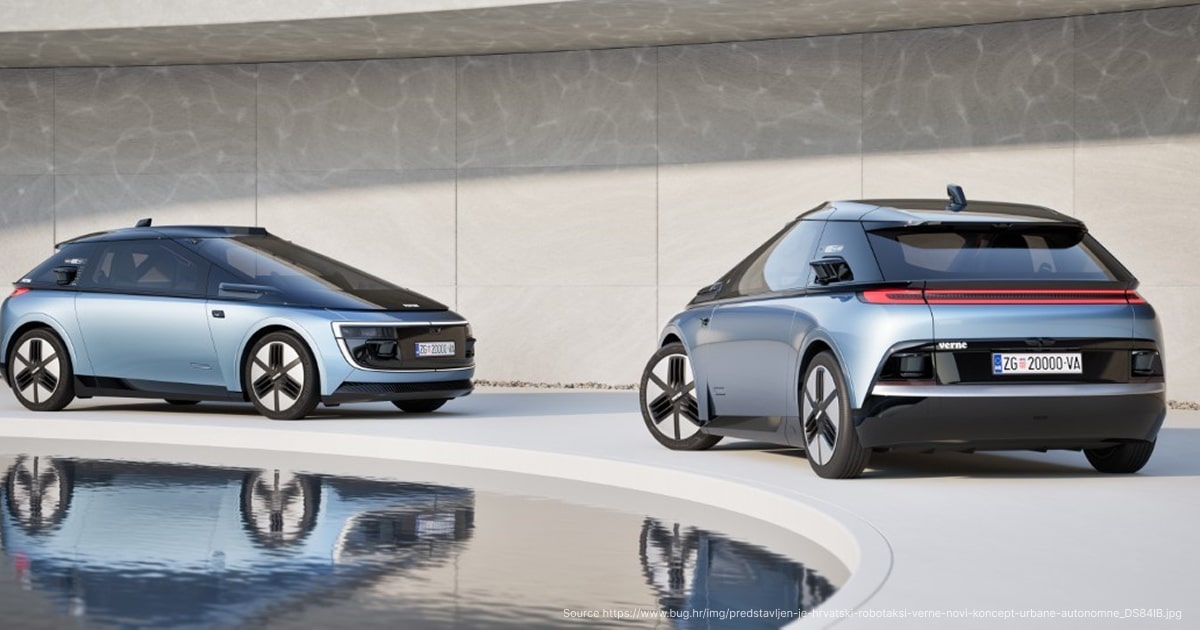
Then there is Verne, the Rimac-backed robotaxi company that might become Europe’s most visible homegrown player. Verne is purpose-building a small two-seat electric robotaxis, operated only as part of a robotaxi service.
The ecosystem combines the vehicle, a dedicated app, and a city “mothership” depot for maintenance and robotaxi charging. The first launch city will be Zagreb in 2026. Verne has already signed agreements with 11 other cities in Europe and the Middle East, and plans to enter the UK and Germany after Zagreb.
Just last week, Mate Rimac showed on video that they are on track with the plans by having built 60 prototypes of the Verne robotaxi so far.
For Central and Eastern Europe, Verne shows that the region is not only a customer for imported robotaxis, and does not have to be the last to incorporate innovation.
Tesla Robotaxi in Europe in 2026? The wildcard

Tesla has already launched a robotaxi service in the US and is ramping it up – with a fleet of nearly 150 robotaxis across San Francisco and Austin. Since it launched in July 2025, it has been using safety drivers in the car while giving rides. The target is to remove the safety driver, at least in Austin, by the end of the year.
Tesla is currently the only fully pure-play robotaxi player live in the Western world, as it is responsible for the whole chain: from the vehicles (Tesla Model Ys), the underlying hardware and software stack (Full Self-Driving, FSD), the robotaxi charging and fleet operations, the Robotaxi app as a platform, and all that comes along with it.
Currently, Tesla offers its robotaxi rides in the un-modified Tesla Model Ys that roll off the Giga Texas production line – in the second quarter, however, it plans to introduce its purpose-built robotaxi, the Cybercab. It’s an electric two-seater with butterfly wings, a large trunk, and it has no steering wheel or pedals, just a large screen in the middle for the two riders.
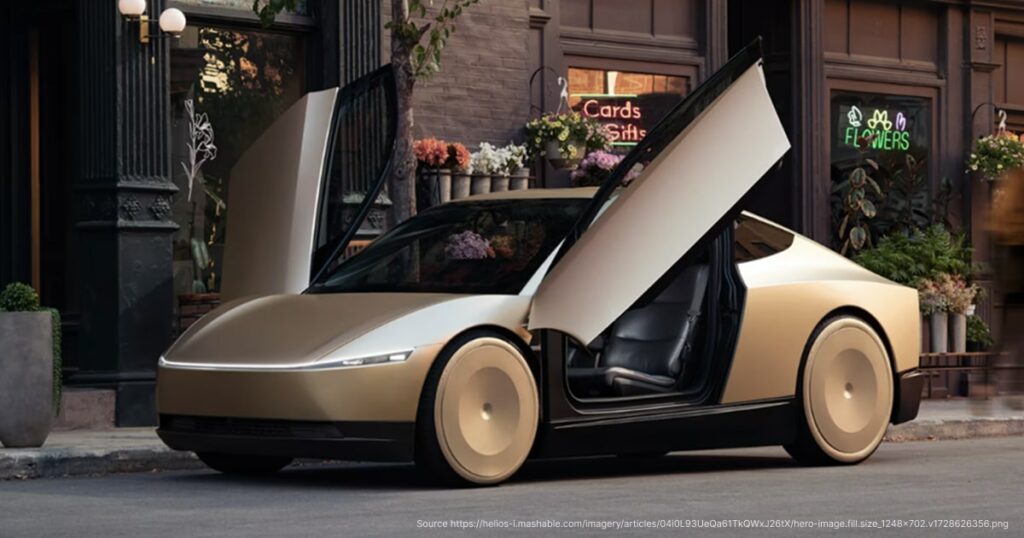
The cost of making the Cybercab is pushed as low as possible – something that Tesla excels at while keeping the quality – and it is set to be built at nearly ridiculous speed and volume. No doubt that Tesla wants to flood the streets with the Cybercab.
Elon Musk is betting that it can serve most trips on the robotaxi network with the Cybercab since people mostly ride alone or together as two. And Waymo Q3 2025 occupancy data confirms it, as 90% of Waymo robotaxi trips in California, its main market, so far statistically have 2 or fewer people.
To be clear, Tesla Full Self-Driving (Supervised), which is the technology Tesla also offers to its vehicle owners and an unsupervised version of which is used in the robotaxis, is not yet live in Europe, only usable in the US, Canada, Mexico, New Zealand, Australia, and China.
While there has been a lot of media noise around the capabilities of Tesla’s FSD over the years, and we in Europe haven’t experienced nearly any of it since we’re stuck with the old Autopilot version, they have actually managed to build out what they promised, or at least nearly all of it, with the latest versions.
Tesla proved that a vision-only approach, using nothing but 8 vehicle cameras over the LiDAR and radar sensors that other robotaxi players use for their systems, alongside cameras, actually works – evident by the latest user videos out of the US.
Why I’m saying latest videos is because the software capabilities have done significant leaps forward within the last months, and the V14.2 and higher seem to offer Tesla owners hundreds of miles of driving where they don’t have to intervene – the car does all the driving.
Now, just these weeks, Tesla has been making its first real moves towards Europe.
The company says FSD could gain its first European approval in the Netherlands in February 2026, through the RDW process, with other EU markets following via mutual recognition and an EU committee vote. Regulators keep reminding everyone that safety and type approval rules will decide the outcome, not public pressure.
If FSD (Supervised) or a future unsupervised version clears those permitting hurdles, Tesla suddenly has millions of compatible vehicles already on European roads.
And it’s also a clear precursor for any Tesla Robotaxi launch.
To get European customers excited and offer legislators some extra ways of testing (and some, well, public pressure through media and people), Tesla last week launched FSD (Supervised) ride-along events in Germany, Italy, France, and the Netherlands.
This is where a Safety driver, a Tesla employee, will sit at the wheel of a Tesla with their hands below the steering wheel, but the Full Self-Driving system drives the car. The employee is there to intervene when necessary, and based on the videos in the link above, it seems rarely needed.
The pattern is clear. Europe is building a careful regulatory path that makes it hard to launch fast, but once a system is authorised, the same rules can carry it across many markets.
Two pieces of European legislative AV framework matter most:
- UNECE regulations and EU type approval. For driver assistance and automated driving, Europe works within the United Nations Economic Commission for Europe (UNECE) rules. These define what systems like Automated Lane Keeping are allowed to do, and how Automated Driving Systems will be approved. New UNECE regulations for higher levels of automation are due to enter into force around 2026 and feed directly into EU law.
- The Automated Vehicles Act in the UK. The UK, outside the EU but still aligned with many UNECE rules, passed the Automated Vehicles Act in 2024. It allows authorised self-driving services on public roads from 2026 and sets liability rules for operators and insurers. The government explicitly talks about driverless taxis and shuttles on British roads by 2026, with a fuller rollout as the Act is implemented by 2027. This act is why you see the international companies play for rolling out their robotaxis in London first.
There are also some robobus & robovan deployments to look for:
Europe’s public transport and shuttle experiments are also being tested on an increasing scale.
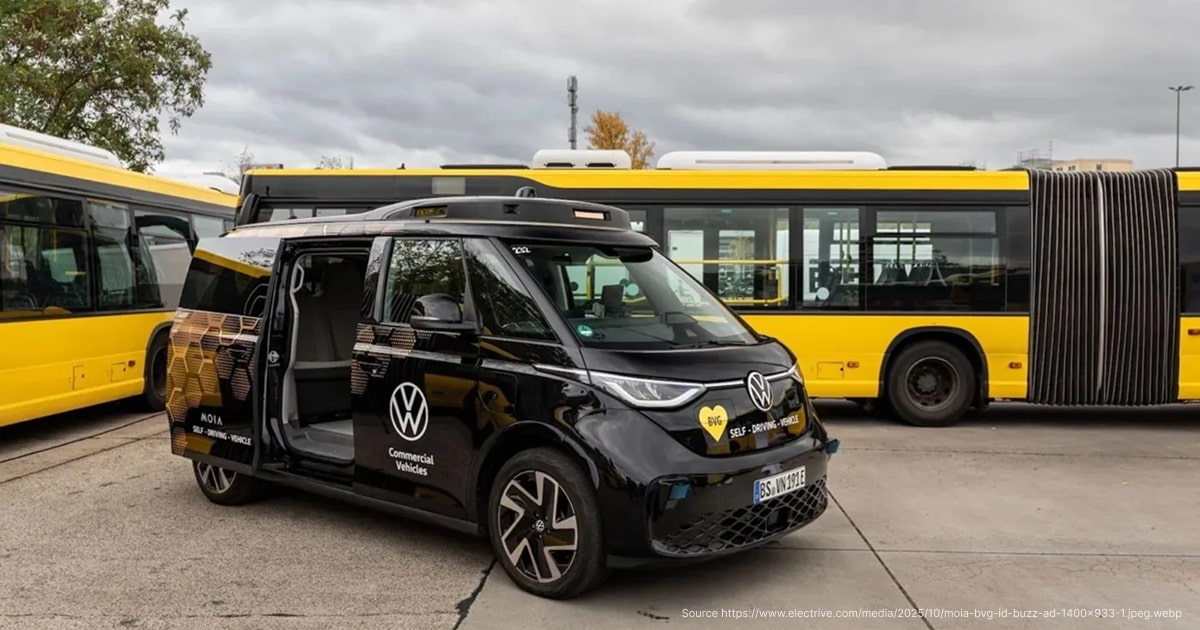
- In Berlin, BVG and MOIA are launching autonomous ID. Buzz AD shuttles in the NoWeL4 project. Five vehicles will operate in a 15 square kilometre area in northwest Berlin, serving about 80 stops. Passenger trials with safety operators on board start in the first half of 2026.
- In Leuven, WeRide’s Robobus has Belgium’s first federal Level 4 test permit. The service runs as an autonomous shuttle between the main station and a nearby corridor, with a safety officer during the pilot.
- Stellantis and Pony.ai will begin real-world testing of autonomous Peugeot e Traveller vans in Luxembourg, with a view to deploy Level 4 commercial services in more European cities from 2026 onward. The first focus is light commercial vehicles, but the same stack can later support passenger services.
How robotaxis will operate in European cities
From a rider point of view, most European robotaxi and shuttle services will feel familiar, especially to anyone who has used ride-hailing.
You open an app, select a pickup point and destination, and get matched with a vehicle. The key difference is obvious – there’s nobody in the car that arrives. Most people consider this a win, for either safety or convenience.
With robotaxis, some other specifics make a difference, such as it being a geofenced service. Most robotaxi services only operate in specific geographical limits where you can order them, and they are not able to go outside that to drop you off. The limits mainly come from either technology (non-mapped areas) or legislative (permits for operations).
The robotaxis might also not operate in certain conditions, like in heavy snow, extreme storms or more, the service can be paused or restricted.
The vehicles will have a control centre watching the driving and intervening if needed. Basically there are centers behind each service, with actual people behind the screens with steering wheels, and there are many vehicles per each person that are accessed if trouble arises.
Pricing-wise, the benefits are yet to play out because we’re in the early stages, but in theory the electric robotaxis and its systems should significantly lower the cost of each ride as their own costs are dramatically lower than with human drivers. This will, however, only happen a larger scale. Currently on the US side, Waymo is priced higher, yet Tesla lower, than regular ride-hailing rides, but that seems to be more about company policy for now.
Is Europe behind in robotaxis after all?
If the trials turn to scaled networks quickly in the middle of 2026, perhaps not. If legislation keeps stopping the inevitable outcome, perhaps we are behind more than we think. Rules to ensure safety must be applied, certainly, but somehow, other regions have already beaten us to it.
We’re not the first, but we’ll still have the same chances to scale up in different cities.
The part where we are behind, however, is actually owning key parts of the service and supply of the robotaxis ourselves. Europe has only a few home-grown robotaxi industry players, and it seems we are mostly just bringing in both the services, tech, and vehicles from outside of Europe.
The homegrown players need all the support they can get to rise to the levels of the incoming competition, but for some reason, there is a much larger lack of support here.
Wayve’s founder has noted that even though they are born and bred in Europe and scaling up here as well, most of the investors still need to be from outside of Europe.
Mate Rimac felt the need in the latest video to express several times that the Verne robotaxi is not built with public taxpayer money, and most investors are private instead.
Markus Villig, the founder of Bolt, said that the EU is paying zero attention to self-driving or physical AI in the real world at the moment. And it’s a massive risk. He said that “If we miss this wave, we’re not going to have our own self-driving car capabilities in Europe. It’s going to be a disaster.”
It is becoming clear that robotaxis in Europe will mean a mix, the place where the robotaxi industry converges. The US and China sides end up here, both partnering up and competing with each other and our local heroes.
The general public, investors, and legislators of Europe need to realize that we need to support our handful of local robotaxi companies. Because this future will arrive across Europe anyway, the only change is whether we participate in and win it… or just watch it happen.