
For EVs, winter exposes the gap between brochure numbers and everyday driving. The same EV that feels effortless in mild conditions can feel less predictable when the battery pack is cold, the cabin heater runs continuously, the charging is slowed down, and wet roads add drag. None of that means the technology “fails” in winter. It means you need the right yardsticks to judge cold-weather capability.
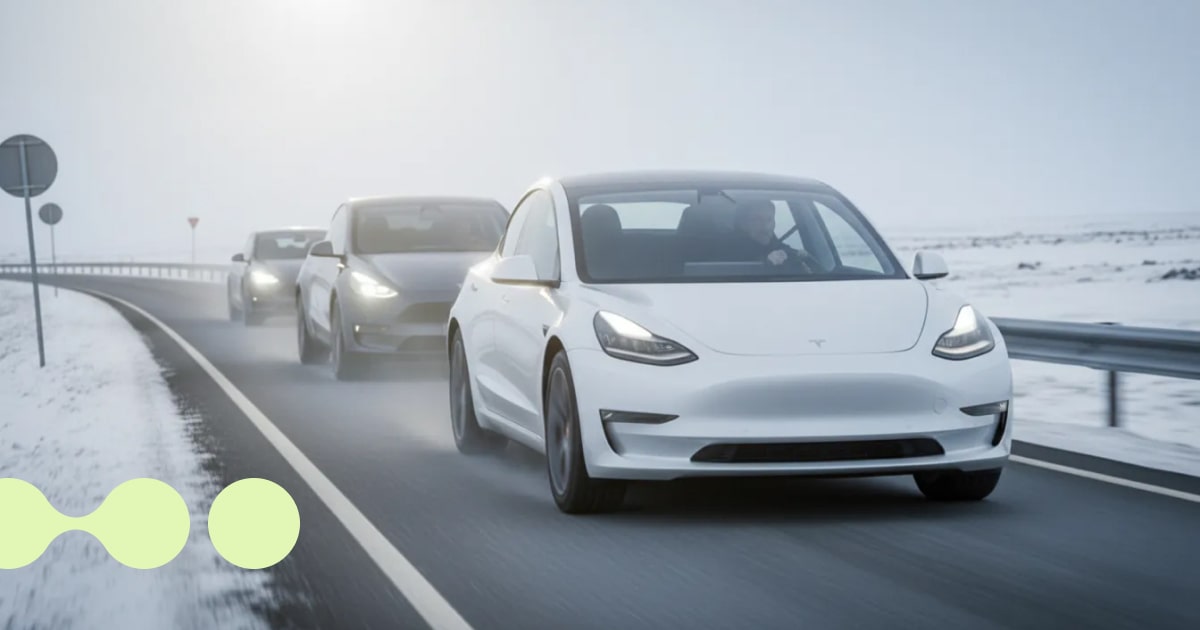
For buyers, the practical question is not whether an EV can operate in winter. It can, and the fact that the northern countries of Europe are leading the EV adoption proves it. The question is whether winter range and fast charging stay consistent enough to plan around. That is where real-world, same-day, same-route testing beats any marketing claims or a single lucky commute.
Our guide utilises results from the Norwegian NAF and Motor El Prix Winter 2025 as its foundation, as the test compares multiple models under the same winter conditions and publishes both range outcomes and charging results. If you came here asking, “Which electric cars perform best in cold weather?” the answer below focuses exactly on that measurable winter predictability, not hype.
Why does winter cut EV range and change charging?
Before we rank how the cars perform, it helps to pin down what winter actually does to an EV. Cold weather does not create just one specific problem. It creates a stack of small penalties that add up. Once you can see those penalties clearly, the test results make more sense, and your EV buying criteria get sharper.
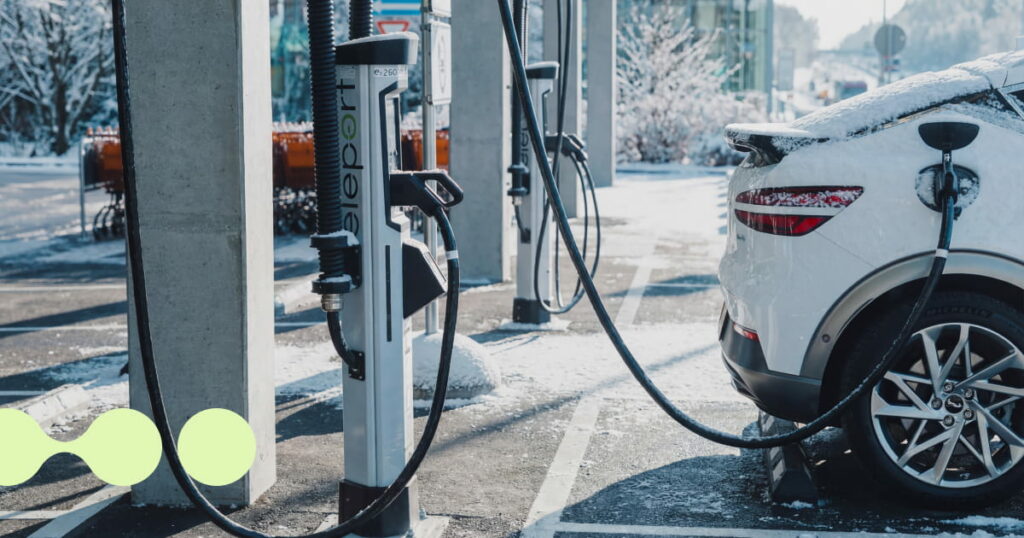
What happens inside the battery when temperatures drop?
Start with the battery pack, because it drives both range and charging speed. Lithium-ion batteries rely on chemical reactions and ion movement that slow down as temperatures fall. A cold pack can still deliver power, but it does so less efficiently.
During DC fast charging, the electric car also often limits the power it accepts until the pack warms up, both to protect the cells and to keep charging stable. Dig deeper into the why with our guide on factors that slow down charging.
The biggest drop in cabin heating comes when using an EV with no heat pump, one that relies only on the resistance heater. In fact, opting for an EV with a heat pump can mean losing nearly three times less in range at 10°C.
Why does heating feel like range theft?
Cabin comfort is the biggest winter load you directly feel. In a gasoline car, the engine produces waste heat that the heater can reuse. In an EV, the cabin heater draws electricity from the battery, either through a resistive heater or a heat pump, so warmth has a direct energy cost.
Short trips amplify the effect. You pay the heating “startup cost” each time you set off, even when pre-heating the cabin, and then you park before that energy has time to spread across a longer trip distance. That is why drivers often notice the biggest winter range loss on school runs, errands, and stop-start commuting.
This leads to the next question: since winter is unavoidable, which design choices help an EV handle it with less drama?
What explains electric cars’ performance in cold weather?
Now we can talk about what separates a winter-friendly EV from one that merely copes with winter driving. The best electric cars for cold weather do not bypass physics. They reduce winter EV range loss through smarter heat use and keep fast charging in cold weather more predictable when the battery pack is cold. In practice, electric cars’ performance in cold weather depends less on one headline range claim and more on the battery thermal management system, battery preconditioning, and overall winter efficiency.
Which parts of the electric car matter most in winter?
Think of winter readiness as three systems working together, because each one shapes cold weather EV range and winter road trip planning.
1. Thermal management. A strong battery thermal management system efficiently heats the pack, keeps the battery temperature within a safe window, and limits wasted energy. That stability also improves DC fast charging winter performance and produces a steadier winter charging curve.
2. Cabin comfort efficiency. Heated seats and a heated steering wheel keep you comfortable at a lower cabin temperature, which helps protect real-world EV range on short trips due to less energy demand. An EV with heat pump often reduces heating energy use under typical freezing conditions, although heat pump performance varies by model and temperature.
3. Software that plans. Battery preconditioning for fast charging matters most on road trips. Many EVs only precondition reliably when you navigate to a fast charger via the built-in route planner, helping preserve charging speed in cold weather.
These are key EV range factors because they influence both cold-season distance and the speed at which you can leave a charge stop. From here, it makes sense to move from theory to EV range test data in winter, because same-day, same-route testing reveals which models stay predictable under all conditions.
How did NAF test electric cars in winter 2025, and why trust it?
NAF and Motor run the El Prix twice a year, using the same route and a consistent procedure so readers can compare winter EV range and fast charging in cold weather on equal terms. In the winter 2025 edition, they tested roughly two dozen EV models that are new to the public roads in Norway, then followed with a standardised 10%-80% charging session.
The winter 2025 range day ran in temperatures from about -6°C to +8°C. Conditions included freezing rain and an enforced stop of roughly 45 to 60 minutes while the convoy waited for trucks to fit chains. This matters because electric cars in cold weather experience the same kind of delays and the same slippery roads at the same time.
Two parts of the method are especially useful if you want real-world EV range data rather than the usual optimism shown in brochures:
- Range: measured to a real “end of pack” limit
NAF now ends the range test when a car can no longer maintain the road’s speed limit. That captures the point at which the car becomes impractical to drive in normal traffic, which is more meaningful than stopping at the first low-battery warning. - Charging: a road-trip style 10% to 80% session
On day two, the cars drive for at least two hours to warm up, then run down to below 10% state of charge. If the model supports battery preconditioning, the team activates it, then times charging to above 80%, and records power and energy to build a charging curve. This setup mirrors a realistic DC fast-charging stop more closely than plugging in with a cold-soaked pack straight from a parking lot.
This context matters because if electric cars in cold weather ever disappoint anyone, they do it in predictable ways. Either winter range drops more than expected, or fast charging turns inconsistent because the battery never reaches the right temperature window. With the method clear, you can talk about “winter-ready” models without pretending the answer lives in a single metric.
Which design choices matter most for electric cars in winter conditions?
Before the top-five list, let’s translate the test into shopping logic. Your driving pattern decides what “best for winter” actually means, so the same data can lead to different decisions.
If you mostly commute and charge at home, prioritise steady consumption, efficient cabin heat, and predictable short-trip behaviour. If you often road-trip in electric cars in cold weather, DC charging consistency becomes just as important as distance, because a slow or unstable 10% to 80% stop can erase any advantage of a bigger battery. For many buyers, the better electric car is the one that stays steady and boring through winter, not the one that wins a spec-sheet contest.
Now, here are five EV models that stood out overall, based on NAF’s final range deviation versus the brochure standard called WLTP, and their 10% to 80% charging results.
Which five models proved to be the toughest electric cars in cold weather?
Winter usually does two things at once: it trims real-world EV range, and it makes fast charging harder to predict. The five models below performed best on both problems in the Norwegian NAF and Motor El Prix Vinter 2025 winter EV test, which is why they rise to the top when you ask, “What are the best electric cars for cold weather?”
| Rank | Model | WLTP (km) | Achieved (km) | Deviation | Winter takeaway |
| 1 | Polestar 3 | 560 | 537 | -4% | Excellent winter efficiency for a large SUV |
| 2 | BYD Tang | 530 | 479 | -10% | Strong consistency for a big family haulier |
| 3 | Mini Countryman | 399 | 358 | -10% | Its compact size did not stop it from holding a range well |
| 4 | Lotus Emeya | 500 | 429 | -14% | A performance sedan that still kept losses controlled |
| 5 | BYD Sealion 7 | 502 | 429 | -15% | Solid winter showing for a modern midsize SUV |
Source: NAF El Prix Winter 2025.
Let’s quickly sum up the winter results in the table. These five models stayed relatively close to their rated range, each for a slightly different reason, from strong thermal control to plain efficiency and predictable auxiliary energy use. In practice, these are key EV range factors that shape electric cars’ performance in cold weather, especially when heating demand and battery temperature management become dominant.
Polestar 3
Polestar 3 stayed unusually close to its rated range, likely because its thermal system likely keeps the battery within an efficient temperature window, limiting heat loss. That kind of approach tends to protect EV car range on long drives and helps explain why it looked so composed among electric cars in cold weather. For road-trippers, range is only half the story, so be sure to check real-world charging electric cars performance in cold weather as well.
BYD Tang
The BYD Tang’s stable winter result points to controlled auxiliary energy use, featuring a sensible cabin-heating strategy, efficient battery conditioning, and steady consumption despite its large cabin and family load. A 10% deviation is a practical win because it reduces daily guesswork. Consistency often matters more than peak-range claims for electric cars’ performance in cold weather, especially for drivers who want predictable planning from an EV that sees frequent sub-zero starts.
Mini Countryman
Mini Countryman impressed because smaller batteries usually suffer bigger percentage losses in winter. Instead, it held close to WLTP rating, suggesting strong efficiency and well-managed heating rather than brute capacity. If you want compact dimensions without winter anxiety, it is a credible option. Efficiency can beat battery size, particularly when your commute includes repeated short trips.
Lotus Emeya
Lotus Emeya avoided the typical performance-EV winter penalty through tight thermal design and intelligent control software that limits cold-weather waste. Its deviation stayed moderate while still delivering serious distance. It is also capable of one of the fastest high-speed charging under ideal conditions of EVs sold in Europe, though the charger hardware itself can become a bottleneck when temperatures drop.
BYD Sealion 7
BYD Sealion 7 combined real distance with a controlled deviation, which is usually hard for SUV-shaped EVs. Matching Emeya’s achieved 429 kilometres in range while staying close to expectations suggests efficient temperature management and predictable consumption. If the model includes a heat pump, that can reduce the energy cost of comfort in freezing conditions, which matters for families who want electric cars in cold weather to behave consistently.
Does charging feel slower in winter, and what is really going on?
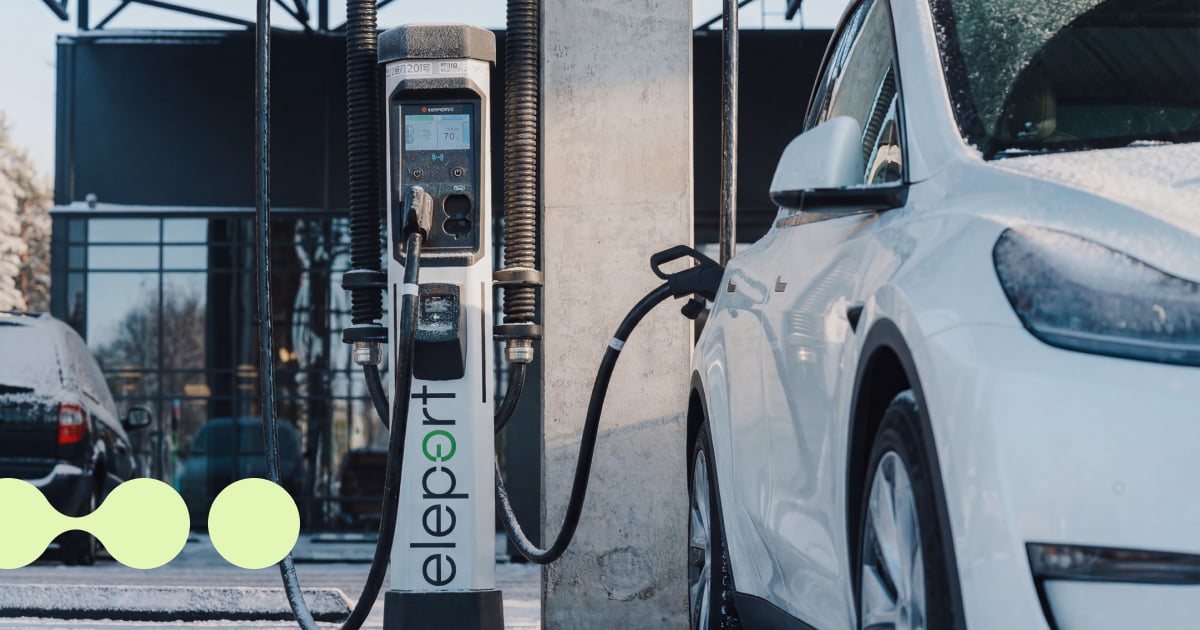
This is one of those winter and electric cars effects that feels inconsistent until you separate the causes. Yes, winter fast charging often feels slower, and the two constraints usually stack.
First, the car protects the battery when it is cold. A cold pack cannot accept high power safely, so the car reduces charging power until the battery “warms up”. That is why a session can start slow and only improve later, even on a powerful charger.
Second, the charger can cap power even if your car could accept more. The Norwegian Automobile Federation (NAF) highlights a common European limit: many CCS fast chargers top out at about 500 A. Power is voltage times current, so a typical 400 V pack hits a ceiling around 400 V × 500 A ≈ , 200 kW under ideal conditions. A higher-voltage pack (often marketed as 800 V) can deliver more power on the same current-limited charger because it gets more watts per amp, giving it more headroom before the charger becomes the constraint.
Put those together, and winter charging stops looking random. A cold pack can force the car to request less power, and the charger can limit power even after the pack warms. That is why peak kW claims rarely match what you see in January. For planning, focus on cold-weather 10-80% times stated and route to the charger with in-car navigation when your model supports battery preconditioning. Arriving with a warm pack is the most reliable way to avoid a painfully slow charging session start.
How can you improve EV range in cold weather on your own commute?
Range in winter is not only a property of the car. It is a property of the whole trip: battery temperature at departure, cabin heat demand, cruising speed, road conditions, and whether the pack reaches the charger being warm enough to take in maximum power.
A practical way to think about it is simple. In winter, you spend energy either on motion or on avoidable losses. Most commuters can cut those losses without changing their commute.
Which preheating routine pays off fastest?
Preheating while plugged in delivers the best return because it improves comfort without pulling heavily from the battery at the start of a trip.
A practical routine: plug in at home or work whenever possible, then start preheating 15–30 minutes before departure using a scheduled departure, vehicle app, or a manual start. Use the seat and steering wheel heat first since they warm you directly with far less energy than full cabin heating. Add cabin heat only when you need it for visibility and comfort. This reduces the biggest winter drain for many drivers: sustained HVAC draw from the pack.
Once you leave with a warm cabin, driving style does the next part of the work. Smooth acceleration, earlier lift-off, and gentle deceleration avoid repeated power spikes that turn into waste heat. On highways, a slightly lower cruising speed often returns more range than people expect in cold, wet, or windy conditions.
If you plan to fast-charge, route to the charger through the car’s navigation so the vehicle can precondition the battery when supported. A conditioned pack improves charging speed and makes stop duration easier to plan around.
What should you keep in the electric vehicle for winter travel?
A winter kit is less about apocalypse prep and more about keeping a delay from becoming stressful. EVs can keep you warm for a long time, but cabin heat still draws from the battery.
Aim for warmth, communication, and self-recovery. A blanket, hat, and gloves cover the warmth layer. A phone charging cable covers communication. In snow-prone areas, a small shovel helps with self-recovery. Add snacks that stay edible in the cold so you do not end up with one frozen block of “food.” The payoff is practical and psychological: you know you’ll be ready for any situation outside your control.
Final takeaway
NAF’s winter testing makes a practical point about winter and electric cars: some models make low temperatures a scheduling risk, while others remain steady enough to plan around.
So, what are the best electric cars for cold weather? Use a simple two-step screen that matches how winter trips actually fail.
First, look at winter range loss at motorway speeds, not mixed-cycle numbers. That tells you whether your planned leg stays realistic once heater load, dense air, wet roads, and winter tyres start adding drag. Second, look for repeatable DC fast charging from 10% to 80% after preconditioning. You are not shopping for a peak kW spike; you are checking whether the car arrives warm, ramps quickly, and delivers similar session times stop after stop.
If a car scores well on both, winter stops become predictable, and route planning stays simple. If it only excels at peak kW or leans on a big battery while charging varies, you end up budgeting extra time and extra buffer energy, which means planning around weather rather than around distance.
FAQs
How much range will I lose in freezing weather?
Loss varies widely by model and conditions. In NAF’s winter 2025 field test, the spread ranged from about 4% to 29% relative to WLTP, which shows why model choice matters. In controlled research, extreme comparisons can look harsher, especially when cabin heating stays high.
If you want a realistic planning rule:
- Assume 15%–25% loss for many modern models in typical freezing conditions
- Assume more loss on repeated short trips with lots of heating demand
This is why people ask do electric cars lose charge in cold weather. The pack does not “leak” charge like a faulty phone battery, but the vehicle does spend energy to keep you comfortable and also to protect the cells.
Do electric cars lose range in cold weather?
Yes, this is inevitable. The size of the hit depends on pack temperature, trip length, speed, road conditions, and how much cabin heat you demand. Short trips usually show the most significant percentage drop because heating costs do not have time to spread over a sufficient distance.
Does cold weather permanently damage the battery?
Cold itself usually does not permanently damage a healthy pack. The greater risk comes from how you treat a cold pack, especially repeated fast charging without proper thermal preparation. Modern EVs protect themselves with software limits, heaters, and charge-rate controls.
What helps long-term health:
- Avoid leaving the pack at 0% for long periods, especially in cold weather.
- Follow the manufacturer’s daily charge guidance (often 70%–80% for routine use).
Let the vehicle manage preconditioning instead of forcing repeated cold fast-charge sessions
Does it take longer to charge an EV in winter?
Yes, you feel it most during DC fast charging when the pack is cold. That is why route-based preconditioning matters. Many drivers phrase this as: “Do electric cars charge slower in cold weather?” The practical answer is “often yes, unless the pack is warm when you plug in.” NAF’s charge tests warm vehicles first and precondition the pack when possible, which shows what a prepared winter stop can look like.
Will the car die faster if I get stuck in a traffic jam in the snow?
It will use energy to keep the cabin heated up, but “die fast” is not the typical outcome with a reasonable state of charge; quite the contrary.
In fact, a 60kWh battery would be good for about 40 hours of heating of the EV’s cabin, assuming a roughly 1.5 kW average use from the heat pump of the EV in colder weather. Discount that by however much you’ve used of the battery, and you can roughly estimate how long you could run the heater for in case of a traffic jam in the snow.
Smart habits for storm days:
- Start trips with more charge than usual
- Keep a blanket in the vehicle as a backup comfort layer
- Use seat heaters and a moderate cabin setpoint if you must idle for a long time
Will an electric car start in extreme cold?
Modern EVs usually start reliably in extreme cold because they do not need an engine to crank. They do need the pack to operate within safe limits, and the thermal system handles that automatically. In practice, electric cars in cold weather can start quickly, but you may see reduced performance until the pack warms.
If you park outside overnight, schedule preheating before departure. That single step often turns an annoying morning into a normal one.