


We are mostly past the chicken-and-egg problem.
You know, the one where there’s not enough EVs to make charging infrastructure viable and not enough charging infra to charge the EVs. The year is 2026 and with very few exceptions, we are already doing good enough in charging availability.
In 2026, the deployment of fast chargers is also keeping up with the same dizzying pace as the EV sales in Europe, which are set to have another record year. Our fresh Q1 2026 EV sales analysis shows another 26.2% year-over-year growth and us reaching every fifth car sold in Europe being fully electric.
So charger deployment from any EV charging network specifically is not a novel thing about the charging industry anymore. Rathem, what’s actually interesting about the latest trends in EV charging technology 2026 is the technology layer underneath and the whole business operations that have now evolved around making the charging networks actually viable and competitive.
In this article, we’ll take a look at the key EV charging innovations across Europe and all the trends we’re seeing in 2026 and beyond.
1. Megawatt charging arrives for passenger cars: BYD’s Flash Charging hits Europe
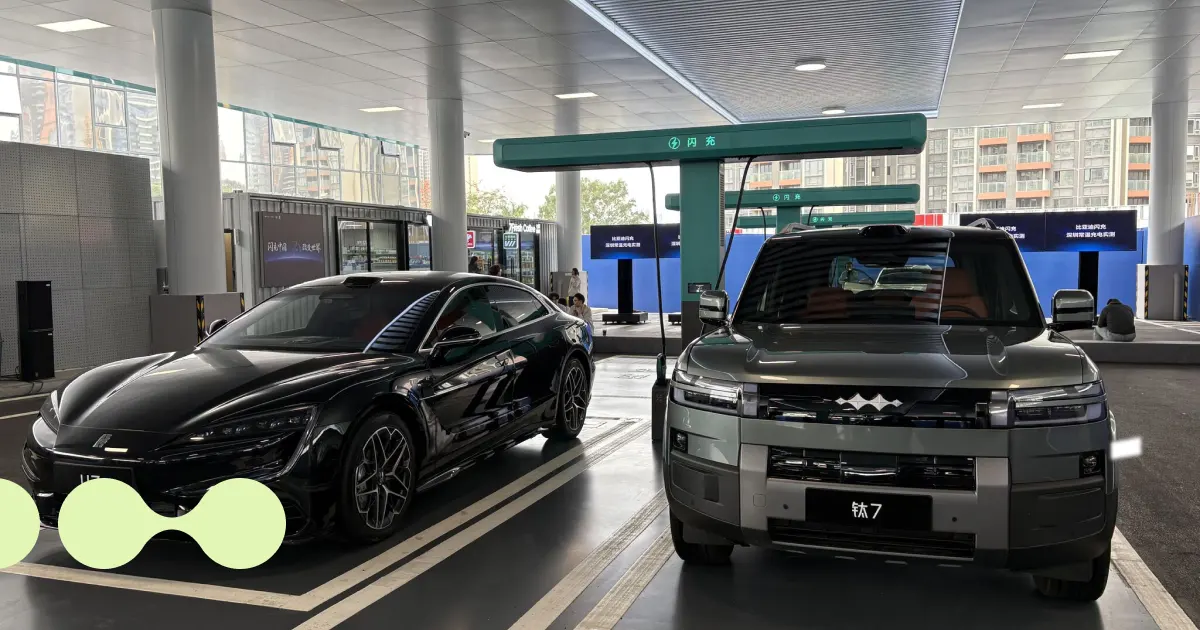
If we had to pick the single biggest EV charging innovation of 2026 so far, which is also about to hit Europe by a storm that most don’t see coming, it is BYD’s Flash Charging network. On April 8, 2026, at the Palais Garnier opera house in Paris, BYD officially launched Flash Charging in Europe together with the Denza Z9GT.
The numbers can make any one of us who owns a “regular” EV a bit dizzy.
In China, BYD’s Flash Chargers deliver up to 1 500 kW (1,5MW) using a dedicated dual-cable design. In Europe, on CCS2, the realistic peak is around 1 000 kW (1 MW) per cable, with the dispenser itself rated for 2 MW total across two stalls.
Compatible vehicles (Denza Z9GT is the first, more to follow) recharge from 10% to 70% in around 5 minutes, 10% to 97% in about 9 minutes, and even at −30°C it’s roughly 12 minutes.
This is the first time that we are talking of actual ICE-parity in refueling times of an EV. BYD is making a charging trip feel like a trip to the petrol station, and they’ve designed the whole experience around this.
If you’ve ever charged your EV when up north in the winter like yours truly have, you’ll be equally surprised about the −30°C performance of a roughly 12-minute fill-up. And I’m not sure if you noticed, but the “tapering off” of the usual charging curve is a bit different in scale here too, which allows the Denza to go 10-97% in 9 minutes.
BYD has committed to 3000 Flash Charging stations across Europe within 12 months, starting with Germany, France, Italy, Spain and the UK, with a total overseas target of 6000 stations.
Crucially, these chargers are CCS2 and open to any EV with a CCS2 plug, not just Denza and BYD. However, of course, not all vehicles can take in that much power, given they’re dependent on the 400V or 800V architectures and other limitations.
Within the BYD lineup, however, their goal is to be able to deliver the Flash Charging capabilities to all of their products, not keeping this EV charging innovation just for the premium models. That’s also visible, given the sheer scale of those stations they are building and have built already.
For context, in March 2026, BYD had already deployed 5000 Flash Chargers across 297 Chinese cities, targeting 20 000 stalls in China by the end of 2026. So this is not a marketing slide, they are actually out there “doing it” – and given I have seen how strong of a team they’ve built here in Europe thus far, these are clearly meant as real-world targets.
Will we see future charging technology push past even these barriers? Highly doubtful, this surely must be the peak for the passenger car charging. Right?
Peak kW numbers don’t really matter as much as they did before
The bigger reframe the industry has needed: peak kW is no longer the most useful number. What matters in real driving is sustained delivery, across temperatures, battery states of charge, and multi-bay sites with everyone plugged in at once. That’s where the EV charging innovations need to come into play to really cover all the bases about the technology at once.
A 1 MW headline that drops to 250 kW after 10 minutes, or that only works on an empty site, is not the same product as a 1 MW that holds. BYD’s battery-buffered architecture is partly an answer to that.
Three things make this technologically cutting-edge beyond the raw kilowatts: each Flash Charger is battery-buffered using two 190 kWh Blade Battery 2.0 packs as on-site storage (so a 1 MW charger doesn’t need a 1 MW grid connection), the dispenser uses an overhead “crane-style” liquid-cooled cable arm that keeps cables off the ground and light enough for any driver to handle (finally), and the vehicle side runs on BYD’s second-generation LFP Blade Battery and a 1000V architecture. Yes, EV charging innovation also expands to – or is limited by – the EV battery itself.
Will every passenger EV in Europe be charging at 1 MW by next year? Certainly not. Most cars today still can’t accept much more than 250-350 kW, and older generation or entry-level EVs even significantly less.
But BYD’s move forces the conversation upward, and Europe-built EVs on 800V (Porsche, Audi, Hyundai E-GMP, Kia, Genesis, the new VW SSP platform from 2026) sit right behind it.
It also raises a deeper point about who’s actually driving innovation in EV charging technology right now: the interesting second-order question is what happens when one automaker rolls out a faster public network than any Charge Point Operators (CPOs) in Europe. As far as I can see, BYD does want to collaborate with CPOs for quicker rollout, but real partnerships remain to be seen.
2. The MCS corridor for trucks finally takes its shape
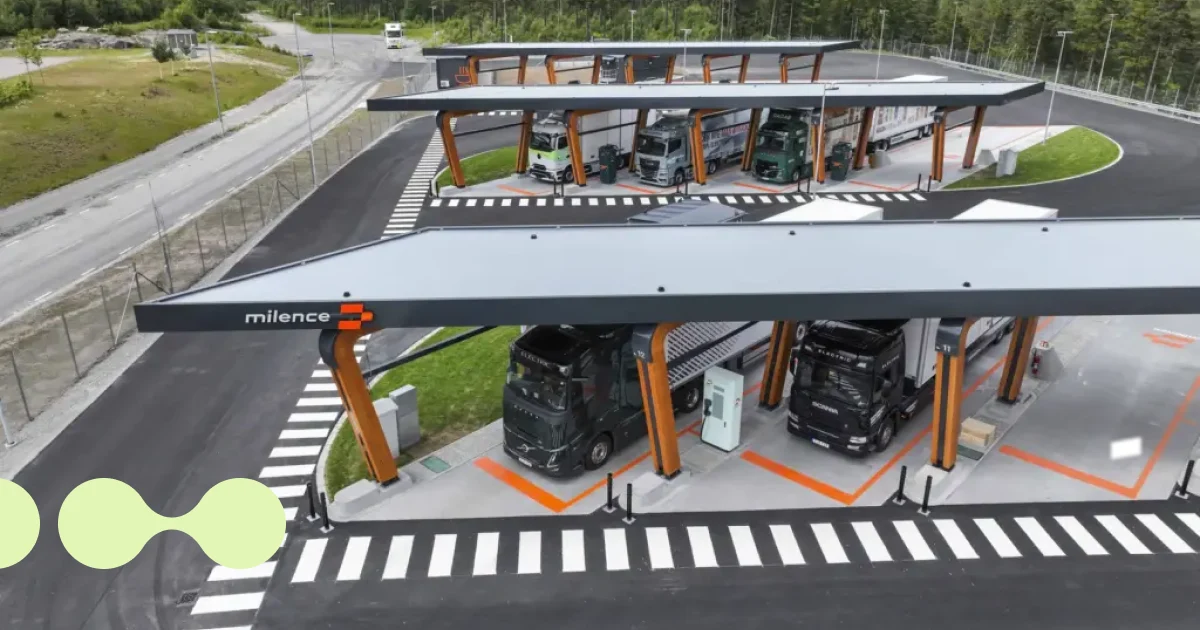
For heavy-duty trucking, megawatt charging is starting to look more like an actual working solution in 2026 with corridors built out, but keep in mind that the trucks themselves can not yet reach the Megawatt-level charge itself in Europe, or when they do, it’s currently only in prototypes.
I know this because just a few months ago, I went to see three different e-truck makers charge their prototypes at one of Europe’s first MCS charging sites deployed, at Alfredssons Logistics in Norrköping, Sweden. This Volvo FH e-truck casually pulled up on the CCS2 use side, as it operates regular routes – perfectly showing that MCS is coming, but for now CCS2 is the one used for actual e-truck logistics still.
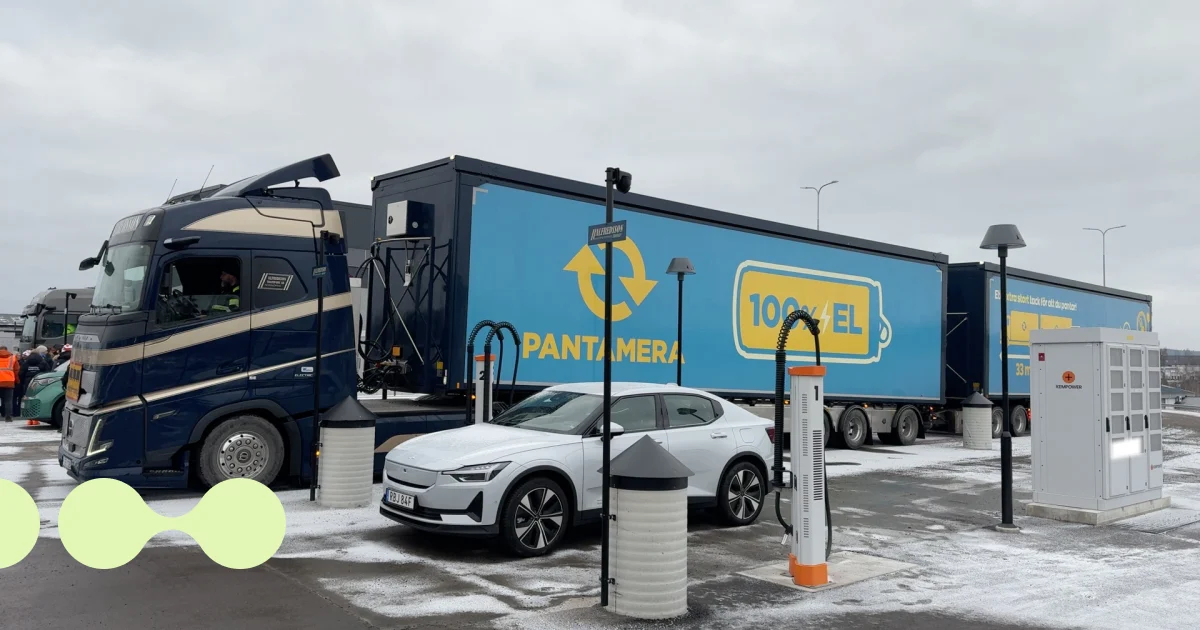
Milence, the European heavy-duty charging joint venture between Daimler Truck, Traton Group and Volvo Group, now operates 34 charging hubs across 8 European countries, with 16 more in development and a target of 90 hubs by end of 2028.
In May 2026, Milence secured an additional 120 million euros in financing, on top of the initial €500M from its founding shareholders.
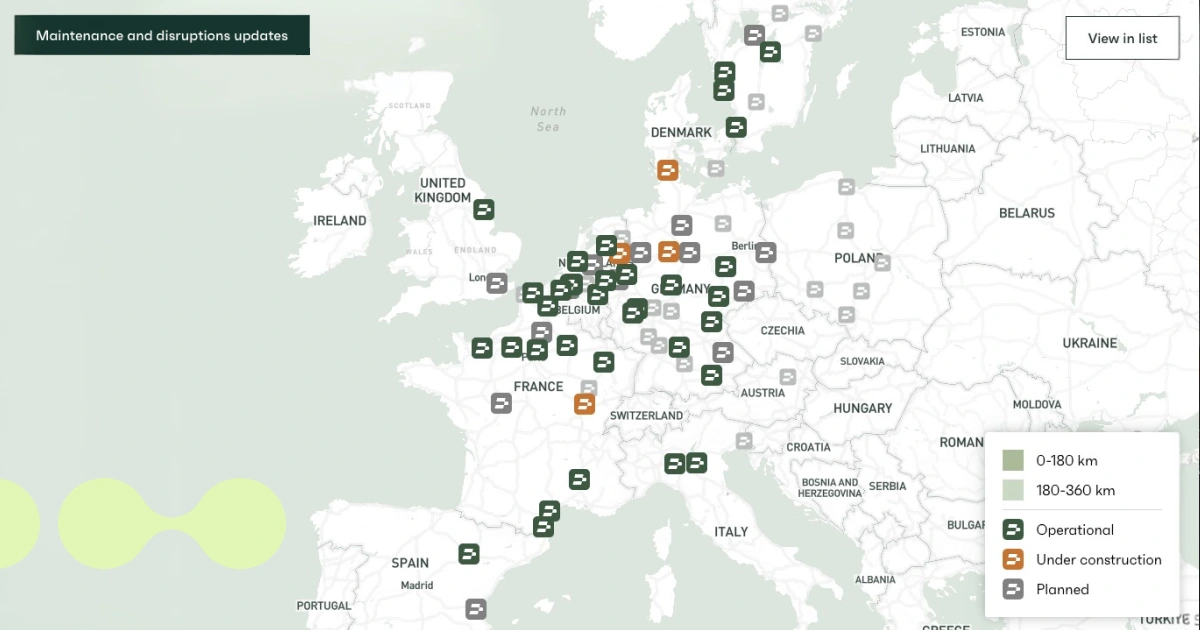
The technology milestones in 2026: the first public MCS charger in Europe is live at Milence’s Landvetter hub near Gothenburg, Sweden, delivering up to 1440 kW (1500 A at 1000 V) per plug, with Volvo demonstrating MCS truck charging using the FH Aero Electric.
On standardization, in February 2026, CharIN published IEC TS 63379, the global MCS technical specification (up to 1500 V and 3000 A, theoretically up to 3,75 MW), making MCS interoperable across manufacturers from day one. That’s something CCS spent a decade catching up on.
On the vehicle side, Scania has confirmed MCS-capable trucks from early 2026, Volvo FH Aero Electric (780 kWh, up to 600 km range) launches Q2 2026, and Daimler’s eActros 600 follows. The first public MCS corridors are being built under the MILES project (548 high-power points across 71 sites in 10 EU member states, 111 million euros of EU funding), with the first connected route running from Antwerp to Stockholm.
MCS rollout, even if not reaching MW+ in power from the get-go, will be a significant tailwind for the e-truck long haul expansion in Europe.
3. Battery-buffered chargers become more of a common solution.
In 2026, battery-buffering, one of the most practical EV charging innovations on this list, has gone from “clever workaround for weak grids” to the default architecture for new high-power deployments. Because the grid problem hasn’t been solved, and, well, not everyone is going to wait for it.
The economics of this EV charging innovation are now obvious. A 1,5 MW grid connection takes years to permit and can cost up to an obscene amount depending on the country. A 300 kW connection plus a 1 MW battery buffer can be permitted in months, costs less, and delivers the same peak charging experience. Add solar, and you also reduce the energy bill and protect against TOU (time-of-use) tariff spikes.
For the operator, the buffer is also a hedge: it lets you offer higher peak power than your tariff would otherwise allow without paying a fortune in demand charges, if applicable. The battery buffered charging sites are moving from novelty to a regular sighting.
4. Charging stops become actual destinations, not just plug walls. Amenities start to matter.
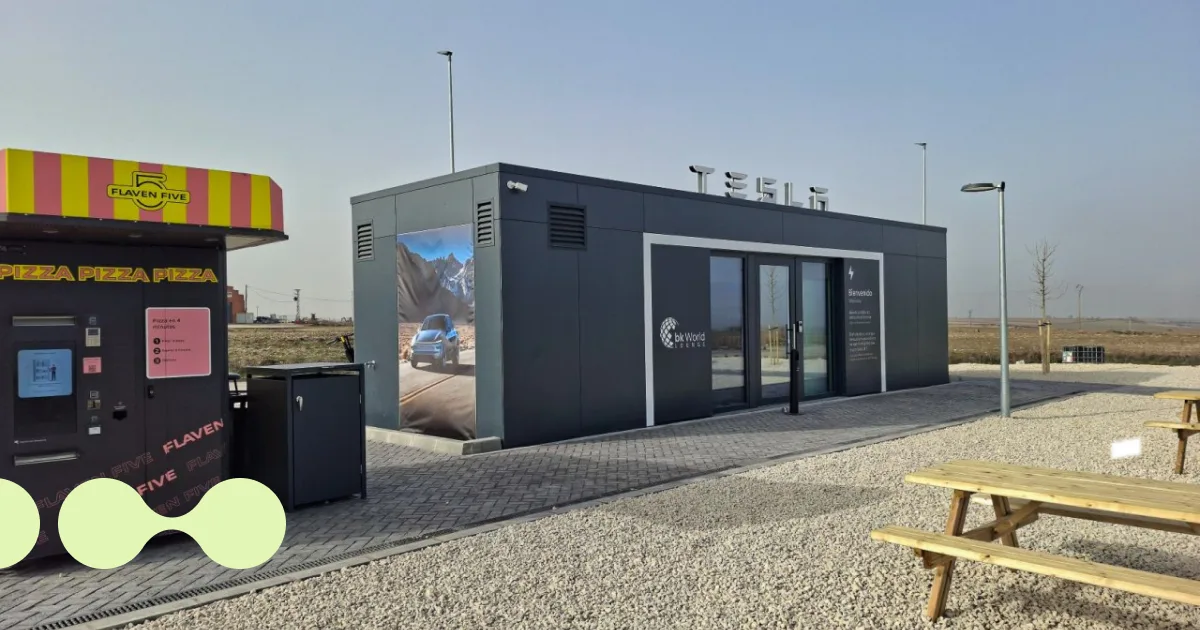
As peak power converges and the time at a high-power site shrinks toward 15-20 minutes, the question that decides which site an EV driver picks shifts from “how fast” to “what do I actually do for 15-20 minutes”.
Eleport has long been advocating for a 30-second charging stop. It’s the time it takes to plug in. Everything else should be handled by amenities nearby while you charge, be it a standalone modular solution specially designed for the EV charging site, or a shopping mall to spend hours on. The Eleport chargers are often strategically located in exactly such locations.
What will I do while charging?
This has been a common question for the whole modern EV era, including from the naysayers. In 2026, this question started getting taken seriously across Europe by charging networks too, with purpose-built amenities and quality of stay emerging as the new differentiator between charging hubs.
Since the competition is also heating up among the charging networks, this differentiator starts to matter more than ever before. While EV charging innovations try to reduce the time spent on charging, it’ll never be zero.
A few signals from this year:
- bk World has shipped lounges at a pace that’s hard to ignore. First location in Spain at the Tesla site in Villagonzalo (which also happens to host Tesla’s 1000th Supercharger stall in Spain) in March, new Fastned lounges in Kinding (Germany) and a third Belgian site, the region’s largest charging hub in Willich, a 5th France-Tesla site in Dardilly, and crucially a new CPO partner in Electra at Salon-la-Tour in April 2026. That makes five CPO partners (Tesla, Fastned, IONITY, EnBW and Electra) for a single hospitality concept across multiple countries. The best part about these, in my humble opinion, is the 24/7 pizza machine.
- Fastned’s flagship at Gentbrugge, Belgium is now the format the industry is copying: 32 stalls of 400 kW under solar canopies, a restaurant, 24/7 self-service shop, showers (incl. for truck drivers), picnic area, family play zone.
- Porsche continues to expand its premium Charging Lounge network.
The underlying logic is simple: with 350 kW+ as the new floor and 400 kW the European norm, the charger is no longer the moat. Site location and quality of stay are. A 20- to 25-minute charging stop overlaps almost perfectly with the time needed to use a clean bathroom, get a real coffee, and grab decent food. CPOs that figured this out a few years too early are now five lounges deep into the differentiation curve, and they’re the ones drivers actively choose.
For drivers, this is the most visible EV charging innovation of 2026 in actually using public charging.
5. Robotic charging arms move out of the lab and into the depot
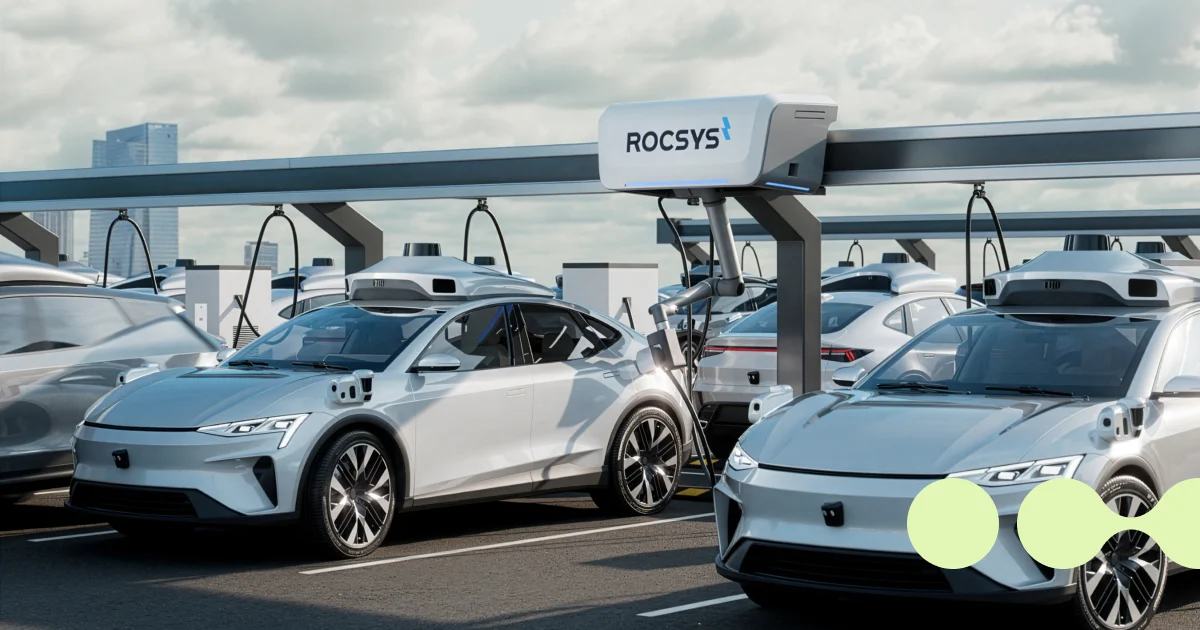
If wireless charging is the easy answer to “how do we plug in autonomous EVs”, robotic charging is the practical one. And in 2026, it’s actually here as one of the latest EV charging innovations, with the most credible operator in this space rolling out two production-ready systems within a single week.
Dutch-American company Rocsys, founded in 2019, made two big moves in early May 2026. The Rocsys M1, unveiled on May 4, is the world’s first hands-free multi-bay charging system specifically designed for robotaxi fleets: a single overhead-mounted robotic arm rides on a rail above up to 10 charging bays, with AI-powered computer vision trained on 6+ years of port and fleet deployment data and a 99,9%+ plug-in success rate. It works with any CCS2 plug, any charger brand, any compatible EV.
The Steward S2 is the next-generation hands-free charging system for heavy-duty electric logistics and port fleets, commercially available now: sub-millimetre precision via computer vision, IP-rated components, and an in-house UWB (ultra-wideband) Smart Cover for vehicle-to-steward communication. Both are EV charging innovations that started solving problems years ago, only to come to a real need at scale in today’s world.
Why this matters in 2026: robotaxis are arriving in Europe, as we covered separately, and the bottleneck question of who charges these robotaxis travels with them. Heavy-duty logistics is the immediate commercial market though: port terminals, distribution centres and intermodal hubs with scheduled, repeatable parking. That’s why Scania Invest just put money in.
VW and Hyundai have shown robotic charging prototypes too, but Rocsys is the one with a multi-bay overhead system in the field and a commercially launched single-bay system shipping this year. Robotic charging is one of the EV charging innovations most likely to remain invisible to most drivers but transformative for fleet and depot operations.
6. Wireless charging finally hits a production passenger car
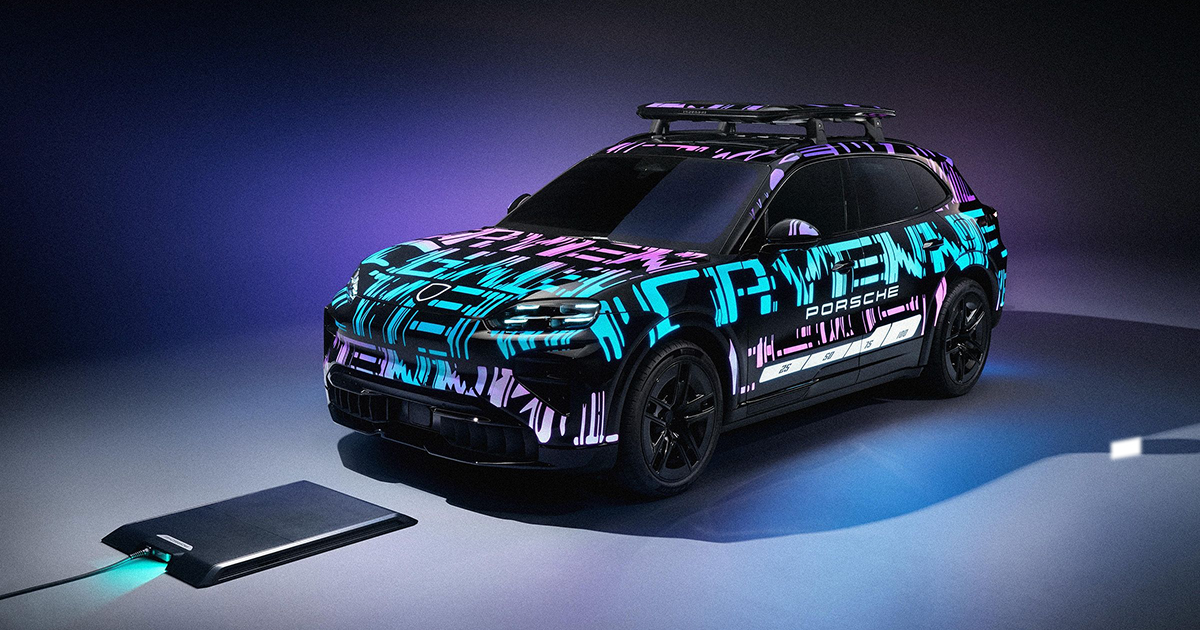
Inductive charging has been one of the “five years away” EV charging innovations for over a decade. In 2026, it’s finally in a series-production car you can actually order.
The Porsche Cayenne Electric, which entered production in Slovakia and reaches markets in summer 2026, is the first series-production passenger car with optional wireless charging from a major European brand.
The hardware in short: 11 kW max power, up to 90% energy transfer efficiency, a 117 cm × 78 cm “one-box” floor plate (50 kg, plugs straight into mains, no separate wallbox needed), a receiver coil in the underbody between the front wheels, 10% to 80% in about 7,5 hours, Surround View parking assistance for alignment, and a waterproof base plate with foreign-body detection.
The price is the awkward part: around 5000€ to 6000€ for the plate, plus around 2000€ for the vehicle-side receiver, plus installation.
Tesla is planning wireless for the Cybercab robotaxi, but there haven’t been more from the automaker on whether and when the technology reaches the regular models – it has only outruled it ever coming to Cybertruck, due to it’s clearance. Cheaper alternatives are in development from HEVO, WiTricity and several Chinese EV brands, aiming to bring inductive home charging closer to mass-market price points. Latest trends in EV charging technology 2026 show that while wireless charging finally here in a series-production car that you can actually order, these will still stay a more of a rare sight across the world.
7. V2G has officially crossed from pilot project to product
Is V2G real yet?
This is a question we can finally answer fully in 2026.
As an EV charging innovation, V2G has been in the works since the early 2010s, but 2026 is the year commercial offers finally landed. BMW launched the first commercial V2G (Vehicle-to-Grid) offer in Germany with E.ON for the iX3, and the entire Neue Klasse platform will be V2G-capable from day one.
Ford and Octopus Energy are launching a V2G bundle in Germany from summer 2026 for the Capri and Explorer EVs, with Octopus estimating customers can earn enough to cover up to 16000 km of free driving per year.
Mercedes-Benz announced bidirectional charging for the new electric GLC via MB.CHARGE Home and The Mobility House.
Tesla started V2G via Powershare Grid Support for Cybertruck owners in Texas, invitation-only.
Renault, Kia/Hyundai (EV9 and Ioniq 9 in the Netherlands), Nissan (G99 grid certification in the UK), VW Group’s Elli, and even the sub-20 000 euro Renault Twingo E-Tech are now in the V2G conversation as actual products.
Plenty of movement in this space, placing it surely among EV charging innovations in 2026.
8. Charging infrastructure gets a cybersecurity reckoning
Cybersecurity might be the least visible EV charging innovation in this list, but it’s absolutely cutting-edge in terms of how the industry has to operate from 2026 onward.
The EU has formally classified EV charging networks as critical infrastructure. Key regulations in force or coming into force: the NIS2 Directive (Directive EU 2022/2555) applies to EV CPOs across the EU and mandates cybersecurity risk management, supply chain security, and 24-hour incident notification, with fines for essential entities up to 10 million euros or 2% of worldwide turnover.
The Cyber Resilience Act (CRA) brings vulnerability reporting obligations from September 11, 2026 (full application December 11, 2027), applying to every connected device on the grid. And Germany’s KRITIS Dachgesetz entered force March 17, 2026, expanding scope from 2000 to over 30 000 entities.
This is no longer theoretical. In December 2025, a coordinated attack hit 30+ wind and solar farms in Poland, attributed to state actors. We’ve also seen charging networks fight against hackers stealing the customer data – and sometimes succeeding. With the new AI-powered world, the threats are only increasing, not decreasing.
For drivers, this is mostly invisible. For investors and operators, it’s one of the bigger structural shifts of 2026. Cybersecurity capability is becoming a competitive moat, and another driver of consolidation as smaller CPOs find compliance costs prohibitive.
What ties all of this together for 2026 and beyond
If you zoom out, the ten EV charging innovations above all point in the same direction: EV charging is no longer just a deployment problem, it is a systems problem. Rollout continues, and the problems the charging point operators tackle are different, ranging from the new type of customers entering the roads like e-trucks and robotaxis, to needing a stronger focus on the amenities they offer because the competition is heating up.
For drivers, this means more charging in places that previously had grid limitations, higher peak speeds, less app friction, sites worth stopping at, and a growing pool of EVs that can actually pay you back through the wallbox
For CPOs and site hosts, the bar just rose and consolidation will continue, in part because the latest trends in EV charging technology 2026 are forcing every operator to upgrade backends, hardware and security in parallel.
All this is what makes 2026 actually interesting, and what makes the future EV charging technology landscape worth tracking through the rest of the year.