Ever since the modern era of EVs began in the 2010s, different battery chemistries have been surfacing that at first are hailed as the “next big thing”, and then fizzle out all the same once they get closer to actually hitting the roads inside cars, for various reasons. Lithium-ion batteries, in their several forms, have prevailed.
Few of the new chemistries or forms, like solid-state batteries and sodium-ion batteries, have been in constant development through years and are indeed coming.
With Sodium-ion particularly, we can already say that it has arrived – showing up in real cars in 2026.
The solution has currently entered the roads in China and hasn’t reached Europe yet, but it surely will soon. From the world’s largest battery producer, CATL, the Naxtra sodium-ion battery entered mass production this year, the first mass-production passenger EV using it (the Changan Nevo A06) was unveiled in February 2026 and arrives mid-year.
CATL has confirmed sodium-ion will roll out across passenger EVs, commercial vehicles, battery swapping and grid storage by the end of 2026.
So the sodium ion vs lithium ion debate is no longer theoretical. The chemistry is now in cars, trucks, swap stations and battery factories.
Just a note here – in some countries and languages, sodium is called by its Latin name, natrium. So if this is what you’re looking for, this article talks of Natrium-ion batteries.
Here is what the sodium-ion picture looks like today:
Why sodium ion vs lithium ion finally matters in 2026
For more than ten years, the EV battery market was basically one chemistry family with sub-variants.
Under the lithium-ion umbrella you have
- NMC (nickel-manganese-cobalt),
- NCA (nickel-cobalt-aluminium),
- LFP (lithium iron phosphate) and
- LMFP (lithium-manganese iron phosphate).
They each trade off energy density, cost, longevity, and safety differently, but the underlying ion doing the work is lithium.
As for the simplest explanation, Sodium-ion changes the ion itself.
Instead of lithium shuttling between the cathode and anode, sodium does. That swap is bigger than it sounds. Sodium ions are larger and heavier than lithium ions, so the cathode materials, anode materials and electrolyte all need to change too.
Most sodium-ion cells use hard carbon anodes rather than graphite, and cathodes built from layered oxides, polyanionic compounds or Prussian blue analogues.
Why does the sodium ion vs lithium ion comparison matter now and not five years ago?
Because three things changed in 2025 and 2026 at roughly the same time:
- Sodium-ion can now be mass-produced at the gigawatt-hour scale that EVs need.
- It passed China’s tough new GB 38031-2025 EV battery safety standard (CATL’s Naxtra was the first sodium-ion battery to do so).
- It reached an energy density of 175 Wh/kg, competitive with mid-range LFP cells.
Energy density used to be the part where sodium-ion lost the argument. It no longer does, at least not against the middle of the LFP pack.
How the chemistries differ
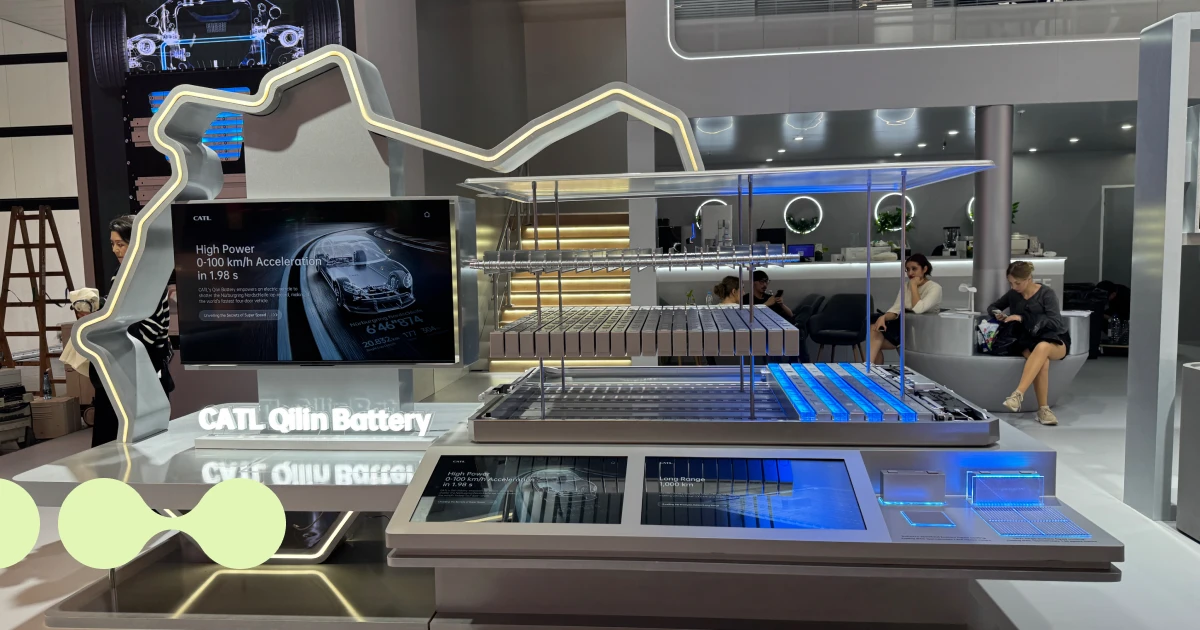
The honest sodium ion battery vs lithium ion battery comparison comes down to physics. Lithium is light. Sodium is abundant.
Those two facts cover most of it. Lithium ions are smaller and lighter, which means lithium-ion cells pack more energy into the same mass or volume.
Sodium is roughly 1000 times more abundant in the Earth’s crust than lithium and you can pull it from common compounds like ordinary salt. So a sodium ion battery vs lithium trade-off comes out as less energy density, but cheaper, safer and less geopolitically exposed materials.
In practice, switching the ion changes:
- Cathode materials. Lithium-ion mostly uses LFP, NMC or NCA. Sodium-ion uses layered oxides, polyanionic compounds or Prussian blue/white materials.
- Anode materials. Lithium-ion uses graphite. Sodium-ion typically uses hard carbon.
- Energy density. Lithium-ion leads, especially in premium EVs.
- Cold-weather performance. Sodium-ion is significantly better.
- Raw material exposure. Sodium-ion can avoid lithium, cobalt and nickel in some designs.
- Production maturity. Lithium-ion is proven at huge scale. Sodium-ion is just now ramping.
That covers the sodium ion battery vs lithium map without descending into battery-conference territory. None of these differences are absolute, and pack engineering matters as much as cell chemistry. But that frame holds up.
Sodium ion battery vs lithium ion: where each one wins
The sodium ion battery energy density vs lithium ion comparison is where the conversation usually starts, because it is where lithium-ion still has a clear lead.
CATL’s Naxtra hits 175 Wh/kg energy density. That puts sodium-ion roughly at the higher end of LFP performance.
But competitive LFP packs sit around 200-210 Wh/kg, and high-end NMC cells reach around 255 Wh/kg. For a long-range premium EV that needs 600 km on a single charge, that gap matters. Yet for a city car or a delivery van that needs 250-400 km, the gap stops mattering.
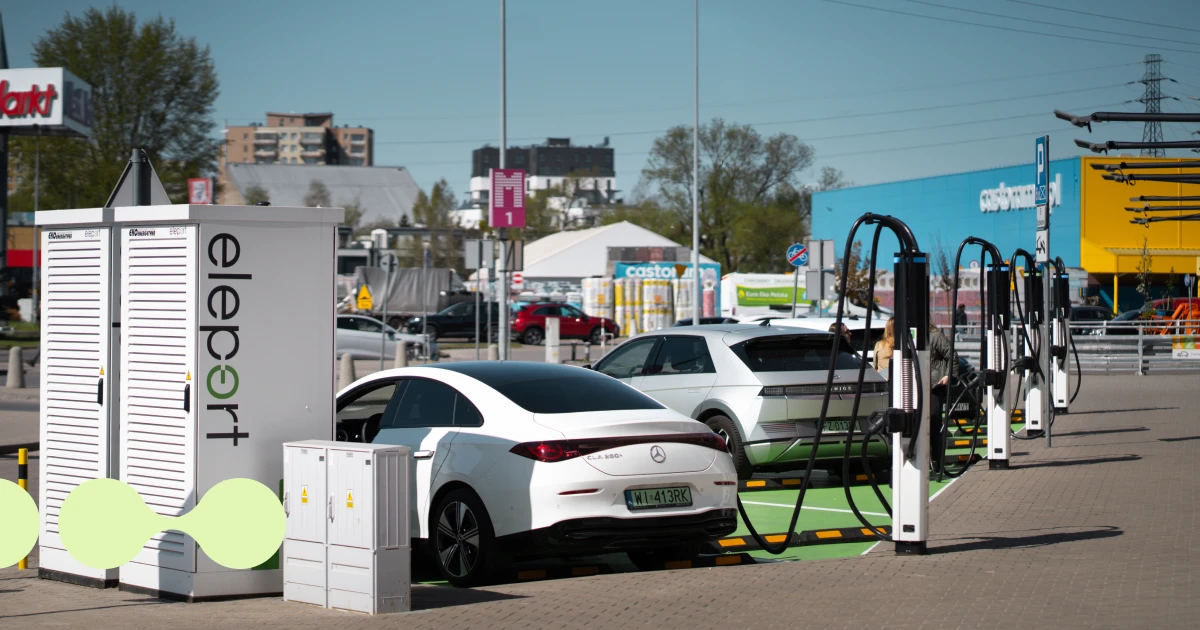
The sodium ion battery vs lithium ion comparison reads differently once you reframe the question. It is not which one is better. It is about which one is better for what.
Lithium-ion still wins on:
- Long-range passenger EVs
- High-performance EVs where pack weight matters
- Vehicles where maximum kWh in minimum mass is the entire game
- Mature global warranty and service networks
Sodium-ion wins on:
- Affordable city EVs and shorter-range cars (250-400 km)
- Two- and three-wheelers, small delivery vehicles, low-speed vehicles
- Cold-climate fleets and depot-charged commercial vehicles
- Battery swap networks, where cost and durability beat pack volume
- Stationary storage, where weight is irrelevant and cycle life is everything
That is the sodium ion battery vs lithium ion battery answer most battery engineers will give in 2026: depends on what the vehicle has to do.
Cold weather is where the sodium ion vs lithium ion shows a real winner
Cold weather is one of the real weak spots of lithium-ion batteries. Charging slows down, range drops, and in extreme cold, the cells need active heating before they can deliver power.
Any one of us who has tried to fast-charge an LFP-equipped EV at minus 15°C knows the routine: the car wants to warm the pack first, the charger sits there waiting, and the actual session takes longer than the headline kW figure suggests.
Sodium-ion behaves very differently in this regime. According to CATL, its Naxtra cells operate across a −40°C to +70°C range, retain about 90% of their usable capacity at −40°C, and can still deliver stable power down to −50°C. At −30°C, sodium-ion discharge power runs roughly three times higher than equivalent LFP cells.
This is why sodium ion batteries vs lithium ion batteries is a more interesting question in the Nordics and Central and Eastern Europe than in Italy or Spain. The same chemistry swap that costs you 60 km of summer range might give you the equivalent back in winter.
Who is making sodium-ion batteries right now and which electric cars will have sodium-ion batteries?
The sodium-ion battery vs lithium-ion battery production race is concentrated in China. That is where almost all the actual hardware is being built.
CATL is the biggest player. Its Naxtra brand was unveiled in April 2025 and entered mass production in 2026.
The first passenger EV to use Naxtra cells is a GAC Aion model launching in Q2 2026, followed by the Changan Nevo A06 (also called Qiyuan A06) in mid-2026 with a 45 kWh sodium-ion pack and a claimed range of over 400 km.
BYD is the next-biggest player. Its FinDreams battery unit has started building a 30 GWh sodium-ion plant in Xuzhou with partner Huaihai, focused on smaller vehicles, scooters and low-cost mobility. BYD has also developed a third-generation sodium-ion cell with over 10 000 cycles and improved high-temperature performance.
HiNa Battery, LG Energy Solution and JAC are all active. HiNa supplied the cells behind earlier production sodium-ion EVs (the JAC Yiwei in early 2024, then JMEV’s EV3 sodium-ion option). LG Energy Solution opened a pilot sodium-ion manufacturing line in Nanjing in January 2026.
Outside China the picture is thinner.
Faradion is still active in lower-cost transport and stationary storage. European players like Altris exist but remain small. Northvolt was the most credible European sodium-ion contender until its 2025 bankruptcy.
Two US failures, Bedrock Materials (shut down April 2025) and Natron Energy (ceased operations September 2025), show how hard it is to scale sodium-ion past the pilot stage and into volume production.
Where can you buy a sodium-ion battery EV? The sodium ion battery vs lithium reality on the road in 2026 is simple. If you want to buy a sodium-ion EV, the showroom is in China.
Stick to lithium-ion batteries in Europe today, but be in the lookout for sodium-ion entry.
For most European EV buyers right now, the sodium ion vs lithium ion choice still defaults to lithium-ion, and that default is the right one. Modern LFP and NMC packs are proven, supported across every service network and improving every year.
Sodium-ion widens the menu. The EV market is splitting into specialised chemistries, and from 2026 onwards, a long-range family EV, a depot-charged van and a city car no longer have to share the same battery chemistry type. The sodium-ion battery vs lithium-ion battery question is starting to have a geographic flavour to it: warm and long-range stays lithium, cold and short-range starts to lean towards sodium.
For charging specifically, three things matter:
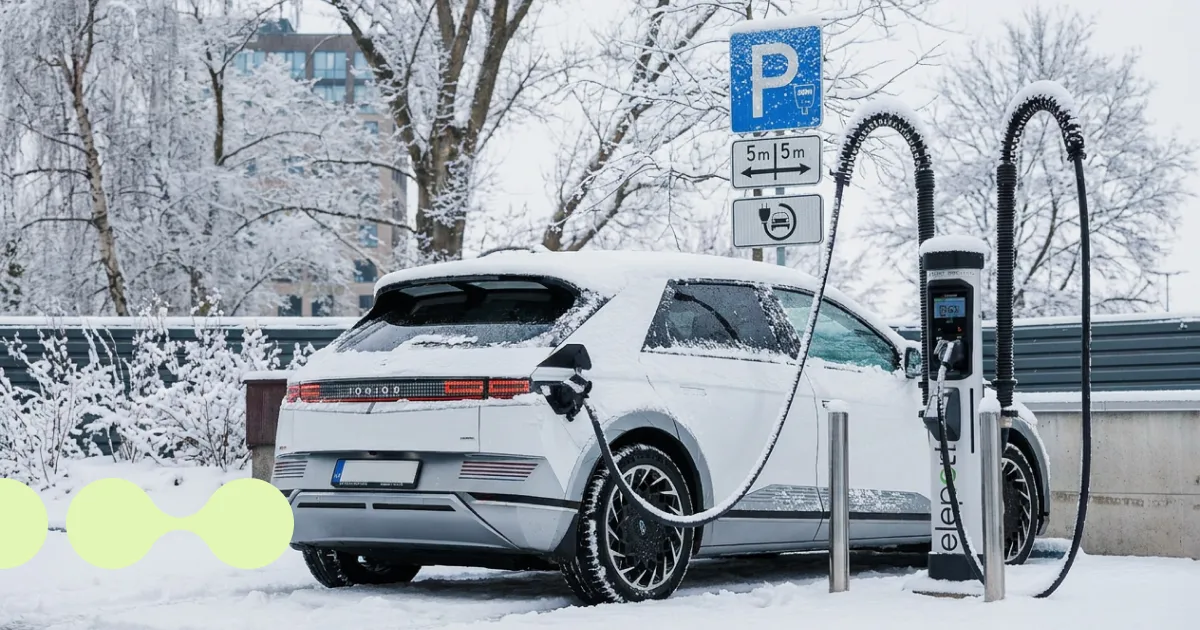
Cold-weather charging speed. Sodium-ion EVs should hold their fast-charging speeds better in winter. For Estonia, Latvia or Finland, where −15°C charging sessions are normal for four months of the year, that is a real advantage.
Battery swap viability. Cheaper, more durable, cold-tolerant cells make battery swap economics work better. CATL’s plan to put sodium-ion into Choco-Swap, alongside NIO’s existing European swap network, makes battery swap a more credible part of the European charging landscape from 2026 onward. Still, consider that the battery swap network in Europe is not at all so highly developed as it is in China, at least for the next few years.
Pressure on lithium supply. Even if your next EV runs on lithium-ion, sodium-ion taking the cheap and short-range segment off lithium’s plate frees up supply for the cars that need it. That helps battery prices stay stable.
Should you wait for a sodium-ion EV in Europe?
Probably not, unless you are specifically waiting for a Chinese-market vehicle that ends up sold in your country.
For most drivers, the right EV is still the one that fits your daily range, your charging access, your warranty and your price. Sodium-ion is promising but not a reason to delay a good lithium-ion purchase today. By the time sodium-ion arrives in Europe with proper service and warranty support (which will take a few more years), the trade-offs may look different anyway.
For fleets, the calculation changes. Predictable routes, depot charging, lower purchase price and strong winter performance is the profile sodium-ion was built around. When a sodium-ion van or city car shows up with proper European service support, fleet operators in the Nordics and CEE should pay attention.
For automakers, the sodium ion vs lithium ion question is strategic. Sodium-ion is a hedge against lithium price volatility, a path to lower-priced EVs that compete with ICE cars on sticker price, and the start of CATL’s “dual-star” future, where two chemistries coexist instead of one doing every job.
Both chemistries will fit into our EV world without replacing each other.

The sodium ion vs lithium ion answer in 2026 is not that one chemistry replaces the other. It is that both finally have a real job to do.
Lithium-ion will keep doing the heavy lifting in long-range, premium and performance EVs for years. Sodium-ion will eat into affordable city EVs, fleet vehicles, two-wheelers, battery swap networks, cold-weather use cases and grid storage. The first real passenger EVs running on it arrive in mid-2026, with the GAC Aion model and Changan Nevo A06 leading.
For European EV drivers in cold climates and price-sensitive segments, this is good news. More battery options mean right-sized vehicles at sensible prices and a noticeably better winter charging experience when the temperature drops below zero.
After more than a decade where lithium-ion did every job, the EV battery market finally has a credible second option. 2026 is the year it started shipping in real cars.