
Today, every fifth new car that hits the roads of Europe is fully electric. The electric vans are following this adoption, albeit mostly a few steps back. Following the same trajectory, transitioning towards being fully electric.
How are electric van sales doing in Europe today? Specifically in numbers, per ACEA, the electric vans (here meaning battery electric + plug-in hybrid versions) in 2025 made up 12% of all new van sales in Europe, almost doubling the market share, which was 6.5% in 2024. This means that currently, about every eight van sold in Europe is fully electric.
Whether you operate a delivery fleet, a trades business, or any operation that uses vans on European roads, the question isn’t whether to choose an electric van for business at all anymore, rather it’s about when and which van to use.
We’ve put together a guide based on our own expertise, research, and the know-how of our fleet partners to help you navigate both decisions.
Why go electric now? The policies are helping to push the decisions
If you operate around city centres, there’s a clear policy that might push you towards an electric van for business use: zero-emission or low-emission zones. You can find such zones all across Europe, like in 16 Dutch municipalities, in Brussels (Euro 5 prohibited), and this year, Stockholm’s Class 3 zone will permit only electric vehicles. Spain has even managed to establish 149 Low Emission Zones so far. London’s Ultra Low Emission Zone covers nearly all of Greater London. Vilnius already has a low-emission zone, and Riga plans to introduce one in 2027.
The larger cities that do not yet have a policy in place will do so very soon: more than 35 zero-emission zones are planned across Europe for the 2030s.
But the shift isn’t just about the policy. The supply of fleet-suitable electric vehicles has caught up. According to Transport & Environment, 2026 will be the year when more e-van models are available in Europe than diesel and petrol combined (48 vs. 46). Purchase price parity with diesel is expected by 2027, which helps to get the TCO cost to the right spot, too.
Start with the Total Cost of Ownership (TCO), not the purchase price of the electric van for business
This is where a lot of business buyers still trip up in the comparisons: a diesel van will often look cheaper at the point of purchase. If you stop the analysis there, electric can seem like a premium add-on rather than a rational fleet decision.
That is the wrong way to assess a working vehicle. If you’re an experienced fleet manager, you already know this, but still worth going over.
The better way is the total cost of ownership. What matters is not just what the van costs to buy, but what it costs to run, fuel, maintain, insure, charge, and keep productive over the years you actually plan to use it. On that basis, the electric version starts to look much stronger.
The wins are really the same as with a regular electric car, but just come in faster thanks to the higher amount of kilometres driven per year.
The biggest difference in favor of EVs in general terms is the energy cost. From the research we’ve found so far, the energy costs range roughly €0.03 to €0.05 per kilometre for electric vans, depending on where and how you charge, versus around €0.12 to €0.20 per kilometre for diesel vans. Charging in your own depots or workplace can help reduce the reliance on public charging networks.
Calculating for about 30,000 kilometres driven annually, you can save around €2,700-€4,500 per each van like this per year. When scaled across a fleet, the savings add up to make it worthwhile.
Maintenance often strengthens the case further; in this case, electric cars and vans for business are very similar. No oil changes, no exhaust repairs, no traditional transmission servicing. Regenerative braking can also reduce brake wear. The draft cites typical maintenance savings in the 30 to 50 percent range, though of course this depends on usage and vehicle type.
Insurance can be slightly higher for an EV van over a diesel van, there’s no way around it… unless you find one of those deals where insurance is lower due to a loophole-type situation. That’s where the kW shown in the vehicle specs can be displayed lower than normal even when it is actually higher, due to measurement methods… which ends up driving a lower premium on insurance.
Tyres may wear faster in some applications due to battery weight and instant torque, especially, as we all know, when the business fleet is not used as carefully as one’s personal car.
But in many urban and suburban fleet scenarios, the overall economics are already moving in EVs’ favour.
And then there is the part many businesses ignore until it bites them: access.
If your van cannot enter or needs to pay a premium to enter Amsterdam, Brussels, London, Vilnius, or other major urban centres without restrictions, penalties, or route changes, then even a theoretically cheaper diesel can become the more expensive business tool in practice.
The first mistake when considering an electric van for business: choosing the van before understanding the route
The right way to choose an EV van is not to start with the brochure, aiming for the highest headline number, but instead to start with the nature of the work the van is set to perform.
How far does the van go in a normal day? What is the longest realistic day, not just the average one? How much time does it spend parked? Does it return to base overnight? What does it carry? How sensitive is the operation to downtime? How much does the weather matter? These questions are less exciting than comparing charging curves, but they are the questions that separate a smart fleet decision from a bad one. And yes, you should also compare the charging curves.
Range matters, but the “up to” range you see on the spec sheet is not the same thing as operational range. WLTP is useful for comparing vehicles on a standardised basis, but it is not your business reality.
There’s a lot that can influence the actual performance of the electric vans, from payload, cold weather, even stop-start traffic, motorway use, terrain, climate control and more. The real-world range typically falls 15 to 25% below the headline figure you find in the spec sheet, depending on conditions.
For many businesses, that’s suitable. Many urban van operations sit comfortably below 200 kilometres a day. That means the question is not whether an EV van can do the job, but rather which one does it best, and at what cost.
The five factors that matter most when choosing an EV van
When comparing every electric van out there for business uses, narrowing down using these five factors can help more than anything else.
- Route fit. The van needs to be able to complete the daily duty cycle with a margin.
- Payload and cargo volume. Batteries make the vans a bit on the heavy side, and although the segment has improved a lot, payload still varies significantly by size and config. If your use case needs to add racking, tools, refrigeration, or specialist fit-outs, you’ll need to search even deeper. For example, electric delivery vans for business have very different needs compared to regular employee-use compact versions.
- Charging strategy. For most fleets, overnight depot charging on AC is the backbone of a workable setup. DC fast charging is valuable, but as a safety net, not as the entire operating mode
- Configuration. Do you need a panel van? Or a crew cab, chassis cab? What about the wheelbase, roof height, fit-out compatibility, and towing needs? Figure out each need so you can filter out which van to even consider quicker, as not all manufacturers have a solution for each need, much like in petrol versions.
- Warranty and support. Battery warranty coverage, service network, manufacturer commitment, and uptime support matter.
The key electric van models to consider in Europe
Let’s get specific – which electric van for business is the right one for your business? We’ll go over the most popular electric vans per segment and work type, and give you some of the key points worth considering around each model.
What are the best electric vans for small business deliveries?
Here is our choice of small electric vans for urban fleets, service jobs, dense last-mile work, and similar use cases: Ford E-Transit Courier, Stellantis small van lineup, Renault Kangoo E-Tech, and Kia PV5.
Ford E-Transit Courier is one of the more interesting newer entries here. It offers a 43.6 kWh usable battery and up to 300 km WLTP, with around 2.9 m³ of cargo space and about 700 kg of payload.
That makes it a strong option for dense city work where size matters, but it is still very much a compact van.
The Stellantis small van lineup, which includes the Citroën ë-Berlingo, Peugeot e-Partner, Opel or Vauxhall Combo Electric, Fiat E-Doblo, and Toyota Proace City Electric, is a popular van fleet option overall.
All these models share the same platform, actually often being the rebadged versions of each other. The setup is likely familiar from the petrol fleet, and you can assume about a 50 kWh battery offering roughly 275 km WLTP range depending on the model.
Renault Kangoo E-Tech also deserves a place on the shortlist. There’s a 45 kWh usable battery, offering roughly 300 km WLTP range, making the electric Kangoo a practical option for businesses that want something proven and easy to live with.
Perhaps the most exciting one? Kia PV5 is the newcomer worth paying attention to. The battery options are 51.5 kWh and 71.2 kWh, and you get up to 412 km WLTP in longer-range form. PV5 brings something fresh to the market. As you can see, the looks are distinctive as well. Packaging looks strong, charging is competitive, and Kia’s warranty story helps.
Medium vans: the sweet spot for many fleets
This is where the real battle in the EV van market really is.
Medium vans are the core of the fleet for a lot of businesses, because they are big enough for serious work, compact enough to stay practical, and often the best balance between range and payload.
Ford E-Transit Custom is one of the most popular electric vans in this segment. The updated version moves to a 71 kWh usable battery, and you get up to 373 km WLTP. Strong configuration flexibility, lots of useful features for different trades, and improved charging performance have made it one of the most serious EV van competitors in the market.
The Opel Vivaro Electric and its Stellantis counterparts, including Citroën ë-Dispatch, Peugeot e-Expert, Toyota Proace Electric, and Fiat e-Scudo, are also gaining momentum. The larger battery variant features a 75 kWh pack and offers a range of up to 352 km WLTP. Cargo capacity and payload capacity stay competitive, which are the key aspects in this segment.
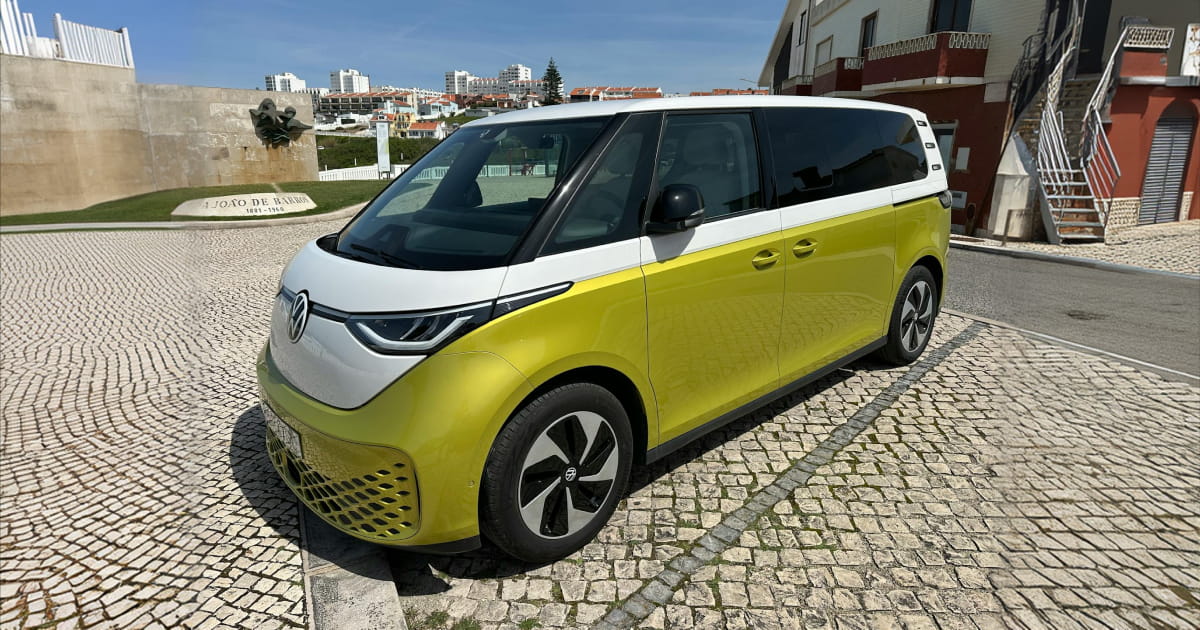
Volkswagen ID. Buzz Cargo is the wildcard. There is a 79 kWh usable battery variant with up to 444 km WLTP, which gives quite a solid range option overall, and the Buzz offers a much more distinctive look than most vans in this class. That makes it attractive for fleets where image matters, especially in urban and customer-facing contexts. In other words, it can be made to look cool. But it is not the obvious winner for every operation. Cargo volume is more limited than more traditional rivals, so the Buzz works best when brand presence matters nearly as much as cubic metres.
Large vans: getting stronger, but still the hardest segment to electrify
Large electric vans are improving quickly and nowadays get solid focus next to their diesel counterparts, but they also invite the most caution as they are dealing with the hardest segment in terms of actual workload.
If your usual fleet routes are long, loads are heavy, and charging opportunities are limited, this is the segment where fleet planning has to be especially honest, looking at the real-world figures instead of what they claim in press releases.
Ford E-Transit Extended Range has an 89 kWh battery, and the range is up to 402 km WLTP. Its main advantage is also that people are already used to Transits, making the transition smoother for businesses currently using diesel Transits. This comes in handy if you need similar racking and trade features to the fossil fuel Transits already in the fleet.
Mercedes eSprinter has a version that goes up to 113 kWh of battery capacity and approximately 440 km WLTP range. This is where Mercedes’ brand reputation, support network, and premium positioning come into play. Although it may not be the most affordable choice, some operators might find the support and reliability justify its higher price. For example, DHL has already deployed more than 10,000 Mercedes eSprinters globally.
Renault Master E-Tech also serves as one of the compelling large electric van for business options. It has an 87 kWh battery and a WLTP range of up to 460 km, along with impressive payload and towing capacities. If it meets expectations in everyday fleet operations, it has the potential to become a leading large electric van for business in Europe.
Charging should be planned with planning the electric van, not after buying it
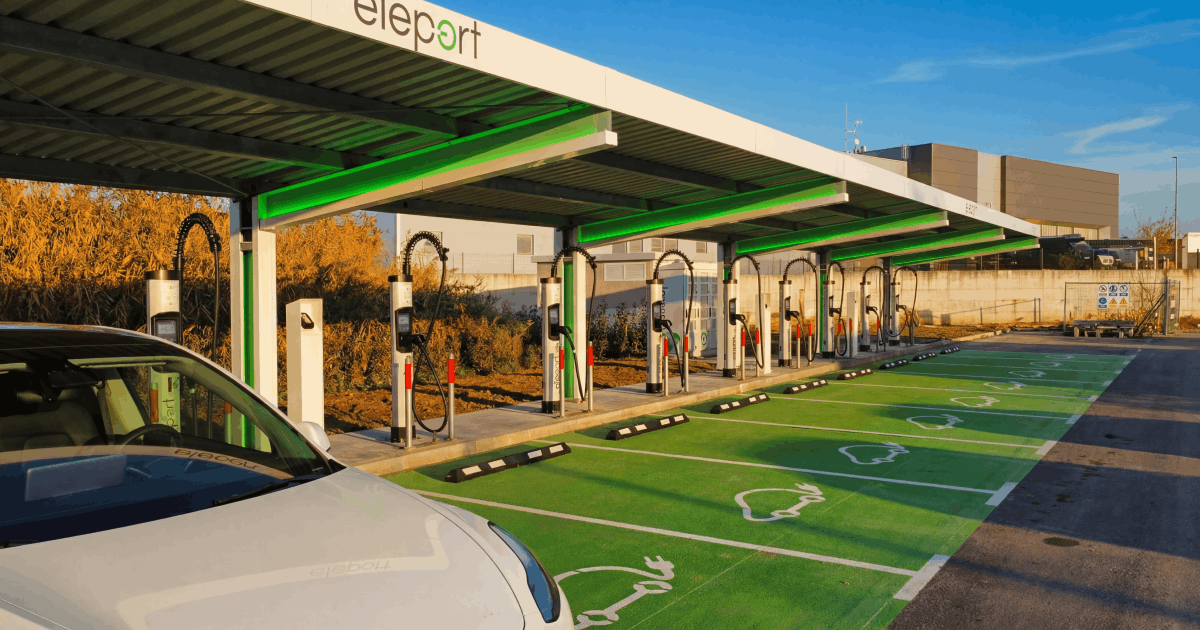
This is worth saying clearly: charging is not a side project when it comes to electric van fleets.
Too often, businesses choose the vehicle first and only later start thinking seriously about infrastructure. That is backwards. The vehicle and the charging setup are part of the same operational system.
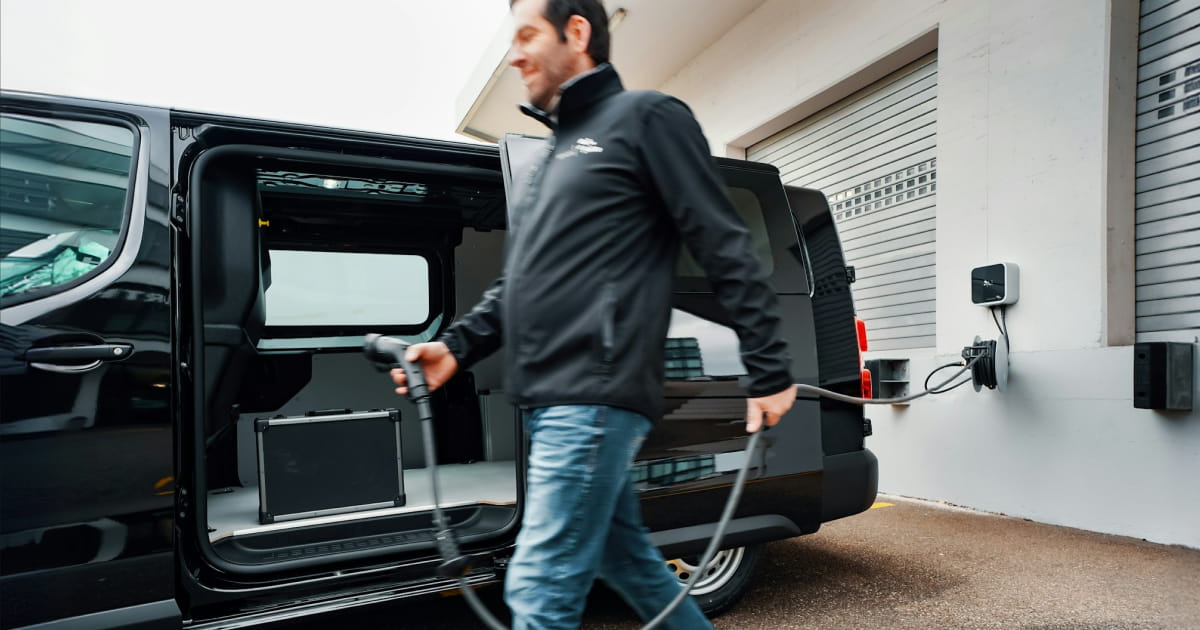
For many fleets, the strongest setup is also the least dramatic one. Vans return to the depot, plug in overnight, charge on AC, and leave ready for work the next morning. That is usually the foundation. Fast charging matters, but it should support the operation rather than rescue it every day, unless the runs are planned to maximize possible range each day.
If you’re building out charging, then it is also smart to think ahead – if you already operate more vehicles which you will likely transition to electric, perhaps it’s smart to build out capacity and space for more than just the initial chargers.
So, should your business switch to electric vans now?
The answer is very likely yes. If not all of it, then today is the right time to start and get through the learning curve.
If your current vans cover daily distances that remain below 200-300km, return to base overnight, and work in or near cities with low-emission zones, the case is already compelling. Electric van for business options have improved over time, and the economic case for EVs is becoming stronger.
And delaying the decision does not freeze the world around you. Cities will keep tightening. Customers will keep expecting cleaner operations. Diesel will not suddenly become simpler again.
That does not mean every fleet should electrify all at once.
For mixed operations, the smarter path is often to start with the routes that are easiest to convert. Urban first. Depot-based first. Repeatable duty cycles first. Learn from those vehicles, then expand based on evidence rather than assumption.
What we have seen with our partners using an electric van for business use is that the know-how and confidence builds over time, after deploying more and more vans in the business fleets.
For businesses with very long routes, limited charging access, or heavy loads right at the edge of vehicle capability, caution still makes sense. But even then, waiting should mean preparing, not ignoring. Map the routes. Assess depot power. Identify the first viable use cases. Talk to charging partners early.
As for the charging partners to find, Eleport is offering special business fleet charging deals across Central and Eastern Europe to any businesses that have more than 3 EVs in their fleets, incorporating three types of discounts, monthly invoices, and more.
Because that is really what electrifying logistics comes down to. Not buying the most futuristic van on the market. Not chasing the biggest battery just to feel safe. Just choosing the right tool for the work, before the old one becomes harder, costlier, and less welcome in the places your business needs to reach. If you can, adding several different electric van models helps to figure out what fits your business needs even better.
The electric vans are increasingly ready.
The real question is whether your fleet planning is prepared.