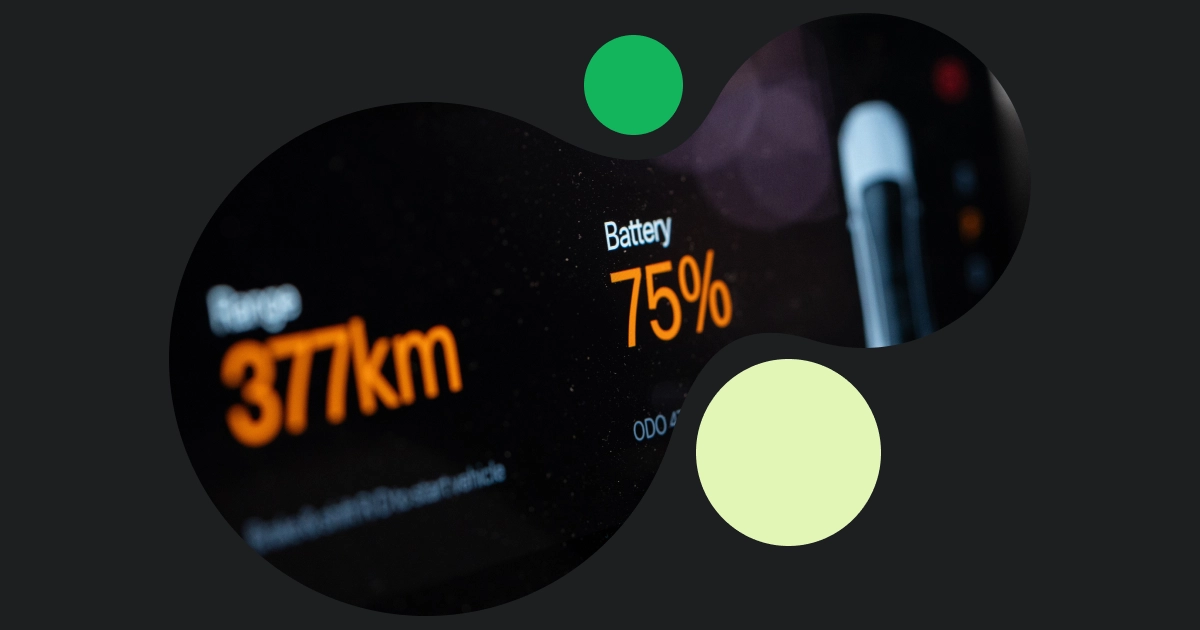
A Vehicle-to-Load (V2L) adapter enables a compatible EV to do more than simply drive: with it, your car can now power external devices. Connected via the charging port, the adapter provides access to the vehicle’s battery for practical use beyond mobility – whether that means running tools on site, charging any equipment in the field, or keeping a few essential appliances running during a short outage.
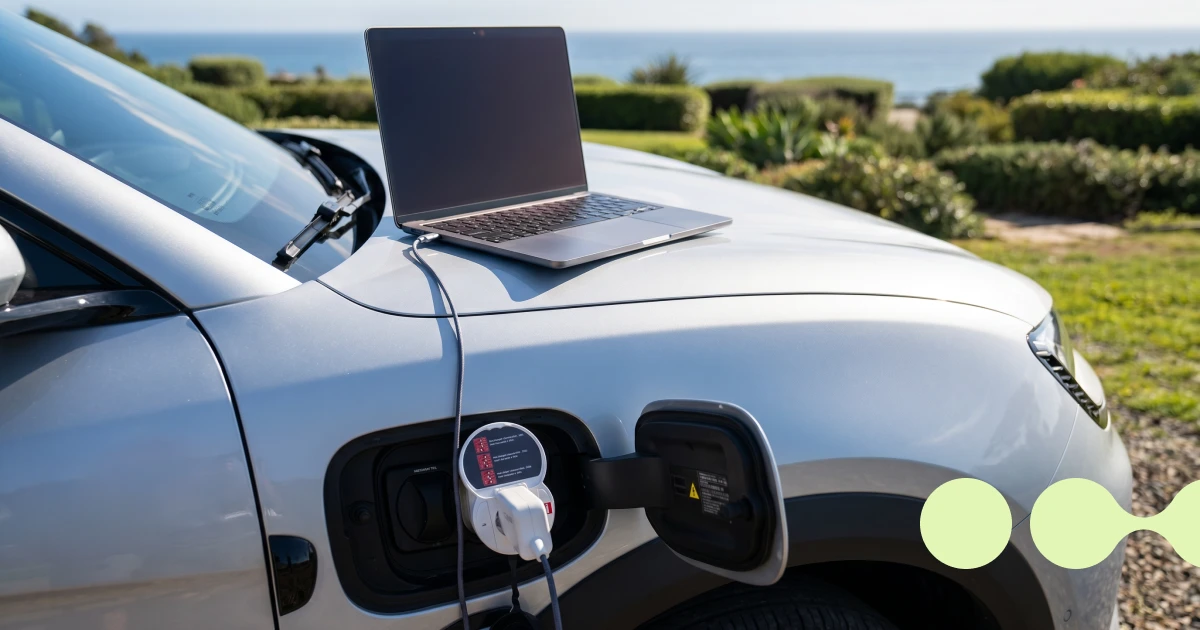
The adapter itself is only part of the story. The more important point is the capability behind it. When an EV supports V2L, stored battery power becomes available in a controlled and usable way outside the charging station. That extends the vehicle’s function beyond transport to something closer to a mobile energy source. Your EV becomes a powerbank on wheels.
Before talking of adapters, it can be helpful to learn from our recent Eleport article what exactly V2L is. And if you’re comparing charging standards, it helps to start with EV charger types. With that foundation in place, the purpose of a V2L adapter becomes much clearer.
How does a V2L adapter work?
To understand what is a V2L adapter, it helps to start with the basic idea. It links the EV’s high-voltage battery to the everyday devices you want to run. On the outside, it looks simple enough. You plug one end into the car and use the socket on the other end for your appliance. But once it is connected, a bit more is happening behind the scenes.
A compatible EV does not automatically send electricity out through the port. It first has to recognise that the connected device is not a charging cable, but an adapter meant for an external power supply. That is where the internal resistor plays its part.
Once connected, it sends a small signal to the vehicle’s control system, effectively telling the car that this is a valid request to discharge power outward. After that, the vehicle can switch into output mode and begin supplying electricity.
It also keeps everything under control while that power is being used. The system monitors heat, output limits, and remaining battery charge. If the load is too high or if something is not right, the car can stop the discharging. It will usually do the same when the battery reaches a preset minimum, so you still have enough energy left to get home.
How it fits into EV charging
It’s easy to see why people associate V2L with charging – after all, it uses the exact same inlet on the car. However, the flow of energy is flipped.
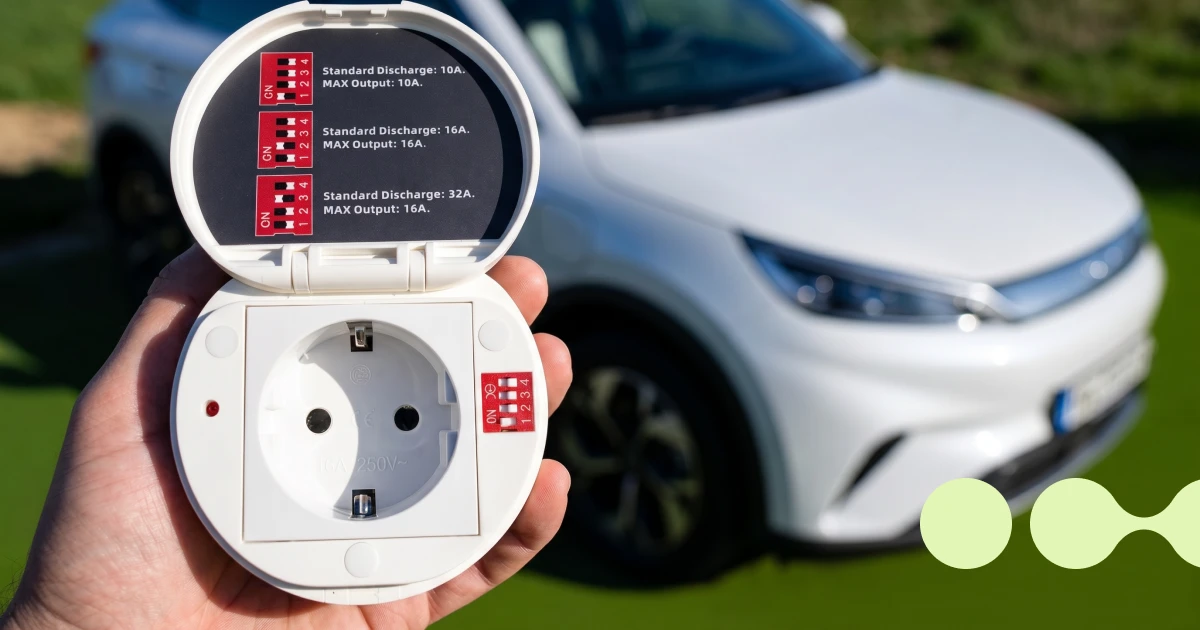
- Standard charging: Power moves from the grid into your battery.
- V2L discharge: Your battery sends stored power out to your devices.
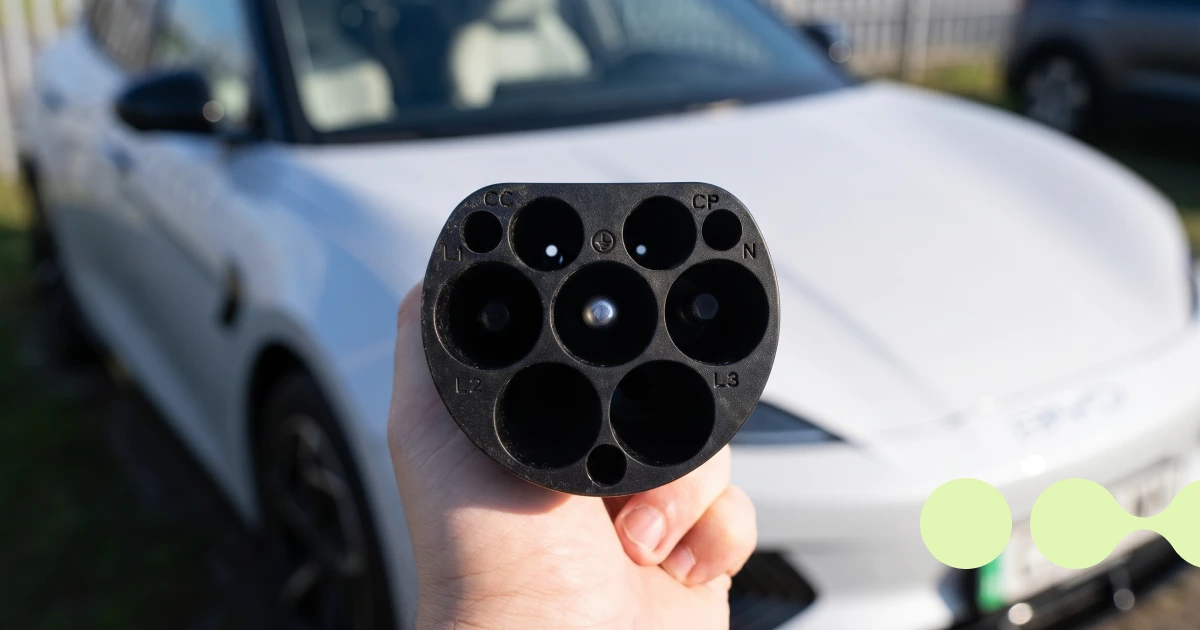
That shared inlet is also where people get caught out. Product listings are often vague, and some are simply wrong. A cable labelled “Type 2 to socket” may be intended for charging the car from a household outlet, not for powering devices in the car. Before buying, check the title and description carefully and make sure it clearly says V2L or discharge, and also check whether your vehicle is compatible with V2L adapters in the first place.
How to use Vehicle-to-Load (V2L) adapter
Using a V2L adapter is usually simple, but the order still matters.
- Get the car ready. Park it safely and switch it to Utility Mode, or the equivalent active mode. In many cars, V2L will not work in Accessory Mode alone.
- Insert the adapter into the charging port until it clicks and locks.
- Turn the feature on. Some adapters have a power button. In other cases, you need to enable discharge through the car’s screen.
- Connect the device. Plug your appliance or equipment into the adapter’s household socket.
- Watch the battery level. Many EVs let you set a minimum charge level, such as 20%, so you do not drain the battery beyond your planned level. But honestly, most smaller devices won’t be able to drain all of your battery anyway.
- Shut it down properly. Unplug the device first, then remove the adapter from the car.
One practical detail is easy to miss. On many newer EVs, the charging port locks the adapter in place while the car is locked. That helps prevent theft, but it also means you may need to unlock the vehicle before you can remove the adapter.
What the V2L adapter usually looks like
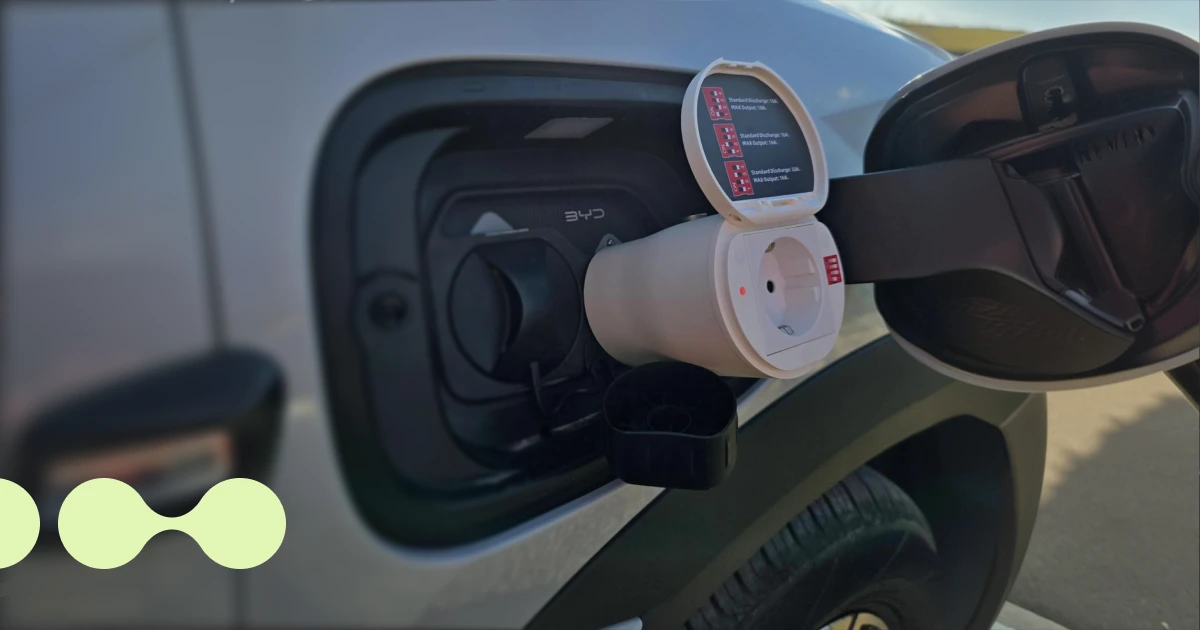
Now it helps to zoom in on the physical design. Most versions are compact and weather-resistant, with a moulded body that includes:
- an EV-side connector matched to the supported standard
- a household socket on the output side
- a casing intended for outdoor use
- basic protection features defined by the maker
- labels or status lights on some models
Main uses: portable power for camping, work, and outages
What is V2L adapter used for in real life? Mostly, it gives a compatible EV something useful to do after the drive is over, or serve as a good backup for unexpected situations. Instead of sitting there with a full battery, the car can run everyday equipment where fixed power is missing, inconvenient, or temporarily unavailable. That is what makes the feature feel relevant so quickly.
1. Camping and road trips
This is probably the easiest use case to picture. On a trip, a Vehicle-to-Load adapter can handle the small things that make life more comfortable without adding much hassle. That might include:
- a portable fridge
- phones and tablets
- laptops and camera batteries
- LED lights
- a kettle or coffee maker within the approved wattage
- a speaker, or a compact projector for an outdoor film night
That is why camping comes up so often in V2L examples. The setup is simple, the benefit is obvious, and the car starts to feel less like transport and more like useful equipment.
2. Trades, field work, and events
The same logic works just as well on the job. For people who work away from a fixed power source, this accessory can be more useful than it first seems. It can help run:
- light-duty tools
- test equipment
- extension leads for temporary setups
- POS systems at pop-up events
- communication gear in remote areas
… or even power your vacuum cleaner for that necessary cleaning of your boat, just as one of our team members recently did:
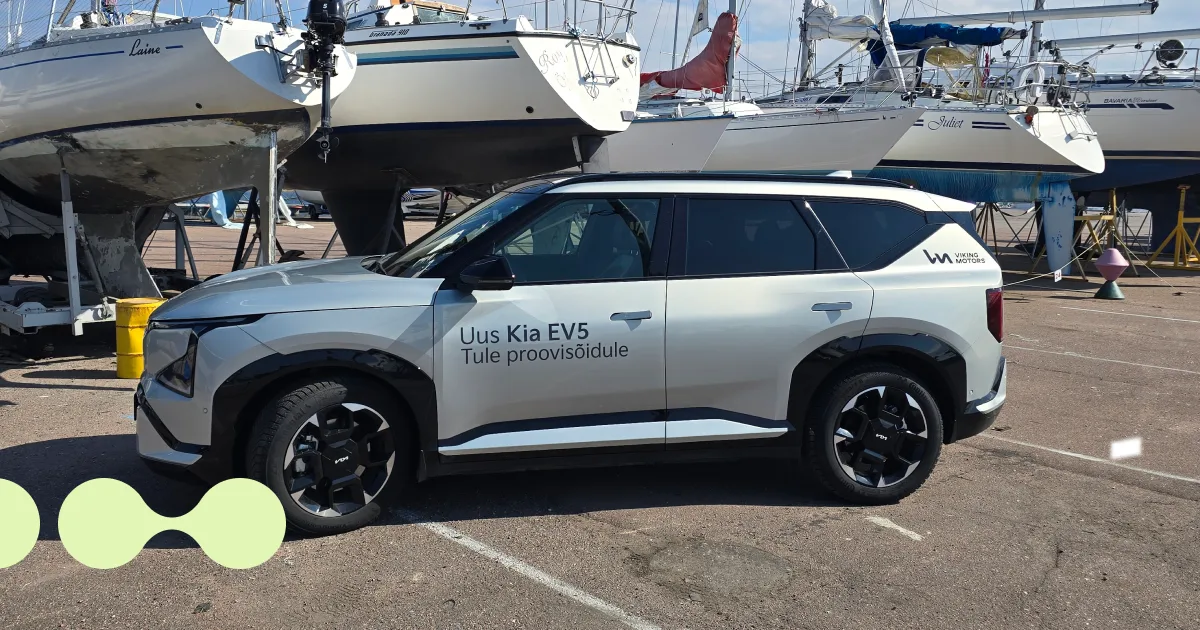
This is where advanced technology like V2L stops sounding abstract. It becomes a practical way to bring electricity exactly where the work needs to happen, without dragging a generator into the picture.
3. Home backup power for short-term needs
A compatible EV can cover selected essentials during a short outage, which is often all people actually need. That does not mean replacing fixed home wiring or turning the car into a whole-house backup system. In most cases, it means plugging a few key devices directly into the outlet created by the accessory.
Useful examples include:
- a modem and router
- a work laptop
- a lamp
- an approved medical device
- a small fridge or freezer for a limited time
What makes this use case convincing is that it stays realistic. Nobody expects the car to run the whole house. What it can do is keep the important things going quietly and with little setup. In a short outage, that kind of targeted backup is often more valuable than a bigger promise.
Compatibility: V2L adapter pre-purchase checklist
A Vehicle-to-Load adapter may look simple, but it is not a universal accessory like a USB cable; it is model-specific hardware. The shape can fool you. Two products can look almost identical and still have very different limits, socket formats, or brand support.
| What to check before ordering a V2L adapter | Why it matters |
| Vehicle compatibility | V2L is not universal. Some manufacturers restrict this feature to specific trims or model years. Always verify your VIN or trim level supports bidirectional discharge. |
| Socket standard | The adapter’s output must match your region (e.g., Type G for UK, Type F/Schuko for EU) to ensure your local appliances can plug in without dangerous daisy-chaining. |
| Max power output | Most systems range from 2.2kW to 6.6kW. Knowing the car’s limit prevents “tripping” the internal breaker when running high-draw tools or heating appliances. |
| OEM vs. third-party | While third-party adapters are more affordable, OEM parts ensure communication protocols between the car and adapter are 100% compliant, protecting your warranty. |
| Technical specs | Look for explicit safety certifications (CE/RoHS), IP weather-resistance ratings for outdoor use, and a confirmed list of compatible vehicle models. |
The easiest way to think about it is this: do not treat a Vehicle-to-Load adapter like a cable. Treat it like model-specific hardware. A product that looks right can still be completely wrong for your car. In this category, narrow compatibility is normal.
How to use a V2L adapter safely
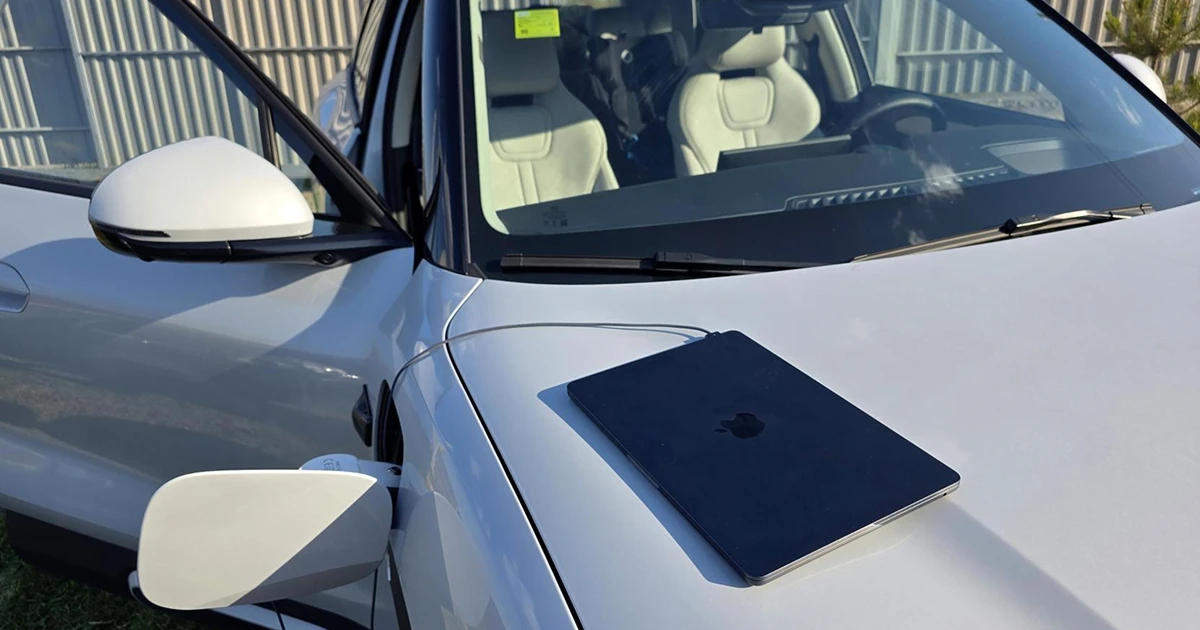
V2L is handy because it gives you power where you need it, but it only stays useful if you use it properly. The basics are not complicated. Most of it comes down to staying within the car’s limits, keeping the setup dry and secure, and not taking shortcuts.
Do this
A few habits make a big difference:
- Read the car manual before first use
- Stay below the maximum output limit
- Make sure plugs are fully inserted, and cables are in good condition
- Place the unit somewhere it will not sit in standing water
- Keep enough battery charge for the drive home
- Use appliances with a known and steady power draw
Avoid this
This is where people usually get into trouble:
- Overloading the socket with high-draw devices
- Using cheap or poor-quality extension gear
- Connecting the car to home circuits without approved equipment
- Assuming every EV-style plug supports the same feature
- Leaving sensitive electronics exposed to bad weather
- Using damaged housings, worn cables, or improvised fittings
Final thoughts
A Vehicle-to-Load adapter makes sense to use because it solves ordinary problems in a simple way. It turns the battery in a compatible EV into something you can actually use outside the car, whether for work, travel, or short-term backup power. That is a small shift in hardware, but a big shift in how useful the car can be.
And that is the real appeal: less theory, more practical value when life gets inconvenient. It will not turn your EV into a power station, but it might save dinner, keep work going, or make you look unexpectedly prepared.
FAQ
Does every EV support V2L feature?
No, and that is where many people get caught out. V2L support can change from one version of the same car to another, depending on the model year, trim, hardware, and software. Some EVs do not offer external power output at all. Some offer it only on selected variants, and some include an interior socket as well. Before buying an adapter, it is best to check the official details for the exact car, not just the model name.
How much can it power in practice?
Usually, the useful everyday stuff. A laptop, phone chargers, lights, a coffee machine, maybe a small appliance. Big heaters and heavy tools are where you hit the limit fast. The safe way to check is simple: look at the device’s wattage and compare it with the adapter and the car’s output.
How to use the V2L adapter?
Using the accessory is usually straightforward, though the exact screen prompts vary by car. Park safely and switch to the required mode.
- Check the battery level and set your minimum reserve.
- Open the unit’s cap, if there is one. Insert the V2L adapter into the charging inlet until it locks in place.
- Plug your appliance into the socket.
- Confirm on the display or indicator light that power output is active.
- Disconnect the appliance before removing the unit.
Some shops describe the accessory loosely as a battery adapter, but what matters is that it is designed for V2L and for the correct vehicle standard.
Can I use V2L to charge another electric vehicle?
Sometimes, but only as a workaround. A V2L adapter may power a portable charger, which can then slowly charge another EV. It is not a great everyday method because conversion losses reduce efficiency, and compatibility is not guaranteed. In practice, the car is sending battery energy out through an AC connection, which then feeds portable charging equipment before the second car receives it. Check the car maker’s guidance, charger approval, and power limits first.
Can I use a V2L adapter in the rain or snow?
Yes, if it is a proper certified adapter, but do not get casual about it. Outdoor use is one thing, wet plugs and pooled water are another. Keep the unit off soaked ground, protect the socket area, and never handle cables with wet hands. Follow the weather rating and the manual. And if you are comparing products online, do not look only at the original price. Build quality, sealing, and certification matter far more in bad weather than a small saving at checkout.