Sooner or later, every conversation about electric cars reaches the battery graveyard. The car may be clean to drive, the argument goes, but somewhere a pile of dead packs full of lithium, nickel, and cobalt must be growing.
For the most expensive part of the car, that is a fair thing to wonder about.
So what happens to EV batteries when they die? Something far less dramatic than the battery graveyard story suggests, and much later than most people expect, because the great majority of packs on the road today are nowhere near the end of their life.
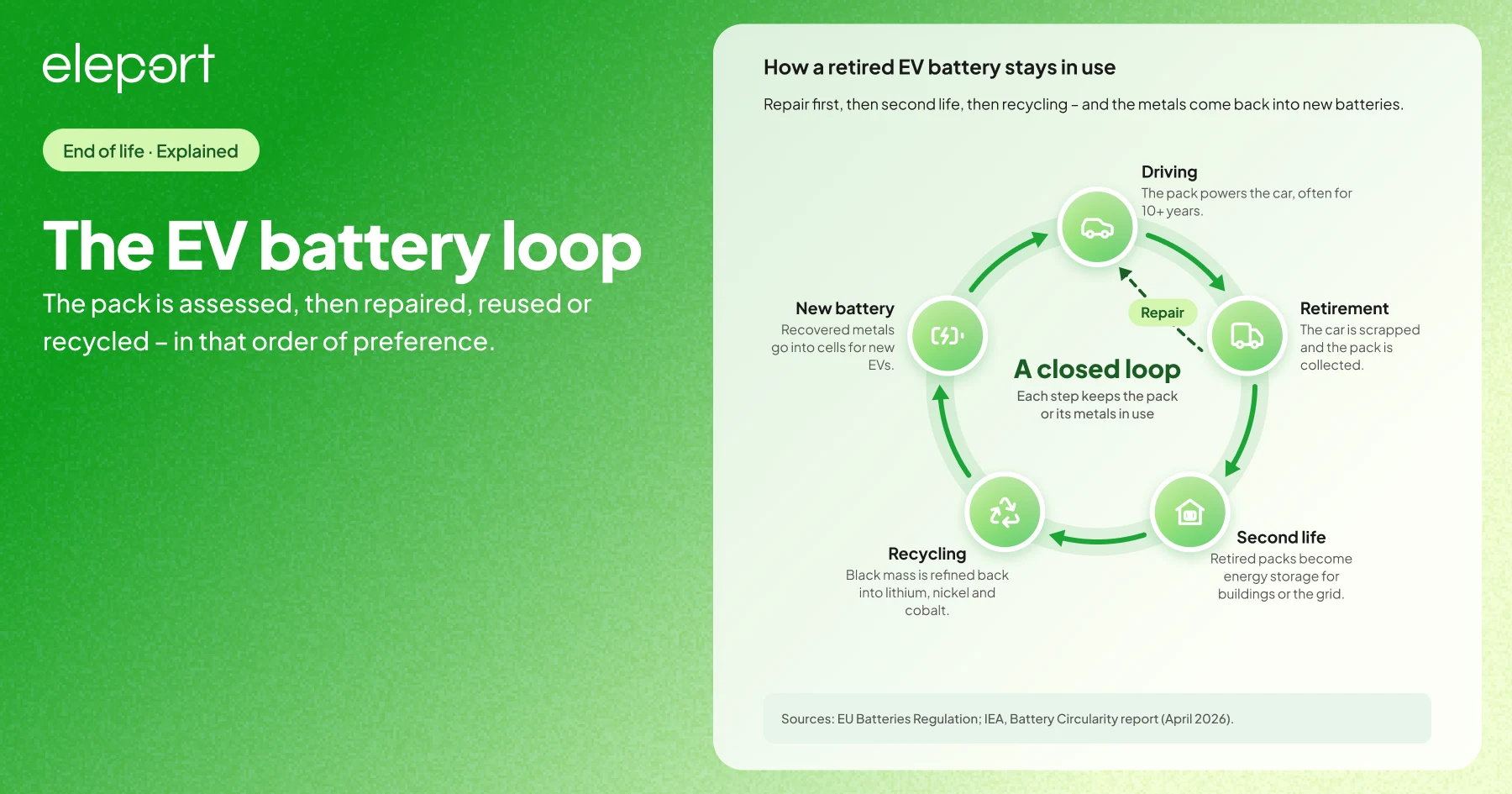
When a battery does retire from active EV use, it doesn’t have to go straight to a shredder. It can be repaired, put to work storing energy in a building or on the grid, or broken down for its metals through electric car battery recycling.
We’ll go through each of those routes, what EV battery recycling involves, and the European rules that now decide who pays for it and how much of the metal has to come back.
When Does an EV Battery Reach the End of Its Life?
Most explanations of what happens to EV batteries at end of life picture a pack that has simply stopped working. And the picture in most minds is that the EV battery pack will end it’s life all of a sudden, rather than the reality of a slowly degrading curve.
By industry convention, an EV traction battery is considered finished for driving once it falls to 80% or 70% of its original capacity, its state of health. A pack at 75% still works in reality; it simply takes you that much less far on a charge.
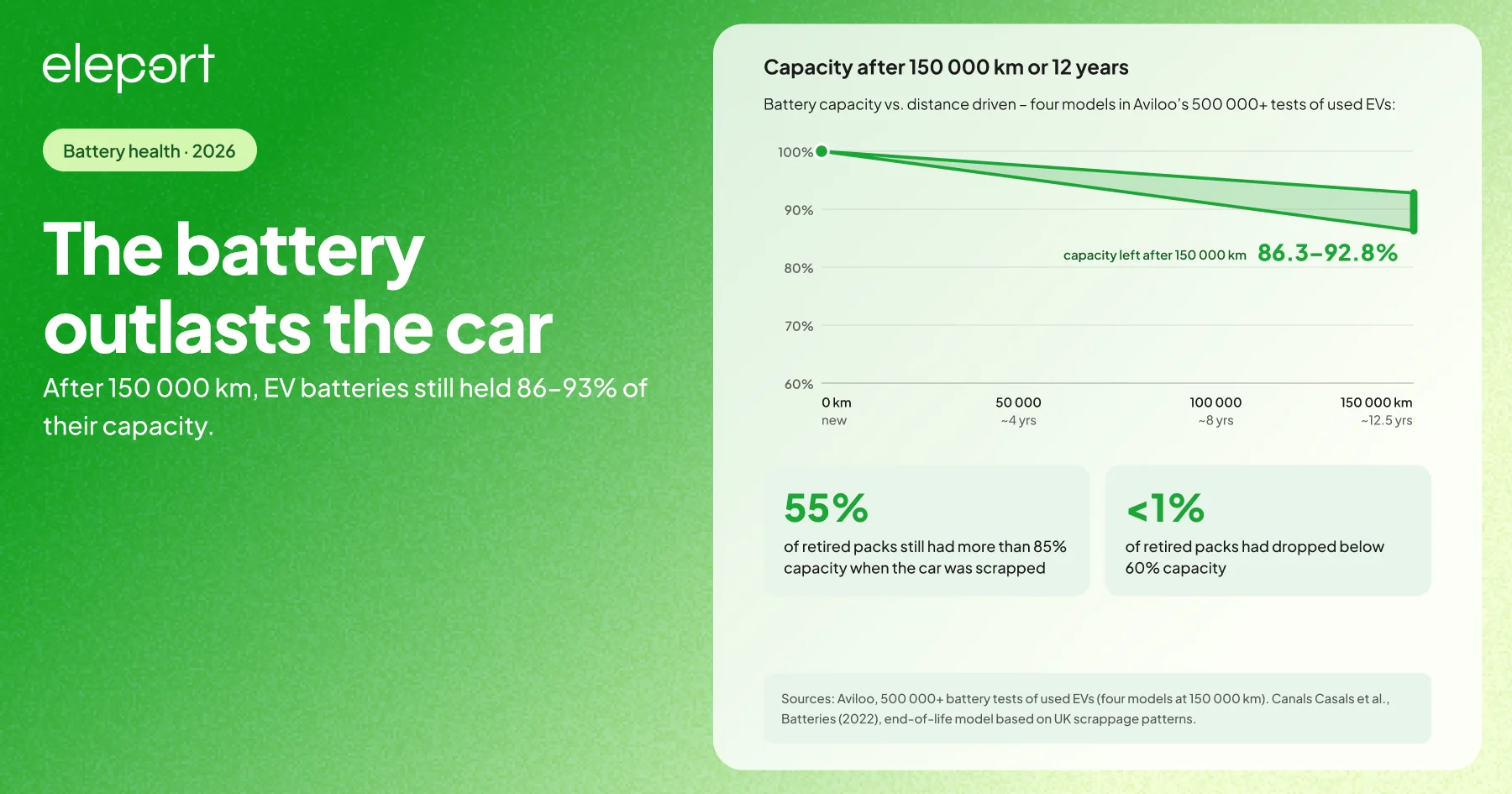
How long do EV batteries last before they get there? Our guide to electric car battery life walks through the latest real-world data. Here’s one – Aviloo’s more than 500 000 tests of used EVs, the four models it details held between 86,3% and 92,8% of their capacity at 150 000 km
In other words, over 150 000 km of driving, the battery degraded (and thus, range was lowered) by 7,8%-13,7% respectively. The average EU driver does 12 000 km per year, so we’re already talking of the span of over 10 years here.
A 2022 modelling study by Canals Casals and colleagues, published in the journal Batteries, took UK scrappage patterns for diesel cars and applied them to EVs. It concluded that most electric cars will reach the end of their life for reasons other than a worn-out battery.
In other words, the battery outlasts the car.
In that model, 55% of retired packs still had more than 85% of their capacity, and fewer than 1% had dropped below 60%.
That goes a long way to explaining why so few of the EV batteries have retired yet. The International Energy Agency’s Battery Circularity report, published in April 2026, expects around 1,2 million EV batteries worldwide to reach the end of their life in 2030, rising to 14 million in 2040, as the fleet of EVs grows with the current times.
The same report counts more than one in four cars sold worldwide in 2025 as electric, so for now the retirements are a trickle next to the sales.
What happens to EV batteries at the end of their life? Usually the car goes first. The pack is removed at a vehicle dismantler and handed into the producer’s take-back scheme, where it is assessed and then repaired, reused as stationary storage or recycled for its metals, roughly in that order of preference.
Can a Worn EV Battery Be Repaired?
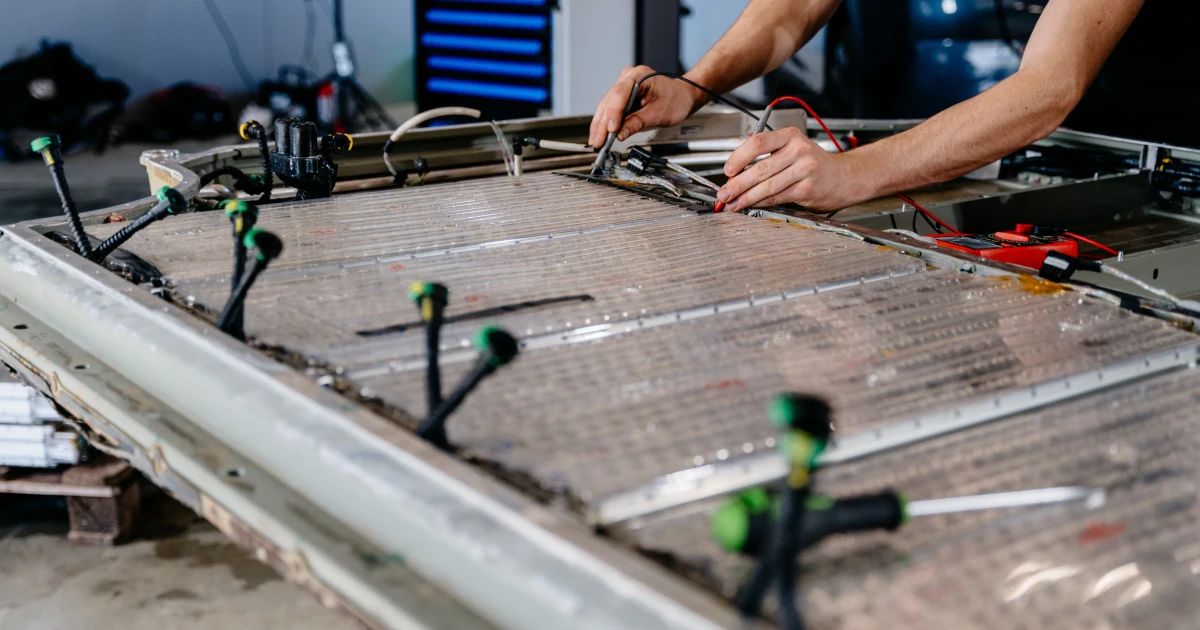
A battery pack that develops a fault rarely has to be scrapped whole. It is built from modules, and the problem usually sits in one of them.
Renault runs a dedicated Battery Repair Expert Center at its Flins site in France, and its circular-economy arm Gaia says 99% of the batteries processed there are repairable, by the company’s own count.
Repair now has a rulebook too. EN 18061:2025, published by CEN and CENELEC in September 2025, sets out how EV battery modules and packs can be safely repaired, reused and prepared for repurposing, by certified workshops with trained staff and documented procedures.
For an existing or would-be EV driver, this matters mostly when buying used. A repair done to the standard should come with documentation, which is worth asking for, and our checklist for buying a used electric car covers what else to ask about the battery.
What Are Second Life EV Batteries Used For Today?
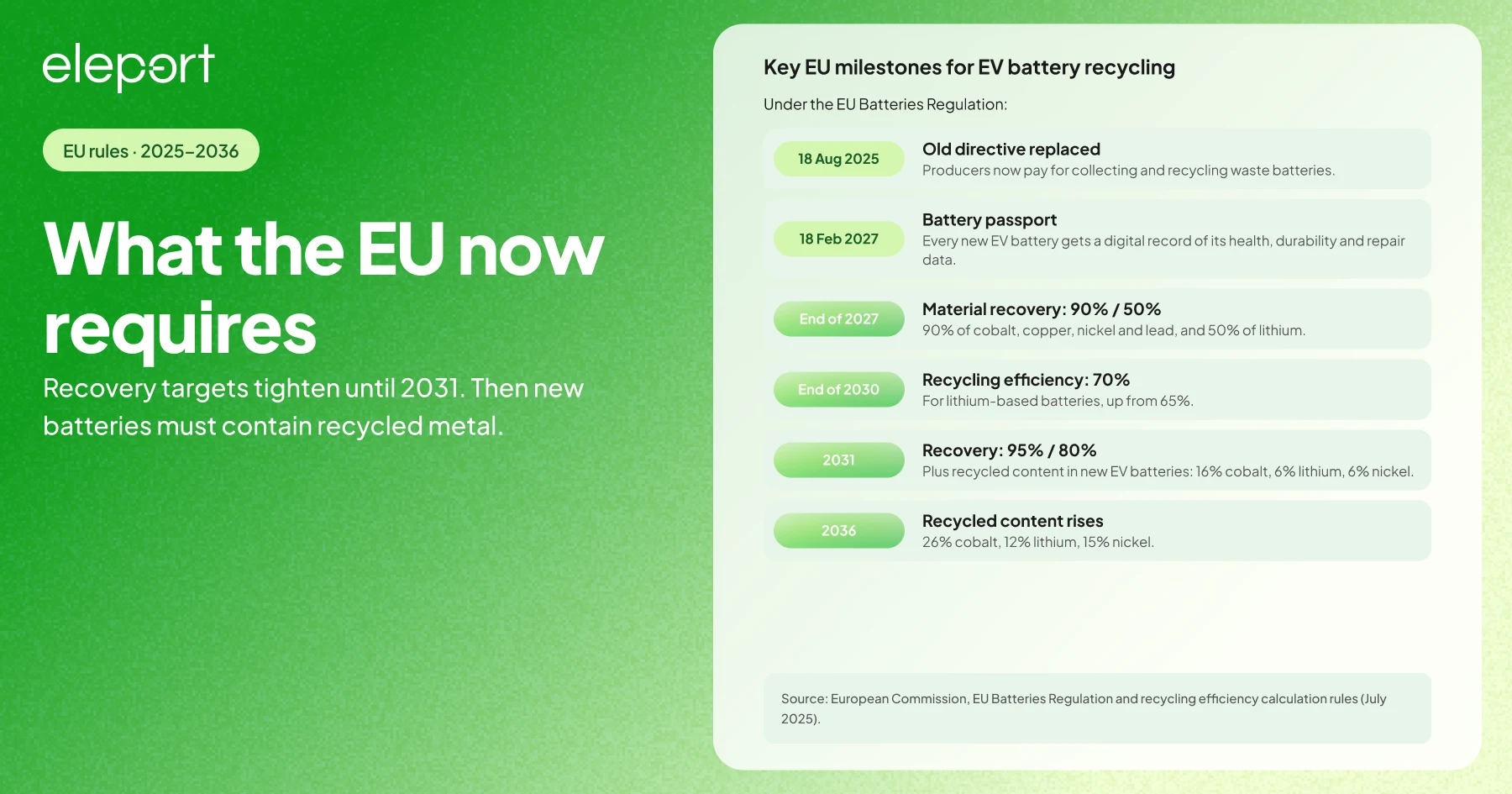
A battery too tired for a car can still hold plenty of energy. Stationary storage is the natural home for these, where weight and space matter far less.
The biggest example so far is in the US. Redwood Materials, better known as a recycler, launched an energy storage arm in June 2025 and switched on a 12 MW, 63 MWh battery energy storage system built from used EV packs for the AI infrastructure company Crusoe in Nevada.
Redwood called it the largest second-life deployment in the world. Its system takes in whole packs, across different chemistries, without fully taking them apart.
Europe is more cautious. The EU’s TREASoURcE project ran pilots in Norway and Finland, as part of a programme covering the Nordics, the Baltics, Germany and Poland, and published its findings in April 2026.
Chemistry decides a lot when deciding what to do with the end-of-life battery.
NMC packs carry valuable nickel and cobalt, which may make electric car battery recycling the wiser choice, while LFP packs, with less valuable material inside, may make better second-life EV batteries.
Access to the car’s own electronics was the other deciding factor. “Reuse is clearly more successful if the original Battery Management System can be used,” said Raimo Tengvall of Forum Virium Helsinki, one of the project partners.
The awkward finding was about money. New batteries are now affordable enough to challenge the profitability of reuse, not least because turning used packs into storage still takes a lot of manual work. The project also called for standardised testing and better access to battery data such as charging history.
There is also a ceiling on scale. The Canals Casals study warned that, with EV sales growing, the market for second life batteries in stationary storage would quickly saturate, and at some point retired packs will have to go straight to recycling.
Which isn’t a bad thing per se, given how much of the battery can be recovered and put back into use through recycling.
How Does the EV Battery Recycling Process Work?
The EV battery recycling process starts with taking the pack apart, and from there it follows one of two main industrial routes.
Pyrometallurgy smelts the batteries in a furnace. Cobalt, nickel and copper come out as an alloy, while the lithium goes into the slag with the aluminium and manganese, where it is diluted and hard to get back.
The other route begins mechanically. The modules are shredded, plastics, copper, aluminium and iron are separated out, and what remains is a dark powder called black mass, which holds the lithium, nickel, cobalt and manganese.
At the Mercedes-Benz and Fortum plants, black mass recycling uses hydrometallurgy, which dissolves the powder in chemical solutions and recovers the metals one by one, lithium included. Those metals can then go back into cathode materials for new cells.
Mercedes-Benz opened its own electric car battery recycling plant at Kuppenheim in Germany in October 2024. It combines mechanical and hydrometallurgical stages and handles 2500 tonnes of battery material a year.
In Finland, Fortum’s hydrometallurgical plant at Harjavalta recovers lithium, cobalt, manganese and nickel from black mass. There are now more and more recycling plants going online across Europe and the world.
Can EV batteries be recycled? Yes. EU rules now set a minimum recycling efficiency of 65% for lithium-based batteries, rising to 70% by the end of 2030. Plant claims run higher on their own measures, with Mercedes-Benz expecting a recovery rate above 96% at Kuppenheim.
What Do EU Rules Say About EV Battery Recycling?
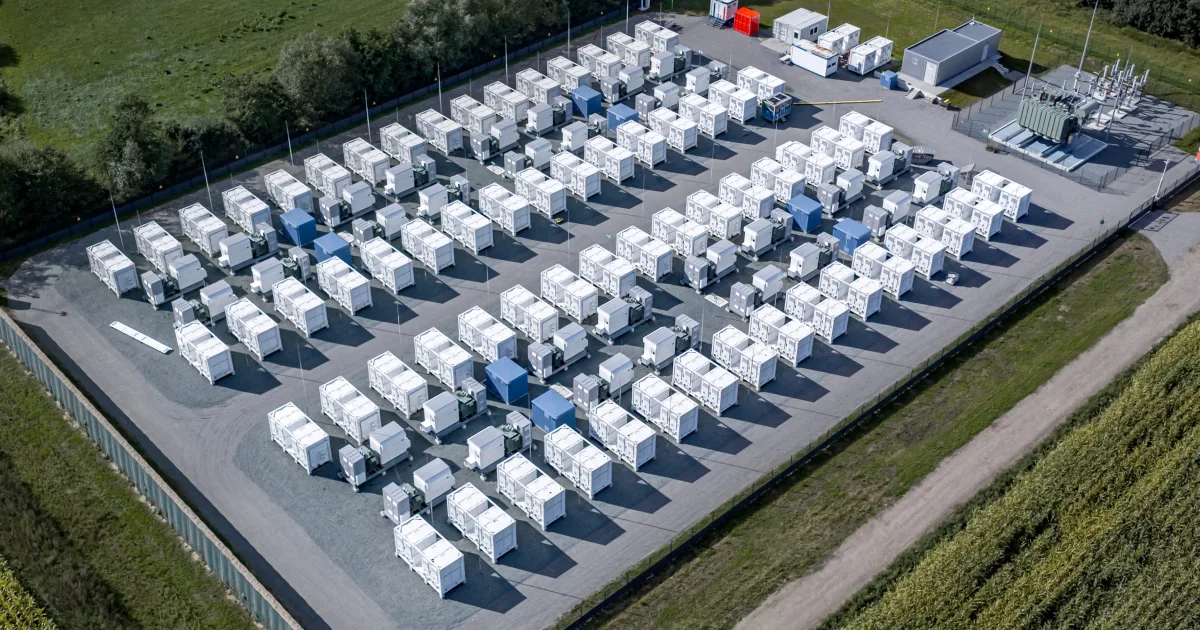
The EU Batteries Regulation sets specific targets for EV battery recycling, starting with material recovery. By the end of 2027, recyclers must recover 90% of the cobalt, copper, nickel and lead from waste batteries and 50% of the lithium. By the end of 2031, that rises to 95% and 80%, under calculation rules the European Commission published in July 2025.
The regulation also sets recycled content. From 2031, new EV batteries must contain minimum shares of recovered material, 16% for cobalt, 6% for lithium and 6% for nickel, and five years later those shares climb to 26%, 12% and 15%.
The battery passport is due on 18 February 2027. Every new EV battery on the EU market will carry a digital record of its identity and technical characteristics, performance and durability data, and information to support repair, reuse and EV battery recycling.
That is the battery data the TREASoURcE project asked for. A second-life buyer who can read a pack’s history can judge what it is worth.
Europe also wants the black mass to stay here rather than being exported for EVs built elsewhere. The Commission has classified it as hazardous waste, which, under EU waste shipment rules, bans its export to countries outside the OECD. The rules also settle who pays for electric car battery disposal.
Do I have to pay for EV battery disposal? No. Under the EU Batteries Regulation, which fully replaced the old batteries directive on 18 August 2025, the producer, typically the carmaker or its importer, pays for collecting, treating, and recycling waste batteries, so the cost of dealing with the pack is theirs to carry.
Why Are Europe’s EV Battery Recycling Plants Short of Batteries?
Contrary to the graveyard story, Europe has more recycling capacity than it has old batteries to feed it.
Fraunhofer ISI’s July 2025 update put European pretreatment capacity at around 270 kilotonnes a year, heading for roughly 520 kilotonnes by 2030.
Return volumes, meaning end-of-life batteries and production scrap together, were about 100 kilotonnes a year. The forecast for 2030 was up to 270 kilotonnes, around 40% lower than Fraunhofer’s own estimate a year earlier.
Most of what recyclers process today is factory scrap. According to the IEA’s Global EV Outlook 2026, recycling worldwide will stay dominated by production scrap until end-of-life batteries take the lead in the mid-2030s.
The old packs may also take longer to arrive. The same IEA outlook finds nearly all batteries deployed in recent years still in use, and a growing second-hand EV market means some of the volume recyclers were counting on may turn up later, and in different places.
The wait for the dedicated EV battery recycling companies that was spun up earlier in the EV revoltion to receive old EV batteries en masse has been actually very difficult for those business models. Among electric car battery recycling companies, Li-Cycle filed for bankruptcy in 2025, and when Glencore completed its takeover that August, the German site was the only one of its plants still running.
Redwood, for its part, entered Europe in 2023 by buying Redux Recycling in Bremerhaven, a plant with 10 000 tonnes of annual capacity.
In Finland, Fortum said in December 2025 that it would phase out its battery recycling sites at Ikaalinen and Tornio during the first half of 2026, keeping the hydrometallurgical plant at Harjavalta.
At the same time, carmakers are building recycling volume of their own. Tesla battery recycling grew 20% in 2025 to more than 14 000 tonnes of battery material, handled in-house and through partners, according to the company’s 2025 Impact Report.
Then there is the EV battery recycling cost. A study led by HHL Leipzig Graduate School of Management for the EU’s SAFELOOP project, published in August 2026, found recyclers losing around 1,90€ per kilogram of battery pack. Moving batteries as hazardous goods costs about 16 times standard freight.
The fix is mostly logistics and design. Safer packs, shorter routes and automated dismantling could cut costs by about 34%, the researchers calculated, enough for a profit of 13 cents per kilogram.
LFP brings a problem of its own. Cheaper and free of nickel and cobalt, it made up over 55% of EV batteries deployed worldwide in 2025, and its low material value is hard on recyclers that live off what they recover.
Most EV Batteries Won’t Need a Recycler Until the 2030s At All
So, what happens to old EV batteries? For now, remarkably little, because so few have reached the end of their life. The packs sold at the start of this decade are still driving.
When their time comes, the route is mapped out. Repair where a module has failed, a stint as stationary storage where the chemistry and the data allow it, then a plant that turns black mass back into battery-grade metal under EU recovery targets that tighten until the end of 2031.
The interesting effect of the EV future is actually what happens when there is a large enough fleet of EVs in the world in circulation already. There should come a point in the future where the need for mining new metals for EV batteries falls off, just because there are enough batteries already in recycling circulation from which new EV batteries will be made.
Either way, for you as a driver, none of it needs managing, whether you charge at home or on the Eleport EV charging network. The pack will very likely outlast your time with the car, and when it finally comes out, EV battery recycling is the producer’s job and the producer’s bill.