EVs didn’t just come to overtake the auto world in our driveways.
They’re now doing so, also, on the track. At one point within our new era of electric cars, which is the last decade or so, it became normal that the performance kings in most aspects are indeed fully electric.
For most of the last decade, the answer to the fastest electric car question kept moving every few months, usually by a handful of km/h, usually from a small European workshop. September 2025 ended that pattern in one run.
A BYD sub-brand, YangWang, sent a four-motor hypercar down a German proving ground at 496,22 km/h and walked off with the outright production car record, petrol or electric. So the fastest electric car in the world is now also the quickest production car ever built, full stop.
Below this top of the top sits a wide range of performance EVs, and the quickest one is not always the most interesting. Here is where things stand in 2026, across top speed, acceleration and the track. Including a four-door saloon from a phone company that is rewriting what a fastest electric car is allowed to be.
The 2026 World’s Fastest Electric Car Podium
Top speed, production cars:
- YangWang U9 Xtreme: 496,22 km/h
- Rimac Nevera R: 431,45 km/h
- Aspark Owl: about 412 km/h
One caveat on the sprint figures. The 0 to 60 mph runs stop just short of a full 0 to 100 km/h, so the Aspark and Lucid times are not perfectly comparable with the Rimac’s. All of these are manufacturer or record-run quotes, not independent test data.
Acceleration:
- Rimac Nevera R: 0 to 100 km/h in 1,72 s
- Aspark Owl: 0 to 60 mph (0-97 km/h) in about 1,7 s
- Lucid Air Sapphire: 0 to 60 mph (0-97 km/h) in 1,89 s
Production-EV lap, Nürburgring Nordschleife:
- Xiaomi SU7 Ultra: 7:04,957
- Porsche Taycan Turbo GT: 7:07,55 (previous holder)
What Is the Fastest Electric Car On Earth Right Now?
The YangWang U9 Xtreme, BYD’s halo hypercar, holds the record. On 14 September 2025, it ran 496,22 km/h at the ATP Automotive Testing track in Papenburg, Germany, with German racing driver Marc Basseng at the wheel.
That number did two jobs at once.
It made the U9 Xtreme the world’s fastest electric car, and it edged past the 490,484 km/h set by the quickest petrol-powered production car. No petrol car has gone quicker to overtake this since.
BYD did not stumble into this. The same group now sells more new-energy vehicles than anyone on earth, and the U9 Xtreme is the spike sitting on top of that volume.
This is not a press-release special, either.
BYD is actually building the car as a limited series, said to be 30 units. The price sits north of 200 000€ equivalent, which by hypercar standards is almost… sensible. The standard U9 topped out far lower, so the Xtreme reset the conversation about the fastest electric car by a margin nobody expected from a brand that did not exist a few years ago.
How The World’s Fastest Electric Car Hit 496 km/h
Motor count is the easy part. The U9 Xtreme runs four electric motors, each rated at a peak 555 kW, for a combined output north of 3000 PS.
What lets all that power actually reach 496 km/h is the electrical architecture underneath it. BYD built the car on a 1200V high-voltage platform, roughly double the 400V to 800V systems most performance battery cars use today, which keeps current and heat in check when every motor is pulling at once.
Then there are the tyres. At nearly 500 km/h, a tyre stops being a consumable and becomes a structural component, and BYD says these are the first Chinese-made tyres certified to withstand 500 km/h. Get any of that wrong and the fastest electric car on the planet turns into an expensive cloud of debris.
The Fastest Accelerating Road-legal Electric Car: Rimac Nevera R
What is the fastest 0-100 time of a production electric car?
Top speed is one trophy. For the other, arguably one of the most important records is something where a Croatian-built EV, the Rimac Nevera R is the one to beat.
In July 2025 it set 24 separate performance records in a single session at the Automotive Testing Papenburg facility. The number that matters most: the Nevera went 0 to 100 km/h in 1,72 seconds. It also reclaimed the 0-400-0 km/h title at 25,79 seconds, a full two seconds quicker than the car that held it before. And the record numbers here didn’t have a typo by the way, they really do measure the car going from zero to 400 km/h and it coming back to a full stop.
The Nevera R makes 2107 hp from four motors, each with its own torque-vectoring control. The same run had a top speed of 431,45 km/h, which actually made it the fastest electric car on the planet for about two months…until the U9 Xtreme arrived we talked about above.
Unlike the limited BYD, the Nevera R is fully homologated and road-legal in markets worldwide, which is why plenty of enthusiasts still hand it the “real” fastest electric car title. It will not out-top-speed the YangWang. Point it at a drag strip, though, and almost nothing on earth keeps up.
The fastest electric car bragging rights split cleanly. BYD now owns the velocity record, while Rimac still owns everything that happens in the first few seconds after the lights go out.
There is something else out there, though, which we’ll have to drop here as a caveat.
The McMurtry Spéirling, The Quickest-Accelerating Car Of All
One name sits outside the podium above, because it does not play by the same rules.
The McMurtry Spéirling is a tiny single-seat British fan car, and on raw acceleration it beats everything here. In testing for the YouTube channel carwow, it hit an independently measured 0 to 60 mph in 1,40 seconds, quicker than the Rimac Nevera. McMurtry even quotes 1,38 seconds.
The trick to achieve this is downforce. Two fans – yes, literal fans – pull roughly 2000 kg of suction onto the track even at a standstill, so a sub-1000 kg car with about 1000 bhp finds grip from the first metre. The same system holds the Goodwood hillclimb record at 39,08 seconds.
It stays off the main rankings for two reasons: it is track-only, not road-legal, and its top speed is just 306 km/h, built for launch and corner grip over outright velocity. The production Spéirling PURE is real, though, 100 units from £995 000, with deliveries running through 2025 into 2026. An outlier. Just a spectacular one.
Which Fastest Electric Sports Car Can You Actually Buy?
The record holders are spectacular and almost entirely theoretical for ordinary buyers. So what about the fastest electric car you could plausibly drive home?
The Japanese Aspark Owl sits near the top of that bracket, with 1953 hp from four motors, a quoted 0 to 60 mph around 1,7 seconds and a top speed near 412 km/h. It is still hypercar money, with about a €2,9 million price tag, built in single figures most years, but it does reach private customers. Just do not expect to spot one at the school run. Same with the Rimac Nevera at around €2,1 million, and as we already said, in a very limited availability, the U9 Xtreme.
Drop a tier, and the fastest electric car picture gets a lot more available. The Lucid Air Sapphire, technically a saloon rather than a sports car, is the quickest road car the United States has ever produced, with a claimed 0 to 60 mph in 1,89 seconds from three motors and 1234 hp. And it’s ready to order for up to $249 000 in price, with the lesser versions starting at €78 300 in Europe for the Pure trim.
Tesla’s Model S Plaid covers the same sprint in around two seconds and, with the optional track package, will hold 322 km/h – but the production was just sunset this year and for the absolute speed-thirsty, the Tesla next-generation Roadster is still coming later this year. It will certainly try to become the fastest electric car in the world, at least in acceleration. Porsche’s Taycan Turbo GT at around €240 000 trades a little outright pace for everyday composure, 777 hp and roughly 290 km/h, while still feeling like a car you could use on a wet Tuesday.
The Fastest Electric Car Top Speed Among Everyday Performance EVs
Strip out the seven-figure exotica and the fastest electric car top speed figures for cars you can configure online are still absurd by any historical measure. The Lucid Air Sapphire runs to 330 km/h. A Model S Plaid with the track pack reaches 322 km/h. Even the more sober super-saloons sit comfortably north of 250 km/h.
To be fair, those were the usual supercar numbers a decade ago, from the petrol side. Nowadays they come with five seats, a frunk, a warranty and a heated steering wheel. Quite a shift.
If you want to see exactly where any given model lands, EV Database keeps a running top speed electric cars chart for the European market, ranked and refreshed as new cars arrive. It is the cleanest way to compare top speeds across the fastest electric car models you might realistically cross-shop.
The catch: top speed is the spec you will use least. A 322 km/h limiter, even if it makes it one of the fastest electric car choices out there, is a party trick on a continent where the fastest legal tarmac is a handful of unrestricted German Autobahn sections. What you actually live with, day in and day out, is perhaps a bit the acceleration and mostly just the charging speed, comfort, and how it actually drives.
Top Speed Versus Track Time: The Nürburgring Angle
Brute force down a straight line is one thing. A proper track is a nother entirely, and at the Nürburgring the most surprising name of 2025, and still undefeated in 2026, turned up.
In June 2025, the Xiaomi SU7 Ultra lapped the Nordschleife in 7:04,957, becoming the fastest production EV in the circuit’s history and beating the Porsche Taycan Turbo GT’s previous mark of 7:07,55. A phone company, in case you still know Xiaomi for just that, did that. With a four-door electric saloon.
The production SU7 Ultra makes 1548 PS from three motors and quotes a 350 km/h top speed with a 0 to 100 km/h sprint under two seconds. Xiaomi’s stripped-out prototype went further still, posting 6:22,091 to rank among the fastest cars ever sent round the Nordschleife, of any fuel.
None of that makes the SU7 Ultra the outright speed champion. It does make the point that the skill of building a seriously fast electric car has spread well past the legacy performance brands, and fast.
A lap time blends power, cooling, brakes, software and tyre management over more than seven minutes of a track run. For a buyer, that arguably says more than a single runway pass.
There’s No Single Answer, But Plenty To Choose From
So, what is the fastest electric car as 2026 settles in? There is no single answer any more, only a winner in each category. The YangWang U9 Xtreme has outright speed sewn up. For raw acceleration it is the Rimac Nevera R. And the quickest lap, improbably, belongs to a Xiaomi saloon.
Each is the fastest production electric car by a different yardstick, which is a fair measure of how broad the field has gone in just a couple of years. For the rest of us, the more useful action sits a few tiers down, where four-figure horsepower is quietly turning into a mainstream option and we’re seeing some ridiculously quick cars suddenly in our regular traffic.
As for the performance EVs on our everyday roads, most of their lives are still spent on the same, EV charging with Eleport network, as every other battery car on the road. The fastest electric car in the world and your neighbour’s commuter hatchback queue for the same electrons.
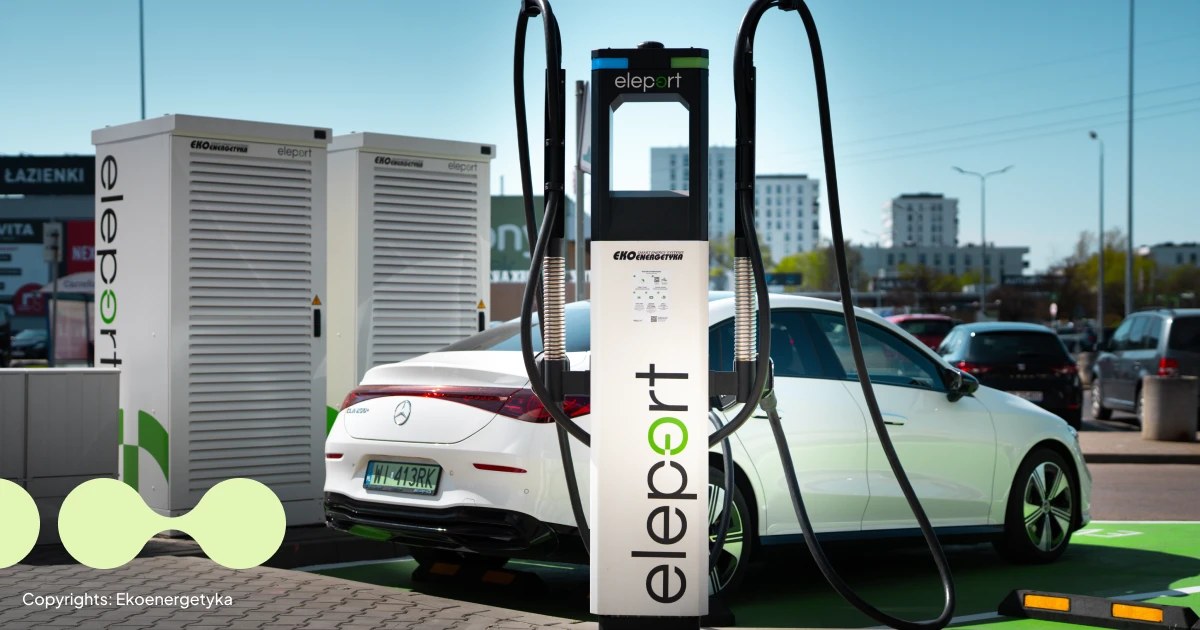
In this case, charging speed will be the differentiator, and that hatchback can sometimes run completely on par or even become the winner, as our ultra-fast charging stations don’t prioritize one over the other based on any other metric than the power your EV can actually take in.