Most EV advice starts with a wallbox on the garage wall. No help at all if your car spends the night on the street or in the courtyard behind a block of flats.
You’re far from alone there.
For a lot of would-be owners, charging without a plug of your own at home is a bigger doubt than range. And for most of them, it can be solved with a bit of planning.
So let’s go through EV charging without driveway access step by step, cost included.
Can You Own an Electric Car Without a Driveway? Plenty Already Do
Can you own an electric car without a driveway? Yes. Nearly half of the EU population lives in a flat, and in Zapmap’s 2025 survey of UK drivers, those without home charging were about as confident using the public network as those with it. What it takes is a reliable charger somewhere on your weekly routes.
That Zapmap survey covered 3976 battery electric car drivers, and almost a quarter of them had no home charging at all.
The flat figure comes from Eurostat’s Housing in Europe. In 2024, 48% of EU residents lived in a flat. Latvia, at 64%, was second only to Spain.
Most of the electric car no driveway worry comes down to where the charging happens. EV ownership without a wallbox runs on habit, and the winning idea is that you top up where the car already stops.
How Often Do You Actually Need to Charge an EV Without Home Charging?
Less often than you might think. Let’s run the numbers on an average European driver.
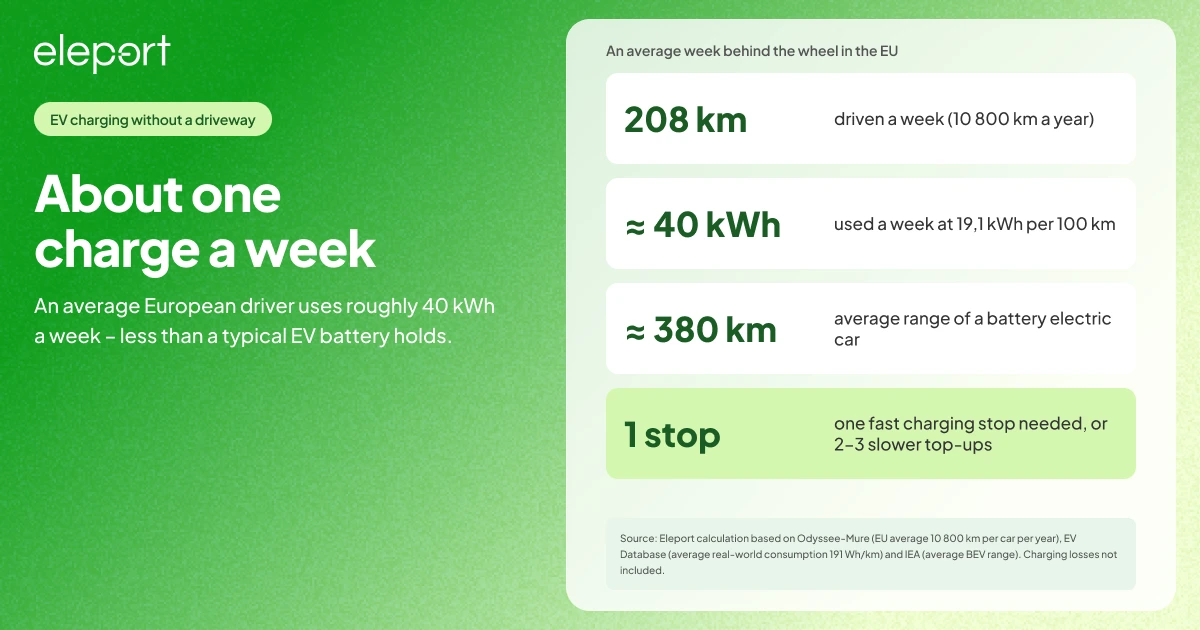
The Odyssee-Mure project puts the EU average at 10 800 km per car per year, roughly 208 km a week. EV Database gives a real-world average energy consumption of 191 Wh/km across the electric cars it lists, which is 19,1 kWh per 100 km.
So, how often do you need to charge an EV without home charging? For an average driver, that’s about once a week. And we didn’t just wing it with the number here, here’s how it sums up.
At the EU average of 10 800 km a year and a typical 19,1 kWh per 100 km, a car uses roughly 40 kWh a week, a little more once charging losses are counted. That’s less than the battery pack of an average electric vehicle in Europe. That means one fast charging stop, or two or three slower top-ups covers your weekly needs.
The IEA puts the average battery electric car’s range at almost 380 km. On paper, a typical week uses a little over half of that, so range anxiety rarely forces a stop you didn’t plan.
Your own week may look different, of course. Odyssee-Mure’s figures run from around 6000 km a year in Lithuania to about 17 000 km in Ireland, and a long commute can easily double the stops needed for such a journey. Which isn’t a dealbreaker either.
How to Charge an Electric Car Without a Driveway: The Places That Work
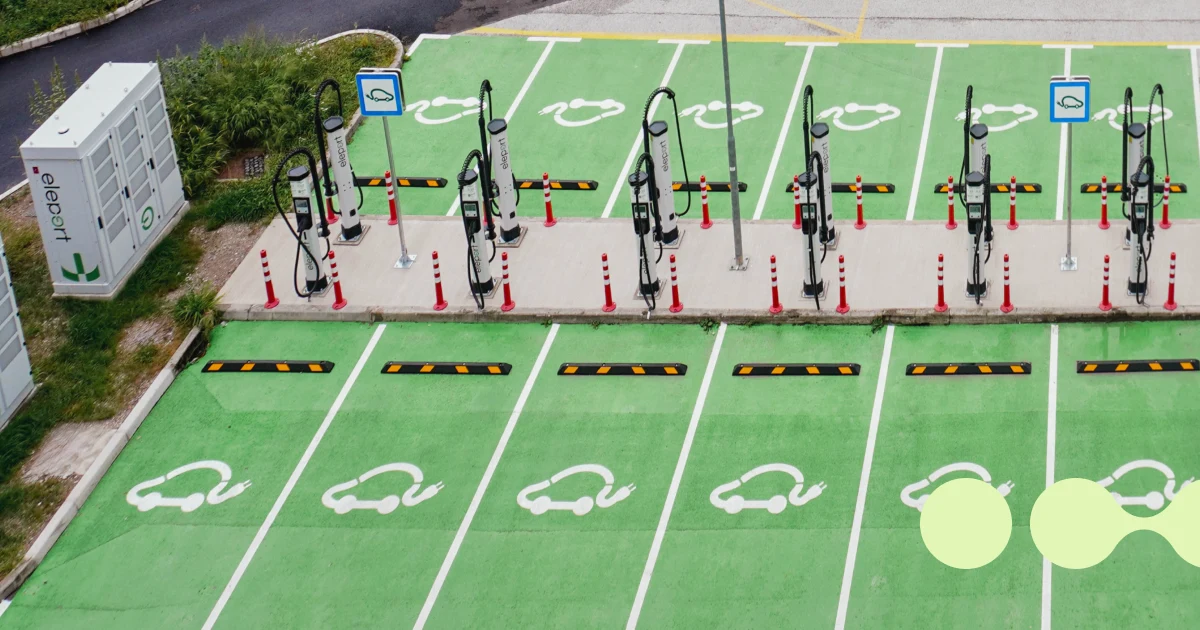
In practice, EV charging without driveway space becomes a mix of two or three places.
For many drivers without a driveway, DC fast charging is the backbone. One stop on the way home covers that 40 kWh. At an EV charging hub with a dozen or more chargers, one is far more likely to be available. For example, our site at King Cross in Zagreb has 12 ultra-fast DC points of up to 400 kW, plus eight AC points, at a shopping centre, so you’ve also got something to do while it charges.
Destination charging fills the gaps at supermarkets, gyms, hotels and car parks. An hour at an 11 kW charger – not even at the fast charger – adds about 55 km on average, allowing for some losses, so in a few hours, you’d replenish enough for your week without feeling it as an actual stop. If that stop has a fast charger instead, the roughly 40 kWh your week needs usually takes under an hour, so a single supermarket run can cover the whole week.
A charger in the office car park, if your employer has one, is the next best thing to a wallbox of your own. That’s usually the same: up to 11 kW charging that will get you going back from work at 100%. A charger at work can essentially completely replace the need for one at home, if the conditions are suitable.
Then there are AC points on residential streets. With a charging station near your on-street parking spot, overnight charging works much like at home, unless the operator adds idle fees once the battery is full. This one is more common across the Netherlands and the UK, and less so in Central and Eastern Europe.
Paying for charging is simpler now, too. Under the EU’s AFIR rules, any public charging point installed since 13 April 2024 must take ad hoc payment by card or contactless, and points below 50 kW may use a QR code instead.
An EV charging card or an app still helps once you charge somewhere regularly. The Eleport app shows our chargers on a map across Central and Eastern Europe, tells you whether your connector is available and lets you pay straight from your phone.
Apartment EV Charging: What Your Building Has to Allow
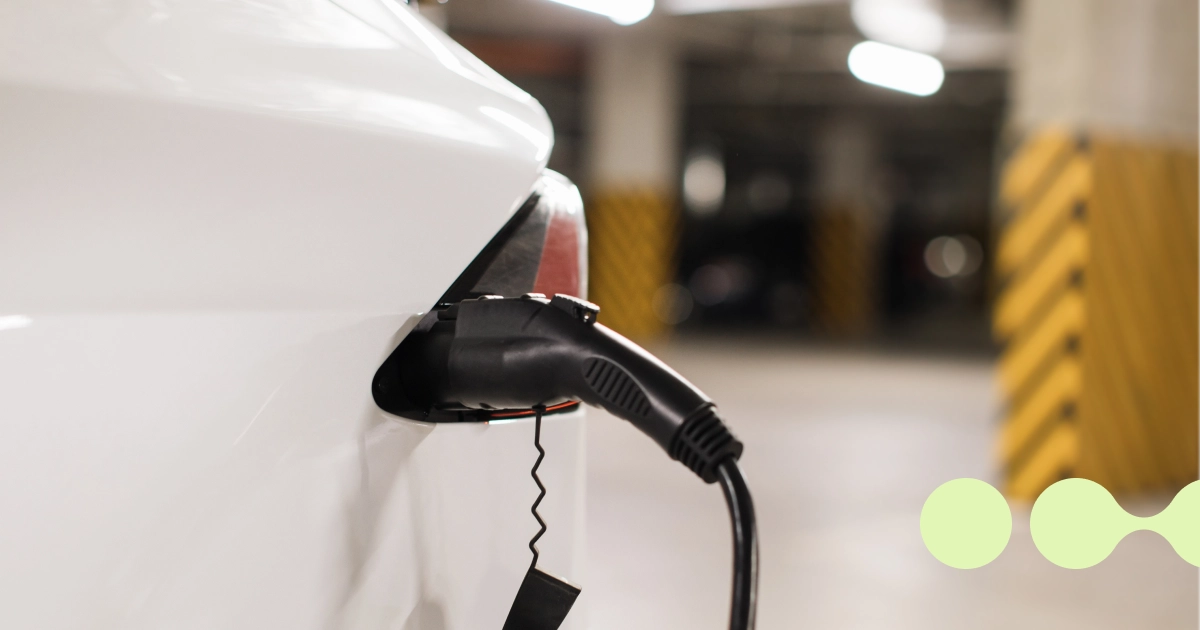
Often, the best answer to how to charge electric car without garage space in an apartment is a charger in the shared car park downstairs.
How do you charge an electric car if you live in a flat or apartment? Start with your building. You can ask the housing association or landlord for a charger at your parking space, and the EU’s buildings directive tells member states such a request may be refused only on serious and legitimate grounds. Until a charger is in place, use public chargers near home, at work or where you shop.
That rule comes from the recast Energy Performance of Buildings Directive, which EU countries had until May 2026 to turn into national law.
New and heavily renovated residential buildings with more than three parking spaces must also pre-cable at least half of the parking spots. For EV charging in apartment buildings that already exist, though, most of the detail is left to each country.
Some got there early. Since a 2020 reform, German apartment owners can demand reasonable building changes for EV charging, and generally pay for them themselves.
German tenants can demand their landlord’s permission too. The landlord may refuse only if the work can’t reasonably be expected of them, even after weighing the tenant’s interests.
Norwegian flat owners already had a right to install a charging point, which the board can refuse only for an objective reason. In 2020, parliament gave the same right to members of housing co-operatives. Residents who may park on the property but have no space of their own can now ask for a charging point, which the board places.
In Estonia, the Environmental Investment Centre (KIK) runs a charging infrastructure grant for apartment associations outside Tallinn and Tartu, in buildings permitted before 10 March 2021 with at least 10 parking spaces. Projects of four to 20 points qualify, while the budget lasts. Design and construction pay 757€ per point on projects of up to ten.
Apartment EV charging rules are still settling in many countries, so ask your housing association what has already been discussed.
Can You Run an Electric Car Charging Cable Across the Pavement?
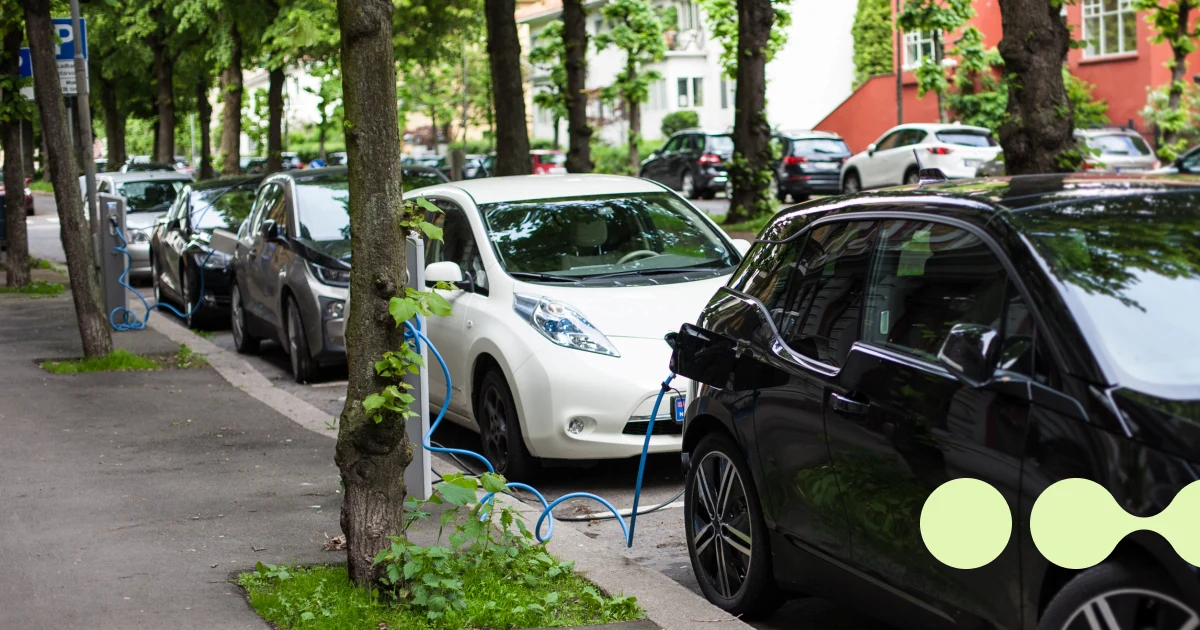
Cable crossings are a live issue in the UK. About 8 million households in England have no off-street parking, according to the Department for Transport’s cross-pavement guidance. So we’ll take a look at the UK’s situation to better understand what could work across Europe.
The guidance deals with permanent ways of getting an electric car charging cable across pavement and kerb. Cable covers and mats laid on top fall outside it, and whether they are allowed is up to the local authority.
Can you run an EV charging cable across the pavement? Usually not on your own. In England, government guidance warns trailing cables can be a trip hazard and may breach the Highways Act. Since 21 October 2026, qualifying cross-pavement channels can go in without planning permission, but only by or with the authorisation of the local highway authority. Outside England, check with your city first.
A channel is the most direct route to electric car charging at home no driveway owners have. It puts EV charging without driveway space on household electricity prices.
Many of the UK’s public residential chargers were paid for through its on street residential charging scheme, officially the On-Street Residential Chargepoint Scheme. It closed to new applications in March 2024, and its completed projects had installed 19 001 charging devices by July 2026.
Is Public Charging More Expensive Than Charging at Home?
This is where EV charging without driveway access costs you, because every kWh is bought at a public charging tariff instead of a household one.
Is public charging more expensive than charging at home? Usually, yes, and fast charging costs roughly twice as much. The median fast charging price across 29 European countries was 0,55€ per kWh in October 2026 per our European fast charging price report, while EU households paid an average of 0,2832€ per kWh for electricity in the first half of 2026, according to Eurostat.
Fast charging prices vary a lot between countries. Our European fast charging price report found the lowest median in Finland, at 0,35€ per kWh, with Estonia close behind at 0,37€. The UK sat at 73,50p, about 0,87€.
The network matters too. In the same report, 39% of operator listings offered a subscription or customer discount with a lower price per kWh. Our fresh EV vs petrol report even finds that relying solely on fast charging can still make your refuelling costs cheaper than petrol in most European countries.
Making EV Charging Without Driveway Space Part of Your Week
Good EV charging etiquette mostly means moving the car once it’s charged, and some operators enforce it with an idle fee. So it’s better to pair your fast charging with a specific stop length, whether it’s at a supermarket, gym, or just on your way home.
With that settled, how to charge an electric car without a driveway becomes a stop or two a week at places you were heading to already.
EV charging without driveway access takes a little more thought in the first month, and after that it fades into the background of owning the car.