

Imagine seeing two used electric cars, parked side by side on a dealer’s lot.
Same model, same 150 000 km on the clock, same price on the windscreen.
One of them can store noticeably more energy than the other.
But nothing on either car, or in either listing, will tell you which.
That gap is the part of the battery question not enough people talk about yet.
The part everybody does talk about through the core question, how long do electric car batteries last, finally has a solid answer, because the real-world data has caught up with the anxiety.
Battery degradation turns out to be both slower and far less uniform from car to car than you’d think… and that is where things get interesting.
In this report, I’ll go over everything the latest real-world tests have shown about where we are at on battery longevity.
Half a million battery tests say: the pack outlives the car

How long do electric car batteries last? Longer than most people keep the car. The largest independent dataset so far puts popular models at around 90% of their original capacity after 150 000 km, and long-term fleet data points the same way.
That dataset is the AVILOO Certified EV Battery Report, published by the Austrian diagnostics firm Aviloo on 2 August 2026. It draws on more than 500 000 independent tests of used EVs carried out between 2022 and 2026 across 20 popular models.
The report singles out four models to show the range of the results, too.
- The Hyundai Ioniq 5 has a median 97,2% state of health (aka how much of its original capacity the battery still has) at 50 000 km and 92,8% at 150 000 km.
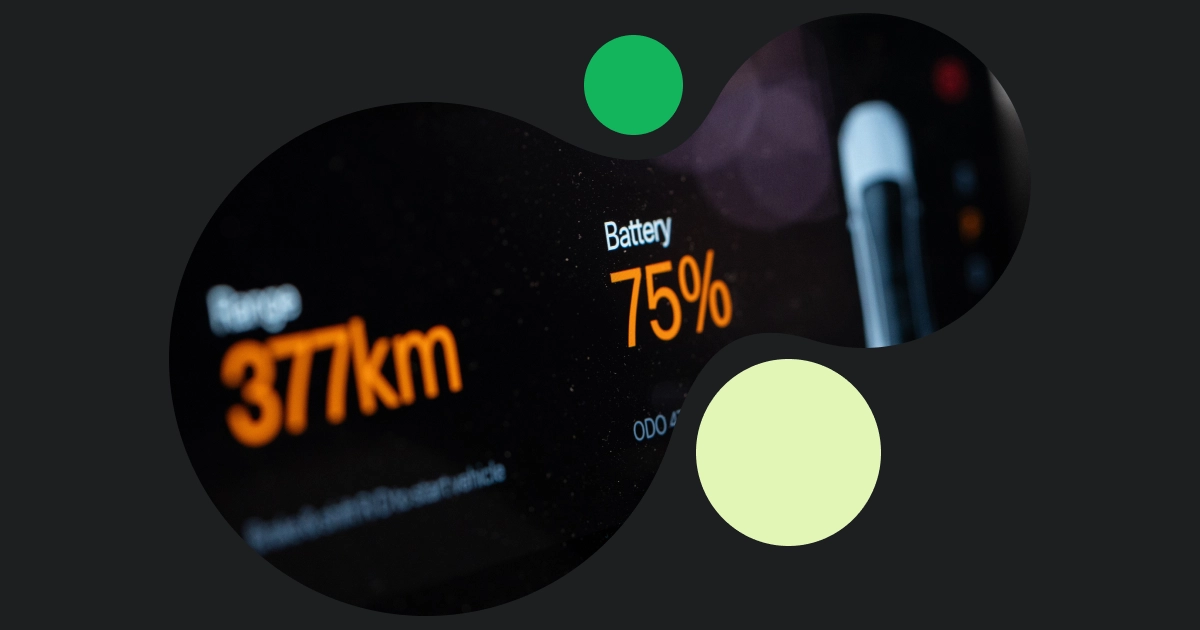
- The Volkswagen ID.4 has 95,3% at 50 000 km and 90,6% at 150 000 km, which in everyday terms means about 373 km of real range per charge falling to around 354 km, a loss of 19 km over 100 000 km of driving.
- The Tesla Model Y sits between them at 94,5% at 50 000 km and 90,3% at 150 000 km.
- The Nissan LEAF ZE1 trails the group at 91,1% and 86,3%, so even the weakest model’s median car has given up less than 14% of its capacity by 150 000 km.
Note that the Nissan LEAF is the only one of the four without active battery thermal management, so conditions of using the vehicle matter the most with that one. But that stat, of losing roughly 1% per 10 000 km from new with the LEAF, correlates well with my personal experience of running over 90 LEAFs in our e-taxi fleet in Estonia years ago.
Fleet telematics tell the same story, measured in years instead of kilometres.
GEOTAB about battery degradation puts average capacity loss at 2,3% a year across more than 22 700 vehicles and 21 models, which on a straight-line projection would still leave 81,6% after eight years of use.
Outright failure is rare. The US Environmental Protection Agency, citing Recurrent data on roughly 15 000 American plug-in vehicles, puts replacement for failure at 2,5% outside major recalls, and importantly at 0,1% to 0,5% of each model year from 2016 onwards. Yes, battery failures haunted the earlier era of EVs far more.
In practice, the typical EV battery lifespan is now set by the rest of the car, not by the pack.
What is battery degradation, and why are the first years the worst
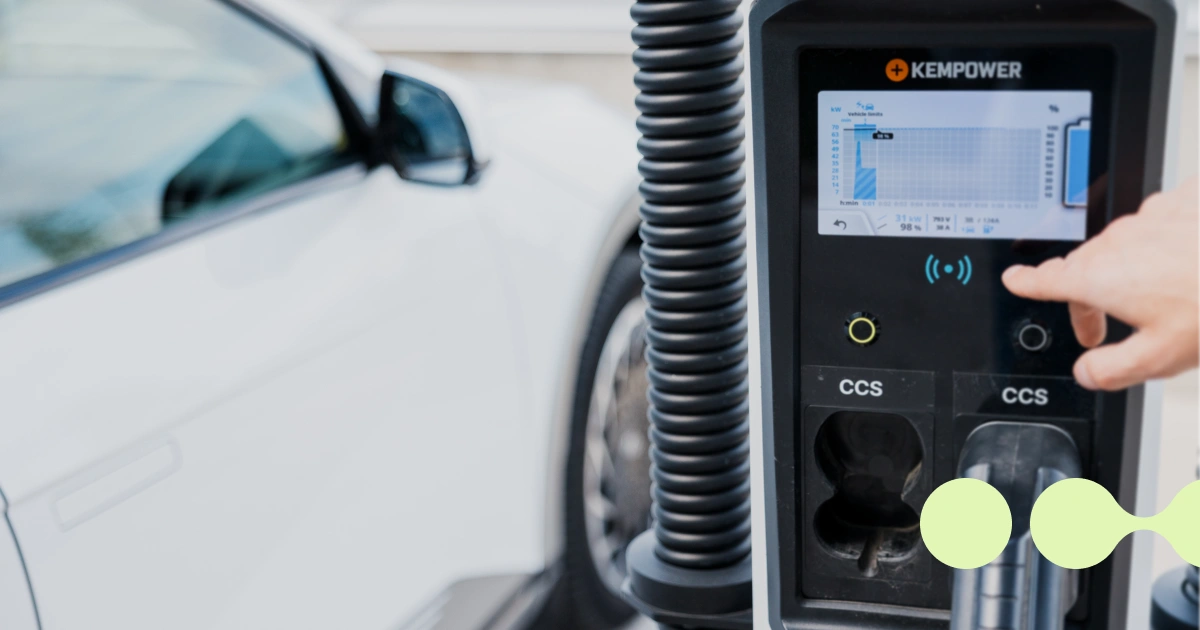
As a quick primer: What causes battery degradation in an electric car?
Two processes run at once. Cycle ageing comes with every charge and discharge, and calendar ageing keeps going even when the car sits unused for weeks.
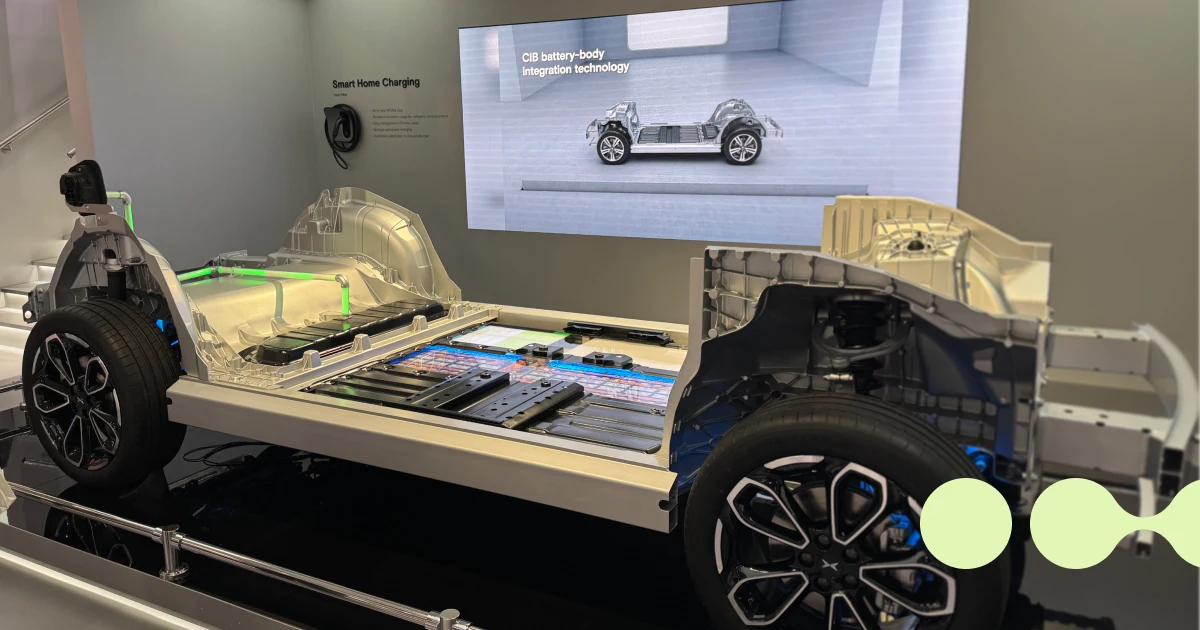
Between models, pack size and how the battery management system treats the cells make a big difference, and in real-world fleets so does how hard a car is charged. Even two examples of the same model can end up as much as 13,5 percentage points apart.
Lithium-ion battery degradation is also not linear… which surprises most new owners. The first few percent go fairly quickly while a protective layer forms on the anode, and then the curve flattens out for years. A three-year-old EV showing 95% is perfectly normal, and electric vehicle battery degradation charts look steep at the left-hand edge and almost flat after that. Where cell chemistry goes next is covered in our piece on new battery technologies.
Also, note that some automakers adjust the hidden battery buffer over a car’s life, which can mask part of the battery degradation on the dashboard and adds a whole other layer of complexity to understanding where the pack is really at.
As a sidenote, two questions get mixed up constantly here. How long does an electric car battery last while driving is really a question about range on a single charge, and that depends mostly on weather, speed and terrain, along with what EV you are actually driving.
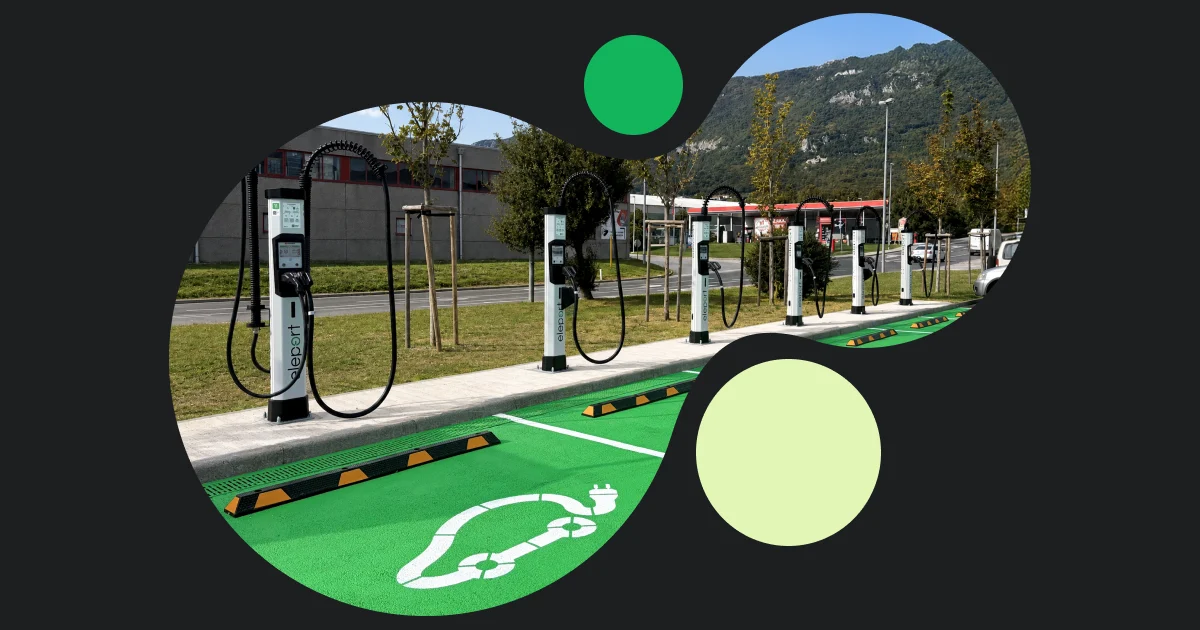
On a road trip, it also decides how often you’ll stop to top up on the Eleport EV charging network. That part has nothing to do with how long an EV battery actually lasts until it’s at its end of life.
And end of life here means the end of usable-in-EVs life, as many EV batteries can go on to a second life inside energy storage systems.
Habits matter for battery longevity, though not the one you were told to worry about
The most repeated piece of battery advice is never to charge to 100%. The fleet data suggests… it matters far less than people think.
State of charge only made a measurable difference once a car spent more than 80% of its total time parked at very high or very low charge, and hot climates added just 0,4 percentage points a year.
We wrote a whole deep dive on should I charge my EV to 100 or not, showing how it depends on the battery you have, along with how to extend EV battery life and which EV battery charging best practices are worth following.
Where Geotab did find a large effect is charging power. Cars where more than 12% of sessions are DC fast charging, and more than 40% of those run above 100 kW, lose about 3,0% of capacity a year against 1,5% for cars charged mostly at lower power. That’s the duty cycle of a taxi or delivery van turning its pack over every day, a very different life from a private car that fast charges on longer trips.
The car itself still sets the ceiling. Aviloo’s own reading of its data is that smaller-battery EVs, which need more charging cycles to cover the same distance, degrade faster than models with bigger packs. The Nissan LEAF ZE1 carries roughly half the capacity of the other three cars in the report, and that is how Aviloo explains Nissan LEAF battery degradation. But the ZE1 has no active cooling either, so both factors are likely in play, and the jury is still out on which matters more.
Tesla battery degradation, the subject of more forum arguments than any other car (as it is also the most-produced EV out there), looks remarkably ordinary in the same data.
The Model Y’s 90,3% at 150 000 km sits just below the ID.4 and two and a half percentage points behind the Ioniq 5. Much of the debate around Tesla Model 3 battery degradation says more about how many people own one than about the cells inside. On the numbers alone, Tesla battery degradation is about average for the group.
Chemistry plays its part too. LFP battery degradation behaves differently from nickel-based cells, and LFP packs cope with sitting at full charge far better, which is why manufacturers tell LFP owners to charge to 100% regularly and everyone else to stop around 80%. The next chemistry on the horizon has its own trade-offs, which we’ve compared in our sodium-ion vs lithium-ion article.
Two identical cars can sit 13,5 percentage points apart
Across the same model and the same mileage, Aviloo found the best and worst individual cars separated by up to 11 percentage points among Model Ys, 11 to 12 among ID.4s, more than 12 among Ioniq 5s and as much as 13,5 among LEAFs.
The percentages and kilometres don’t line up neatly, either. The LEAF’s 13,5 percentage points are worth about 29 km of real range because its pack is small, while the Model Y’s 11 percentage points are worth about 46 km because there is simply more battery to lose.
The spread also widens the further a car travels, which makes battery degradation much harder to read from the outside than any average suggests.
Marcus Berger, Aviloo’s chief executive, put the consequence plainly. “A gap of ten or fifteen percent in state of health is a real difference in range, in what a car is worth, and in what you can rely on it for. You simply can’t know where your car sits in that range without testing it independently.”
Aviloo sells battery tests, so it has an interest in that conclusion, but others have reached it too.
Generational, a UK firm that also sells battery diagnostics, found across 8000 assessments from 36 manufacturers that mileage alone tells you little about battery condition, with cars past 100 000 miles commonly returning between 88% and 95%.
The strongest confirmation comes from a source with nothing to sell: a March 2026 study by Park and colleagues that tracked 1114 EVs from five manufacturers for 375 days and found real capacity differences of 12% to 25% inside every single model.
Used EV prices are only starting to reflect battery health
If two identical cars can be that far apart, then the answer to how long do electric car batteries last depends heavily on which one you buy, and you would expect the used market to price that in. So far the evidence that it does is thin, and much of it is private.
The best public evidence comes from auctions. BCA, which grades cars using Aviloo’s test, reported in October 2025 that across more than 22 000 battery-graded vehicles in its first year, graded cars sold for £258, or 1,4%, above guide price. In the third quarter of 2025, that rose to £365, or 2,1%, and graded cars sold 2,7 days faster. That prices having a certificate at all, not each extra point of state of health, but it is a start.
The more telling sign is that valuation tools have begun to price it privately.
Germany’s DAT Group says its SilverDAT system “calculates any deviations between the actual SoH and target SoH directly in euros”, comparing each car against what it should show for its age and mileage. The machinery exists, in other words, even if a private buyer still cannot look up what a 13-point gap is worth online (yet?).
It seems clear that a used EV should have its battery state of health inspected before resale by default, on top of the carmaker’s own battery figure, which, as we’ll see below, is often missing or unreliable.
Underneath all of it, naturally, sits the buyers’ fear of an EV battery replacement cost. Whole packs are replaced so rarely that the fear is mostly theoretical, yet an EV battery replacement cost that almost never materialises still shapes what buyers will pay when they can’t see a state of health figure.
The measurement layer is going in, and the law got there first
Meanwhile, the testing is spreading fast. Large fleet players like Arval have issued more than 30 000 state of health certificates across eleven countries, and Ayvens Carmarket launched certification for used BEVs in six European countries in September 2025.
On the listing side, one of the largest car marketplaces, mobile.de, has shown battery certificates since February 2024, with a colour-coded state of health percentage and its own search filter, and AutoScout24 in Switzerland began accepting them in April 2026.
Importantly, the number is also becoming a guarantee.
Aviloo’s battery warranty sets a state of health floor for each car and pays out 3000€ in most European markets if the pack drops below it within a year.
In September 2026, this offer expanded to 24 countries. That is a different kind of cover from an EV battery warranty issued by the manufacturer, which typically runs eight years or 160 000 km with a 70% floor. A factory EV battery warranty protects you against catastrophe, whereas these new products cover the gap between the model average and the individual car.
Regulation is ahead of the market here. Article 14 of the EU Battery Regulation has required since 18 August 2024 that state of health data sits in every EV’s battery management system, and that read-only access to it be granted for purposes that explicitly include evaluating a battery’s residual value.
Under Euro 7, new car types approved from 29 November 2026 must keep 80% of their certified energy to five years or 100 000 km and 72% to eight years or 160 000 km, with all new cars covered a year later, and the battery passport becomes mandatory on 18 February 2027.
How to check EV battery health before you buy
Is it worth buying a used EV with 150 000 km on it? Often yes, provided you test the pack instead of trusting the average. The model matters, the individual car matters more, and an independent certificate costs about 99€ against a used car price measured in thousands.
The averages above answer how long do electric car batteries last as a category, and they stop helping the moment you are looking at one particular car. Start with what that car reports about itself, if anything, and put little weight on it. In the Park study, 384 of the 1114 cars exposed no state of health figure at all, and among the rest, the correlation between what the dashboard claimed and what the battery could hold was as low as 0,10.
For anything you are about to buy, an independent EV battery health check is the better answer. Aviloo’s consumer test costs 99€ and runs over seven days while you drive the car from 100% down to 10%, producing a certificate that can be verified by QR code.
The three-minute FLASH test that dealers use is a statistical model trained on hundreds of thousands of comparable cars, which is why it does not depend on the car’s own figure exactly. Knowing how to check EV battery health this way turns the biggest unknown in a used EV’s price into a number.
The question has moved from “how long” to “which car”
So, how long do the batteries last in an electric car? Long enough that it is no longer the most useful thing to ask. Model by model, the answer is reassuring, with medians around 90% at 150 000 km and failures rare. What replaces it is a harder question about electric car battery life, namely how one particular car compares to another, and sometimes how it has been charged or used.
Europe is about halfway to answering it.
The testing now exists, the leasing companies and auction houses use it, major listing platforms are starting to show these results, and the law already names residual value as a reason the data must be accessible. What is still missing is mostly just a public link between the state of health figure and the price it commands.
Until a state of health figure sits on every listing as routinely as the mileage does, the buyer who asks for an EV battery health check has the advantage, which… brings us back to those two cars on the dealer’s lot we started this article out with.