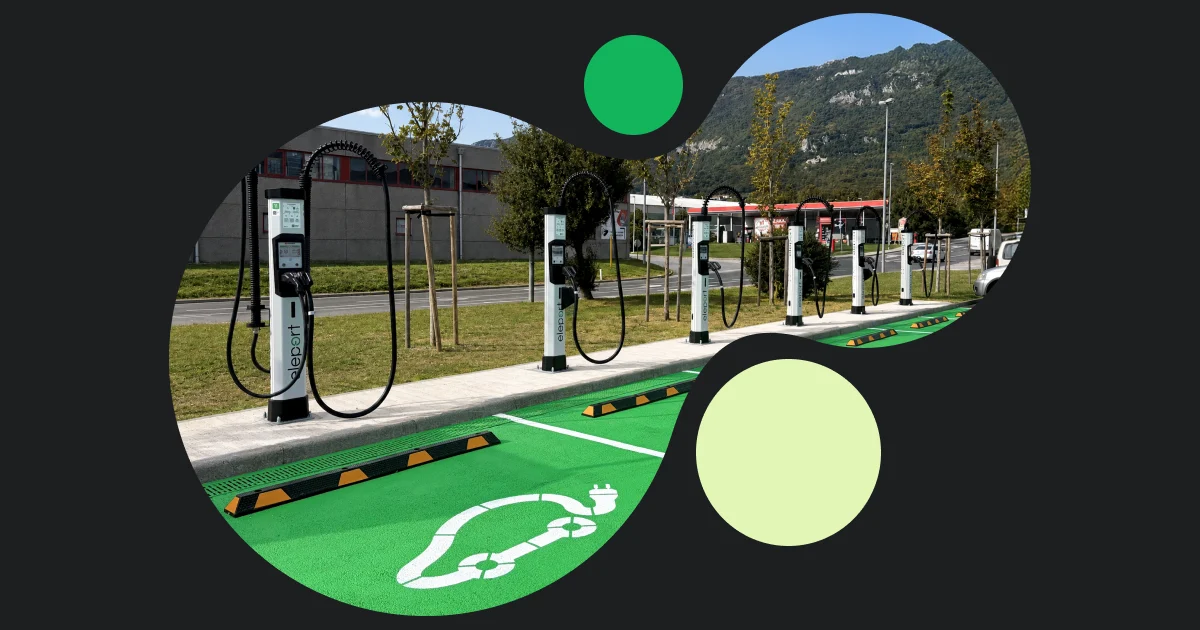
Larger policies and local governing bodies across countries in Europe have been pushing our cities to adopt low, ultra-low or completely zero-emission zones. For a good reason, as we know the concentration of emissions can get especially bad in dense urban environments.
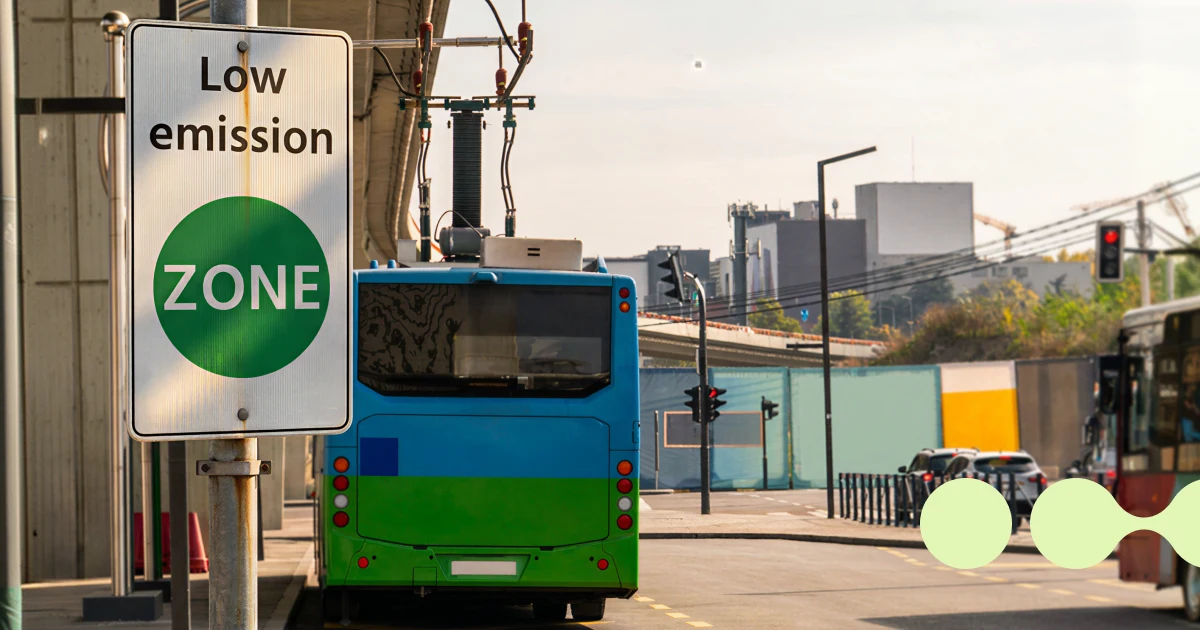
We tried to find a general resource to seek out which cities have taken up and changed any part of their environments into a low or no emission zones, but there is none. Nobody has mapped it before, so naturally, we did.
We built the table below from national and municipal sources, country by country.
We also found that this was the absolutely right time to do this, because there has been a lot of change. And not completely on the direction you’d expect!
2026 is the year the map stopped moving in one direction. Germany is down to 35 environmental zones with 23 abolished, France’s parliament voted to scrap its whole scheme and was overruled by the constitutional court, Piedmont walked away from a diesel ban due in October, and Stockholm’s flagship zero emission zone was annulled in May.
Meanwhile, the Netherlands built the only serious ZEZ network on the continent, Poland switched on three new zones, and Brussels tightened its rules after a court struck down the delay.
LEZ meaning, ZEZ meaning, and all the other labels around emission zones
LEZ stands for a Low Emission Zone. Vehicles below a set emissions standard, almost always set by a Euro “number” class, are barred or charged within its boundary.
Anyone asking what is LEZ short for, has their answer in the three words. What does LEZ mean in practice is harder, and depends entirely on which country you are standing in.
ZEZ stands for a Zero Emission Zone. Only battery-electric and hydrogen fuel-cell vehicles may enter. People search for this as a no emission zone too, which no regulator uses but it still describes the same effect. Both exist to reduce air pollution where traffic is the dominant source. A LEZ is a filter. A ZEZ is a wall.
The national names, however, rarely translate directly.
- Germany has the Umweltzone, often searched in English as umwelt zone, and in translation it actually means an “environment zone”.
- France has the ZFE,
- Spain the ZBE for its zones of low emissions,
- Sweden uses the miljözon,
- Denmark similarly uses the miljøzone,
- Portugal the ZER,
- Poland the strefa czystego transportu.
- Austria uses province-wide IG-L areas.
- Britain has Clean Air Zones in England,
Low Emission Zones in Scotland and
ULEZ in London specifically
There are two differently-zoned versions, too:
Italy’s ZTL is a permit-based access scheme about who may enter, not what they emit, and the roughly 600 of them dwarf the truly emissions-based Italian schemes.
Athens in Greece, meanwhile, has it in reverse, its daktylios running on odd and even plates with clean-car exemptions bolted on.
And most of the schemes you see ban cars from entering. London’s does not. The ULEZ is a LEZ charge zone where a non-compliant car just pays £12.50 a day and drives in anyway, as do Oxford and Milan’s Area C.
Every European LEZ and ZEZ we could verify
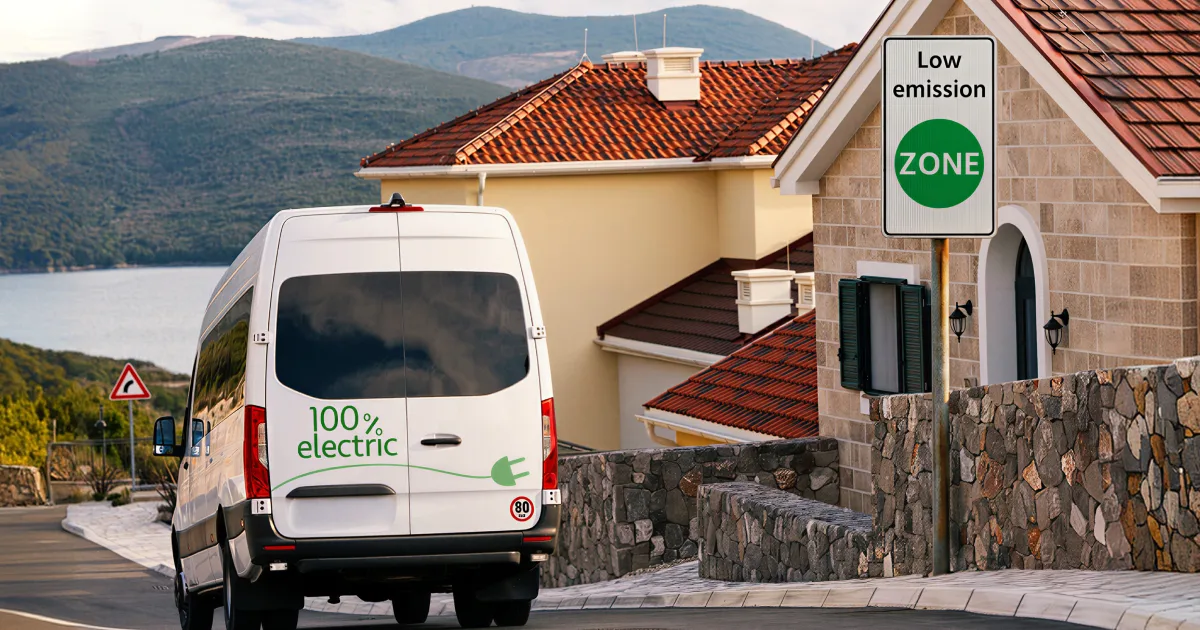
Here is a selection of all the specific bans we’ve currently found. We couldn’t possibly list them all as there is actually more of the LEZ going on across cities. Dates in the last column are scheduled, not guaranteed.
| Country | Local term | In force today | Applies to | Announced |
|---|---|---|---|---|
| Austria | IG-L Sanierungsgebiet | Vienna, Lower Austria, Upper Austria, Styria and Burgenland province-wide, plus the Tyrol A12 sectoral ban | Lorries and vans only, Euro 2 and below, in Tyrol Euro V | |
| Belgium | LEZ | Antwerp, Ghent, Brussels | All vehicles. Brussels bars Euro 5 diesel and Euro 2 petrol since 1 Jan 2026, fines from 1 Mar 2026 | To 2036 in Brussels. Flanders withdrew all planned tightenings. |
| Bosnia | Zone A | Sarajevo, smog-episode only | Cars and lorries Euro 2 and below | None |
| Bulgaria | Low emission zone | Sofia, 1 Dec to 28 Feb only | All vehicles, two rings by eco-group | Outer ring tightens 1 Dec 2027 |
| Czechia | Nízkoemisní zóna | None | None | Act 42/2025 enables camera-based zones |
| Denmark | Miljøzone | Copenhagen, Frederiksberg, Odense, Aarhus, Aalborg | Diesel cars, vans, minibuses since 1 Jan 2026, lorries, buses | Copenhagen adopted an Indre Vesterbro ZEZ on 21 Aug 2025, no start date set |
| Estonia, Latvia, Lithuania | None | None | Kaunas charges a flat 2€ with no Euro-class test | Lithuania’s 13-town mandate may become optional |
| Finland | Ympäristövyöhyke | Helsinki | City buses and refuse lorries only | None |
| France | ZFE | 25 agglomerations across cities from Paris to Marseilles | All vehicles. Only Paris and Lyon must bar Crit’Air 3, the rest need only bar unclassified vehicles | Lyon and Strasbourg to Crit’Air 2 in 2028. Rennes, |
| Germany | Umweltzone | 35 zones across cities from Berlin to München. | All vehicles, green sticker only. Separate diesel bans in Stuttgart, Munich and Darmstadt | None. 23 zones already abolished, most recently Mainz on 1 Oct 2025 |
| Greece | Daktylios | Athens, seasonal | Odd and even plates, not Euro class | Athens and Thessaloniki plan still at consultation |
| Hungary | Szmogriadó | Budapest, smog-alert only | Euro 3 and below, camera enforced | None |
| Ireland, Iceland, Luxembourg, Turkey | None | None | None | Luxembourg has explicitly ruled one out |
| Italy | Limitazioni per classe Euro | Milan Area B and Area C, Rome Fascia Verde, other cities from Florence to Naples, plus regional schemes covering several hundred municipalities | Cars, vans, lorries, motorcycles. Area B and Area C charge or ban by class | Euro 5 diesel banned from 1 Oct 2026 in Lombardy, Veneto and Emilia-Romagna. Piedmont cancelled its version in June 2026 |
| Malta | CVA | Valletta | Time-based charge, electric cars exempt, not Euro-graded | None |
| Netherlands | Nul-emissiezone | 19 municipalities plus Schiphol, from Amsterdam to Eindhoven | Delivery vans and lorries only. Not passenger cars | Alphen aan den Rijn, Venlo and Deventer 2027, Almere 2028, Breda 2029, Apeldoorn, Ede and Zaanstad 2030 |
| Norway | Nullutslippssone | None. Oslo has a dormant episode-triggered diesel ban | None | National enabling law out for consultation since 2 July 2026 |
| Poland | Strefa czystego transportu | Warsaw, Kraków, Szczecin from 17 Apr 2026, Katowice from 29 Jun 2026 | All vehicles. Kraków charges first, bans from 2028 | Wrocław legally due by end July 2026, launch unconfirmed |
| Portugal | ZER | Lisbon, two nested zones | Euro 3 inner, Euro 2 outer, weekdays 07:00 to 21:00 | Porto, Braga and Coimbra have expressed interest only |
| Romania | Zonă cu emisii reduse | None | None | Law 155/2023 mandates zones in 13 cities. Bucharest’s Oxigen charge was cancelled, a digital zone is planned for 2027 |
| Spain | ZBE | 58 in force of the 169 the ministry maps, from cities like Madrid to Málaga | All vehicles without a DGT label | 91 more in procedure, 20 not started |
| Sweden | Miljözon | Klass 1 in Stockholm, and cities from Göteborg to Lund. Klass 2 on Stockholm’s Hornsgatan only | Klass 1 heavy vehicles, klass 2 cars | Klass 3, the ZEZ tier, exists in law. Stockholm’s was annulled in May 2026 and is under appeal |
| Switzerland | Stick’AIR | Geneva, pollution-episode only | All vehicles, six macaron classes | None |
| United Kingdom | CAZ, LEZ, ULEZ, ZEZ | London ULEZ and LEZ plus Islington and Hackney ultra low emission streets. England cities from Birmingham to Dundee. Oxford runs a pilot pilot | London and England charge, Scotland fines, Oxford charges by tier | Oxford’s wider zone still has no date. Nothing in Wales or Northern Ireland |
| Cross-border | Tunnel bans | Mont Blanc and Fréjus | Older Euro-class lorries barred | None |
Why nobody has a complete low emission zone map
The gaps are actually legal, not just about research availability.
The revised ITS Directive, Directive (EU) 2023/2661, comes closest to forcing disclosure of the zones. Its Annex III covers “boundaries of restrictions, prohibitions or obligations with zonal validity, current access status and conditions for circulation in regulated traffic zones”, with a third-column deadline of 31 December 2026.
Two qualifiers, however, gut it. The duty is only on data “created or updated on or after” that date, and for unchanged existing zones the relevant cell is the fourth column, which holds no date at all. Only the words “delegated acts to be adopted”, and those acts do not exist. The coverage cell then limits the row to major roads and TEN-T urban nodes, so a mid-sized town would fall outside this scope entirely, which makes it even more impossible for us to source it.
Delegated Regulation (EU) 2022/670 routes zone data to national access points, but its recital 19 says the rules “should not oblige any stakeholder to start collecting any data that they are not already collecting or to digitise any data that is not already available in a digital machine-readable format”. A council that keeps its zone in a PDF is… fully compliant.
So far, we’ve found the best work from Urban Access Regulations in Europe, a tool that is free and maintained, and also a private commercial product run by Sadler Consultants Europe GmbH. The most-quoted total you might see anywhere, saying there are 703 low-emission and zero-emission zone schemes across 26 countries, comes from Eurocities citing that database back in February 2024.
For the zero-emission side, the Clean Cities Campaign’s Zero Emission Zone Map is fresher, updated on 28 July 2026 and counting 33 committed cities. It does not name them, and I could find no comparable zero emission zone map on the official side. We would recommend to treat the widely quoted “320 low emission zones in Europe” carefully too.
It comes from a Clean Cities report with a June 2022 data cut-off, and its companion figure of 507 by 2025 was a forecast nobody has since measured.
All this is which is why the practical answer stays the same.
How do I check whether my car is allowed into a specific European city? Start at Urban Access Regulations for the shape of the scheme, then confirm on the city’s own website before you travel, because the city is the only source with legal standing and the only one that knows about a change made last month.
The retreats away from emission zones nobody expected in 2026

France is the big one we found.
Opposition MPs attached an abolition of the ZFE mechanism to an economic simplification bill and Parliament passed it, and on 21 May 2026 the Conseil constitutionnel struck it down as a legislative rider with no link to the bill’s subject.
The framework survives, but a properly drafted bill could finish the job next session, and enforcement is patchy anyway: Lyon started fining Crit’Air 3 at €68 on 1 July 2026, Grenoble runs warnings only until mid-2027, Paris will not fine anyone before 2027.
Germany is shrinking its network for the opposite reason. The zones did their job, the fleet turned over, and once nitrogen dioxide limits are met, the legal basis thins. Stuttgart shows the nuance, where compliance holds but the state government said in January 2025 that lifting the ban on older diesel vehicles would risk breaching the limits again.
Italy’s Po Valley agreement is fraying. Piedmont pulled out of the 1 October 2026 Euro 5 diesel ban in June, sparing about 307 000 vehicles. Lombardy is going ahead in Milan, Brescia, Monza and Bergamo. Veneto is formally in while its government drafts a cancellation.
Belgium has split both ways in just one year. Brussels tightened on 1 January 2026 after the Constitutional Court annulled the ordinance postponing it, Flanders withdrew every planned tightening for Antwerp and Ghent, and Wallonia’s parliament repealed its region-wide scheme outright in April 2024.
Spain has the strongest law and the weakest delivery. Three years past the deadline, two-thirds of the municipalities its ministry maps still have no zone, and courts have annulled ordinances in Madrid, Barcelona and several Catalan towns without stopping the cameras.
5. Where the zero emission zones actually are
Enforced almost nowhere right now, and almost entirely in freight.
Which answers a question people ask a lot. Which European country has the most zero emission zones? It’s the Netherlands, by a wide margin and not a close contest. Nineteen Dutch municipalities plus Schiphol airport operate one for city logistics, against a single small pilot in Oxford and nothing else in force anywhere on the continent.
The Dutch design is why it worked. Those zones cover vans and lorries, never private cars, and the transition is long: Euro 5 vans keep access to 1 January 2027, Euro 6 vans registered before 2025 to 2029, Euro VI lorries to 2028 or 2030 by registration date. No household’s car was ever at stake, so it was easier to implement.
Everything else is smaller than its reputation. Search for ZEZ Oxford and you find a handful of streets charging nothing for a zero-emission car, £2 for an ultra-low emission car, £4 for a low emission vehicle and £10 for the rest. Copenhagen adopted an Inner Vesterbro zone in August 2025 without setting a date. Stockholm’s klass 3 zone was annulled. Norway, where nearly all new cars are already electric, is only now consulting on the law that would permit one. And, well, if your country is an all-electric one already anyway, do you even need to create the zones?
What the zero emission zone map is really telling us
Two things really, and both are pulling opposite ways.
Low emission zones are no longer a one-way ratchet. Germany closes them because they worked, Piedmont and Flanders and Wallonia because the politics turned, and France kept its framework through an accident of parliamentary drafting. Any piece telling you European cities are steadily tightening is describing 2019.
And the strictest schemes have moved off private cars entirely. Every genuine ZEZ in Europe targets commercial vehicles, because that is where the emissions concentrate, where duty cycles suit electrification, and where a city can act without fighting every household inside the ring road.
Which leaves the awkward bit. There is no authoritative pan-European LEZ and ZEZ register, the law does not require one before 2027 at the earliest, and the delegated acts covering existing zones have not been written. The table above is the closest thing we could build, and getting there took us researching for the primary sources in eleven languages.
Can an electric car enter any European city without restrictions? In almost every case yes, because these schemes filter on combustion emissions and a battery-electric car sits in the cleanest tier by definition.
The exceptions are not emissions rules at all: congestion charges like London’s now give electric cars only a partial discount, and access schemes like Italian ZTLs restrict who may enter regardless of what they drive.