

No EV owner sets out to buy a battery. You buy a car, the battery arrives inside it, and in most cases, the name on the battery cells is not written anywhere a driver would look.
Which could be considered odd, as it is, after all, the most expensive component in the vehicle and something that is often not produced by the automaker itself. Engines never managed to be that invisible, and there were once dozens of companies making them.
When it comes to batteries, today there are ten companies that cover about 88% of every kilowatt-hour fitted into an electric vehicle worldwide. As of the first half of 2026, seven of those ten are Chinese companies.
Below, we’ll take a look at all the larger EV battery manufacturers to understand who makes the battery of your EV and then get to the question that matters most on this continent: what about European battery production?
Ten companies fitted almost 88% of the world’s EV battery energy
The number the industry tracks is battery energy installed in vehicles that were registered, counted in gigawatt-hours (GWh). For January to June 2026, that total came to 608,5 GWh globally, up 20,0% on the same six months of 2025, released on SNE Research figures.
Growth seems to be fluctuating a bit. Full-year 2025 finished at 1187 GWh and grew 31,7%, so the market is still expanding at a quick pace in general, especially with the latter part of the year usually being the busiest for EV sales globally. As we’ve shown in our EV Sales in Europe H1 2026 overview, the demand for EVs is very strong.
Here are the top EV battery makers in the world right now, the ten largest by installed energy:
| Rank | Maker | H1 2026 | Share | Year-on-year |
|---|---|---|---|---|
| 1 | CATL (China) | 242,7 GWh | 39,9% | +25,3% |
| 2 | BYD (China) | 87,7 GWh | 14,4% | +1,6% |
| 3 | LG Energy Solution (South Korea) | 52,6 GWh | 8,6% | +8,4% |
| 4 | CALB (China) | 31,2 GWh | 5,1% | +39,5% |
| 5 | Gotion High-tech (China) | 28,0 GWh | 4,6% | +43,3% |
| 6 | Panasonic (Japan) | 22,7 GWh | 3,7% | +10,2% |
| 7 | EVE Energy (China) | 20,9 GWh | 3,4% | +51,7% |
| 8 | SK On (South Korea) | 19,0 GWh | 3,1% | -6,7% |
| 9 | Svolt (China) | 15,7 GWh | 2,6% | +40,9% |
| 10 | Sunwoda (China) | 14,5 GWh | 2,4% | +13,7% |
These ten together delivered 535,0 GWh worth of EV batteries. Everyone else on earth, and there are dozens of those everyone-elses, divides the remaining 12% between them.
How many of the world’s largest electric car battery manufacturers are Chinese?
Seven of the ten largest. Together they held 72,4% of the global EV battery market in the first half of 2026, up 1,5 percentage points year-on-year, with CATL and BYD supplying more than half of that on their own.
As recently as 2020, LG Chem was still trading first place with CATL across whole quarters. That fight is long over.
CATL is a bigger battery maker than the next five EV battery manufacturers put together
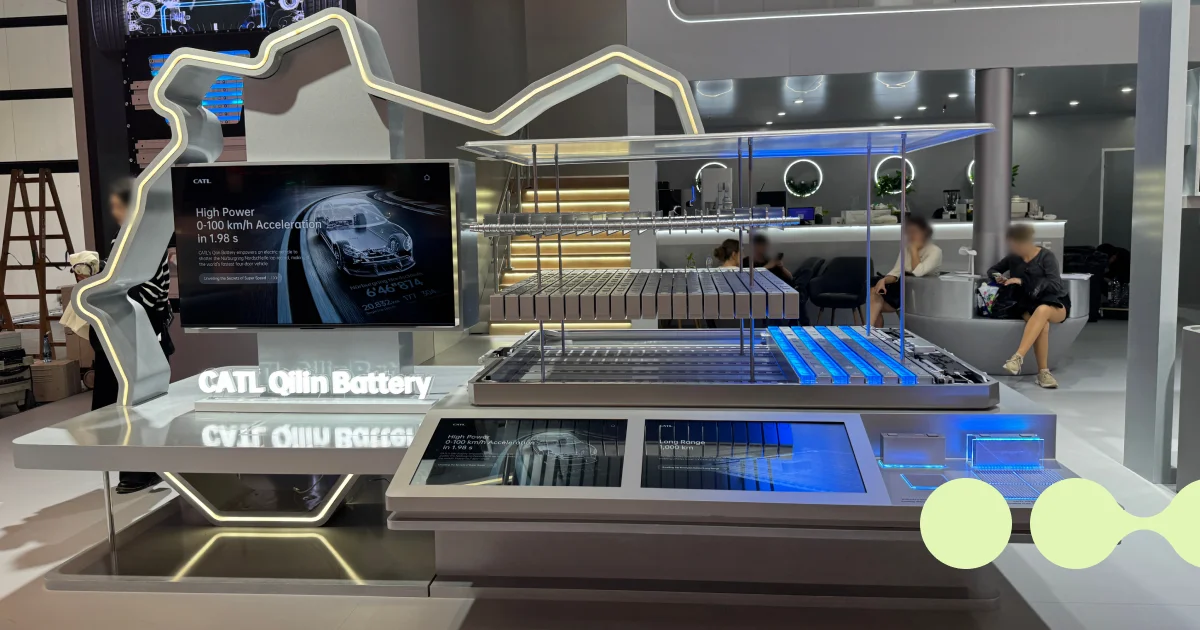
Which company makes the most EV batteries in the world? CATL. It has deployed 242,7 GWh in EV batteries in the first six months of 2026, taking up 39,9% of the global market. The next five EV battery companies, BYD, LG Energy Solution, CALB, Gotion and Panasonic managed 222,2 GWh between the five of them over the same period.
CATL’s share climbed from 38,2% a year earlier to 39,9% of the whole market now, and by the company’s own count it has now led this table for nine consecutive years. In its 2025 annual results the company reported selling 661 GWh of lithium-ion batteries across every application, cars and grid storage together, with production capacity of 772 GWh and another 321 GWh under construction.
If you run those two numbers against each other, you get an implied sales-to-capacity ratio of about 86%. That is not a published utilisation rate, though it is close enough to make the point. In an industry where half-empty gigafactories have killed several companies outright, keeping those lines busy is what the rest of the industry depends on.
BYD fluctuates and seems it can’t build its new Blade cells fast enough in 2026
BYD grew 1,6% in a market that grew 20,0%. Its share fell from 17,0% to 14,4%. And it looks like this might not be about demand for the brand’s EVs.
BYD’s chairman Wang Chuanfu attributed the group’s sales drop to insufficient production capacity for the second-generation BYD Blade battery, which is still ramping up, and said this year’s sales depend on battery output. We’ve heard a similar story from Tesla before, where the battery production had become a bottleneck, not sales.
A flash-charging division representative added that capacity had grown after half a year of production line upgrades and still was not enough. The Blade battery is BYD’s own LFP cell design, and the second generation is the one its flash-charging models depend on.
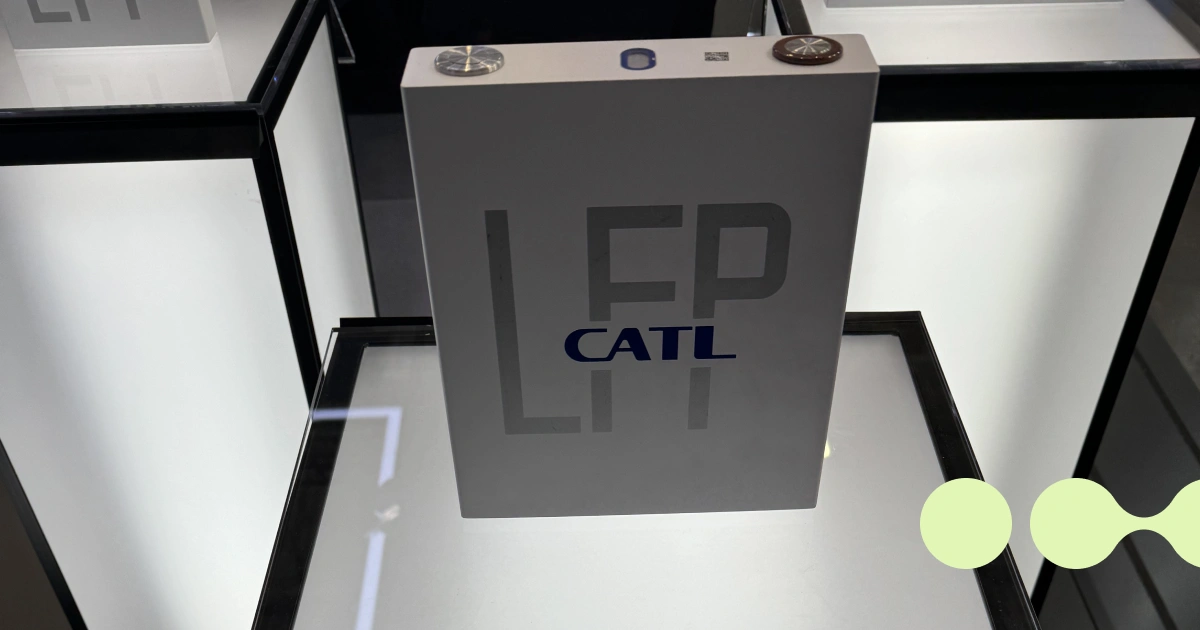
Worth remembering that BYD is unusual here among the EV battery companies. It is a carmaker that also happens to own (be) a battery giant, so most of those BYD Blade battery cells go into its own vehicles, and its ranking rises and falls with its own sales fluctuations first.
If you are wondering why Tesla isn’t in this top 10 table, then the answer is quite straightforward. The Tesla 4680 battery is made partly in-house in Texas, and Tesla buys or jointly produces the rest of its cells from Panasonic, LG Energy Solution and CATL, so it appears in the ranking through its EV battery suppliers rather than under its own name.
The Korean and Japanese EV battery manufacturers are slipping, and Samsung SDI has left the top ten
In SNE Research’s full-year 2025 table, Samsung SDI ranked ninth with 28,9 GWh. It does not appear in the global top ten for the first half of 2026 at all. If you strip China out of the numbers, it reappears in sixth place with 10,5 GWh, down 29,0% and holding 3,9% of the market outside China, which is the steepest fall of any major supplier.
LG Energy Solution is holding on better. 52,6 GWh and +8,4% growth sounds respectable… until you set it against a market growing 20,0%. This caused its market share to slide from 9,6% to 8,6%.
SK On had the only outright decline in the top ten, down 6,7% to 19,0 GWh, with its share falling from 4,0% to 3,1%.
Panasonic, the last Japanese name on the list and one of the “OG”s, grew 10,2% to 22,7 GWh and still slipped on market share, 4,1% down to 3,7%.
The picture softens once China’s home EV market comes out of the numbers. Of the 269,0 GWh installed outside China in the first half, up 26,3%, CATL still leads at 33,6%, but LG Energy Solution sits second at 16,7% and Panasonic fourth at 8,5%, both around double in market share compared to their global shares that include China.
So the Korean and Japanese EV battery companies are not weak everywhere. Their problem is China, which is where most of the world’s volume sits. After all, nearly 60% of all EVs sold in the world are sold in China.
The other common thread here is chemistry. All four built their businesses on premium nickel-based cells, and the growth right now, which was initiated from China, is in cheaper lithium iron phosphate (LFP) batteries. Additionally, it will be very interesting to watch if and how these rankings will be shuffled on the sodium battery vs lithium market share down the road.
We covered where these chemistries are heading in our piece on new battery technology, the mechanics of what happens at the plug in how DC fast charging works, and the practical side of using a charger in our EV charging guide.
The fastest growth in the table belongs to China’s second tier
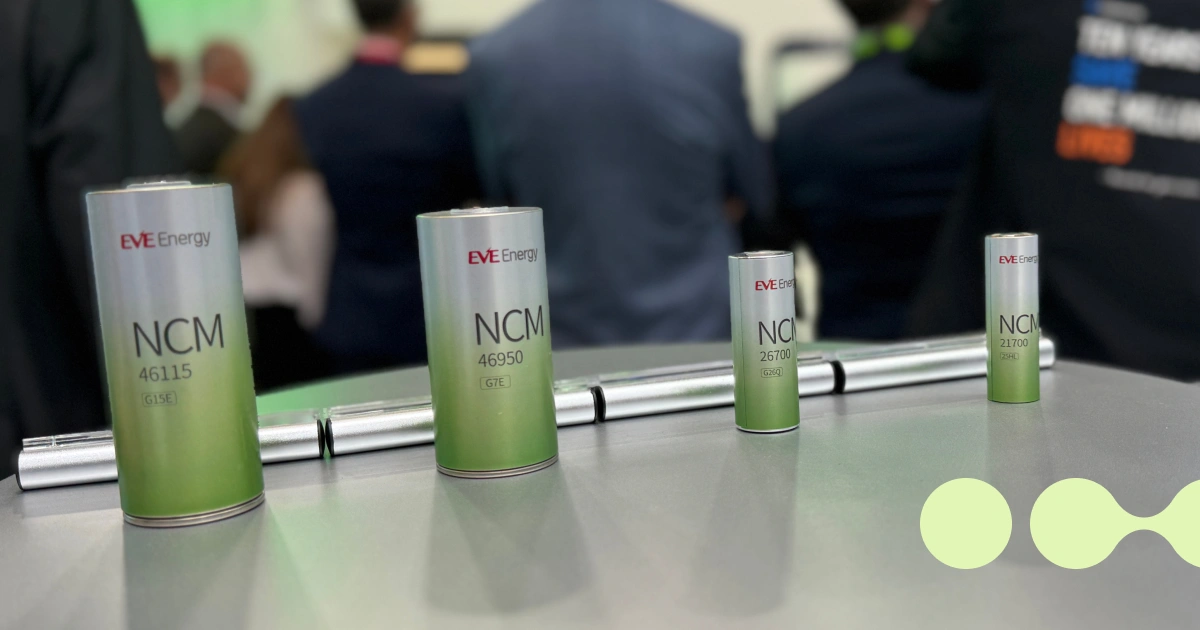
CALB battery installations grew 39,5% and Gotion’s 43,3%. EVE Energy grew 51,7%, and the Svolt battery business 40,9%, which means four of the five fastest-growing EV battery manufacturers in the top ten are names most European drivers have never heard of. Sunwoda, the tenth name, grew 13,7%. Europe is not completely out of the picture, though. For example, VW owns over a quarter of Gotion.
None of these EV battery companies is close to CATL. Added up, all five together installed 110,3 GWh against CATL’s 242,7 GWh.
What they are doing is taking the space that Korean and Japanese EV battery suppliers used to occupy in the middle of the table, with LFP as their main offering.
On capacity, the gap is even wider than the installation table shows
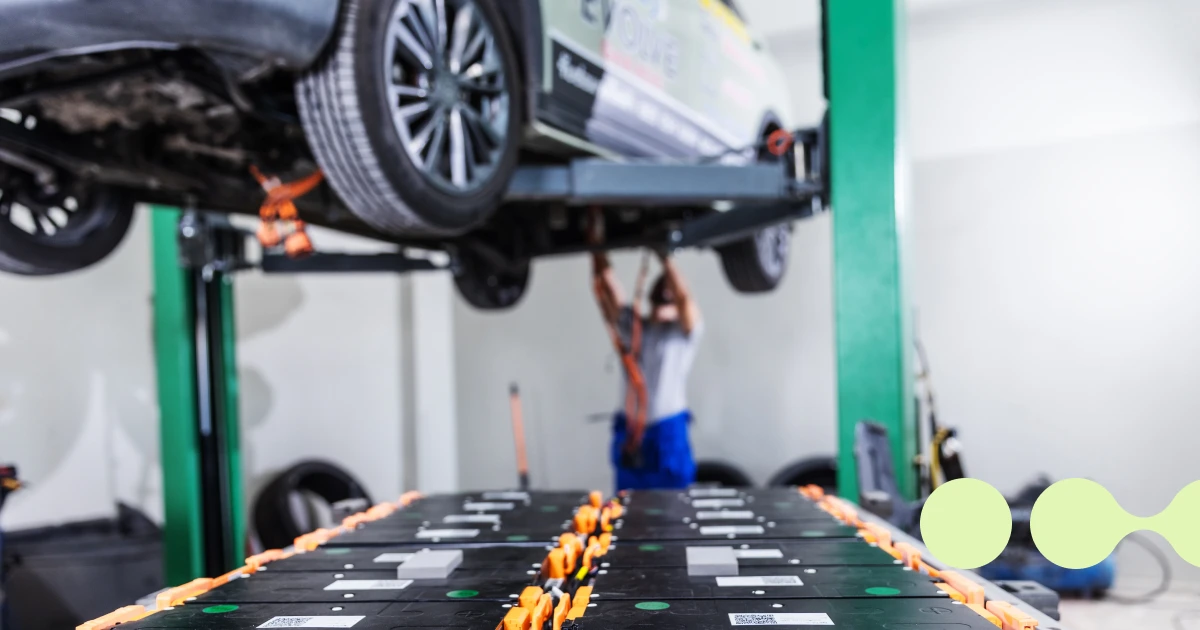
Installations tell you what has already been sold.
EV battery capacity in the factory sense is the forward-looking number in the full potential GWh output capacity, the number that decides who supplies the rest of the decade. In this, the concentration is even heavier towards the top.
The latest IEA report on the subject, the Global EV Outlook 2026, puts China at over 80% of global lithium-ion battery manufacturing capacity, with the European Union and the United States on 6% to 7% each. Chinese producers accounted for almost 75% of global electric car battery deployment in 2025 by the IEA’s count, which lines up neatly with SNE Research putting the seven Chinese EV battery manufacturers in its top ten at 72,4% of the global market.
A Deloitte study published in August 2026 gets to a similar place from a different angle. It found 77% of EV battery production sat in Asia in 2025, up from 70% the year before, with Europe stuck at 13% of global capacity.
However, note that Deloitte’s 13% and the IEA’s 6% to 7% do not describe the same thing. Deloitte counts Europe, the IEA counts the EU alone, and neither publisher shows enough of its method for us to analyze where each % comes from.
Europe makes about half of its own cells and owns almost none of the factories
Here is the statistic that surprised me most while pulling this report together.
Are EV batteries made in Europe? Yes, and more than most people assume. Cells made in Europe met 48% of the battery demand from new electric cars and vans sold in the EU, EFTA and the UK in the first four months of 2026. But, importantly, 98% of European cell production capacity is controlled by Asian companies.
The first half of that equation comes from Benchmark Mineral Intelligence, which tracks where cells are made and puts Chinese-made cells at 47% of the same demand and other Asian production at the remaining 5%.
As for the second half of that, what’s behind it all, Deloitte says Asian EV battery manufacturers control 98% of European capacity in 2025, and the IEA notes that of outside China, most battery cell manufacturing happens in Europe and the United States, nearly all of it by companies headquartered in Asia.
Asian does not mean Chinese, though, or at least not yet.
The European cell base that exists today was mostly built by the Koreans.
LG Energy Solution’s Wrocław plant is, by the company’s own description, the largest EV battery factory in Europe, Samsung SDI has 40 GWh at Göd north of Budapest, and SK On runs Komárom and Iváncsa in the same country.
That base is the reason LG Energy Solution holds 16,7% of the market outside China against 8,6% of it worldwide.
The build-out of European battery production underway now is, however, mostly Chinese, and the trend becomes obvious quick once we start listing some of the projects.
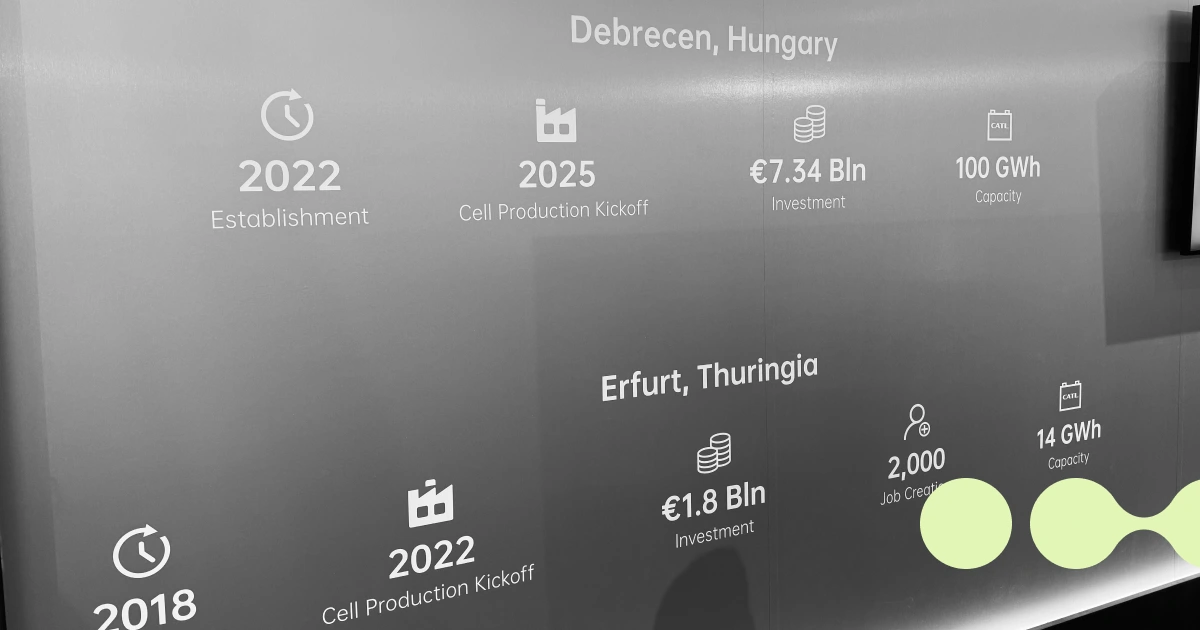
- The CATL battery plant at Arnstadt in Thuringia has been making cells since the turn of 2023, supplying Volkswagen, the Porsche Macan and the Audi Q6 e-tron.
- The second CATL battery plant, at the Debrecen plant in Hungary, is designed for 40 GWh, rising to as much as 100 GWh.
As of late August 2026 it had still not made a cell there and was assembling modules from CATL battery cells shipped in from China.
- CATL’s 50 GWh LFP joint venture with Stellantis at Figueruelas near Zaragoza is a 4,1 billion euro project with construction due to finish by March 2028.
- Gotion broke ground with InoBat at Šurany in Slovakia for 20 GWh, with pilot production due this September and series production in 2027.
- BYD’s Szeged car plant has slipped to the fourth quarter of 2026.
Deloitte’s estimate of what this costs European industry is 10,5 billion euros of profit over the next four years, and 100 to 150 billion euros of lost value creation across the EV battery supply chain by 2030 once imported materials and equipment are counted.
Underneath sits the EV battery cost gap itself, which the IEA puts at Chinese pack prices roughly 35% below European ones in 2025.
What is left of Europe’s own battery champions
The last eighteen months were unkind to several of Europe’s own EV battery companies. Northvolt, which raised more than 11 billion euros across seven years and was supposed to be the answer to this entire problem, went bankrupt in March 2025.
Its Swedish assets went to the American lithium-sulphur firm Lyten, and the Skellefteå site is now set to host a one-gigawatt data centre built with EdgeConneX, with construction expected to begin at the end of 2026. The data centre revenue is meant to finance a new battery production ramp-up.
Norway’s Morrow filed for bankruptcy on 6 May 2026, citing price competition, capital costs and industrialisation delays.
ACC, the Stellantis and Mercedes-Benz joint venture, confirmed on 9 February 2026 that its planned plants at Kaiserslautern and Termoli are dead, having been paused since May 2024.
Douvrin in northern France carries on, making NMC battery cells since 2023.
Two good pieces of news came in at late last year, though:
Verkor opened its 16 GWh battery gigafactory at Dunkirk on 15 December, with the first cells going to the Alpine A390 and a target of 50 GWh by 2030. The ramp to full series output is still running, which in the EV battery manufacturing process routinely takes years.
Two days later, Volkswagen’s PowerCo started Unified Cell production at Salzgitter, ramping towards 20 GWh and eventually 40 GWh, with Valencia scheduled to follow in July 2027.
For an additional boost, the Battery Booster package from the EU, announced in December 2025, puts 1,5 billion euros of interest-free loans through the Innovation Fund towards cell producers, plus 300 million euros for critical raw materials, and creates Made in Europe requirements along with it.
Ownership is the ranking Europe still has to change
Nothing in the first half of 2026 data suggests the ranking of the biggest EV battery manufacturers is about to change. CATL is pulling away. BYD has a factory problem, and factory problems get solved. The Korean and Japanese incumbents are being squeezed from underneath by Chinese EV battery companies willing to sell LFP cells at prices that undercut them.
The European question is different and more interesting. Half the cells going into European electric cars are already made here, which is more than the run of bad gigafactory news would lead anyone to guess. Almost none of the value from that stays here, however, because the plants belong to companies headquartered elsewhere.
Meanwhile, European EV sales keep climbing, which means the cell demand behind them keeps climbing too. Whether Verkor, PowerCo, ACC, and whatever Lyten becomes can turn 1,8 billion euros of Brussels support into a European name among the ten largest EV battery manufacturers is the thing worth watching between now and 2030.