EV charging in Europe has moved fast. Because EV sales have moved fast.
Today, already more than every fifth car sold in Europe is fully electric.
And while we’ve seen the number of EVs and number of chargers go up all around us over the last decade or so, something else significant has changed about both. Thanks to technological advancements in both the EV drivetrain and the charging hardware, we can charge our cars a lot faster than a decade ago.
But while the chargers treat all cars as equal, the cars’ capabilities to take that charge is anything but.
Pull into a now-regular 350 kW ultra-fast charger in a Kia EV6 and you are back to 80% in about the time it takes to queue for a coffee. Eighteen minutes, give or take.
But park a Dacia Spring on the same site and you will have time for a whole lunch, even though the battery is more than three times smaller. Assuming the Spring’s owner paid extra to get DC charging capability at all.
That gap is the whole story of this EV charging time article. The honest answer to how long does it take to charge an electric car is that it depends on three aspects, and most spec sheets only tell you one of them clearly.
So let’s go car by car, with real figures for twenty of the most popular EV models you actually see on European roads.
So How Long To Charge An Electric Car, Really?
Pose the question as how long does it take to charge electric cars in general and you should expect a range, not a number, because three things set the pace:
Battery size, the charger’s power, and the maximum power the car itself will accept.
The third one is the quiet decider.
A Kia EV6 and a Kia EV3 share a badge and a roughly 80 kWh battery, yet the EV6 runs on an 800V system that peaks near 258 kW, while the EV3 sits on 400V and tops out around 128 kW. Same brand, same battery, charging times that differ by thirteen minutes.
When people ask how long does it take to charge an electric car, they almost always mean the DC fast-charging number, the one you live with on a trip. So that is where the cars separate the most.
Public DC fast charging is what you use on a trip, measured as the time to go from 10% to 80% (that’s the part where charging is quick, before the car slows to protect the battery). In most cases, it doesn’t make sense to sit at a fast charger after that 80%.
Home AC charging is the one measured roughly 0–100% at whatever your wallbox delivers, usually 7,4 kW on a single-phase supply or 11 kW on three-phase.
EV Charging Speeds Compared: Twenty Popular Models
How long does it take to charge an electric car you’re interested in, compared to all the other models? We set out to find out with this comparison table.
Figures below are European WLTP testing cycle, drawn from manufacturer specifications and the independent database called EV Database. DC times shown here are the 10–80% window unless marked; home AC times assume an 11 kW three-phase wallbox. Do consider that the WLTP range can differ from the real-world one, but it is the unified measure we can compare.
| Model | Usable battery | Max DC power | DC 10–80% | WLTP range added | Full home charge (AC) |
|---|---|---|---|---|---|
| Kia EV6 (84 kWh) | 80 kWh | 258 kW | 18 min | ~405 km | ~8,5 h (11 kW) |
| Hyundai Ioniq 5 (84 kWh) | 80 kWh | 258 kW | 18 min | ~400 km | ~8,5 h (11 kW) |
| Hyundai Ioniq 6 (84 kWh) | 80 kWh | 258 kW | 18 min | ~475 km | ~8,5 h (11 kW) |
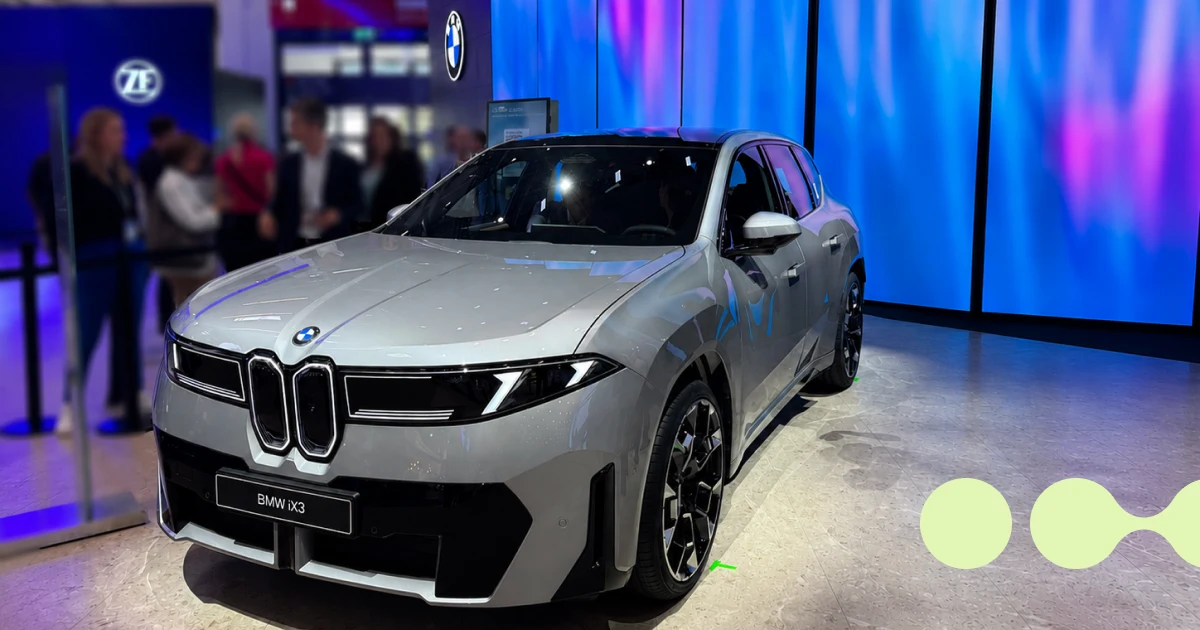
| BMW iX3 50 xDrive | 108 kWh | 400 kW | 21 min | ~560 km | ~10,5 h (11 kW) |
| Tesla Model 3 Long Range | 79 kWh | 250 kW | ~27 min | ~440 km | ~8,5 h (11 kW) |
| Tesla Model Y Long Range | 79 kWh | 250 kW | ~28 min | ~410 km | ~8,5 h (11 kW) |
| Cupra Born (59 kWh) | 59 kWh | 165 kW | ~25 min | ~300 km | ~6,5 h (11 kW) |
| MG4 Long Range | 62 kWh | 140 kW | ~26 min | ~315 km | ~6,5 h (11 kW) |
| VW ID. Buzz Pro | 86 kWh | 185 kW | 26 min | ~330 km | ~9 h (11 kW) |
| Škoda Elroq 85 | 77 kWh | up to 175 kW | ~28 min | ~400 km | ~8 h (11 kW) |
| Polestar 2 Long Range | 79 kWh | 205 kW | 28 min | ~460 km | ~8,5 h (11 kW) |
| Volvo EX30 (69 kWh) | 65 kWh | 153 kW | 28 min | ~335 km | ~6,5 h (11 kW)* |
| BMW i4 eDrive40 | 81 kWh | 205 kW | 30 min | ~415 km | ~8,5 h (11 kW) |
| BMW iX1 eDrive20 | 65 kWh | 130 kW | ~29 min | ~315 km | ~6,5 h (11 kW) |
| Renault 5 E-Tech (52 kWh) | 52 kWh | 100 kW | ~30 min | ~285 km | ~5,5 h (11 kW) |
| Nissan Leaf (75 kWh) | 75 kWh | 150 kW | ~30 min** | ~375 km** | ~8 h (11 kW) |
| Kia EV3 (Long Range) | 78 kWh | 128 kW | 31 min | ~420 km | ~8,5 h (11 kW) |
| BYD Dolphin (60 kWh) | 60 kWh | 88 kW | ~40 min | ~300 km | ~6,5 h (11 kW) |
| Dacia Spring (Electric 100) | 24 kWh | 40 kW*** | 29 min** | ~135 km** | ~4,5 h (6,6 kW) |
*Volvo EX30 offers an optional 22 kW AC charger that roughly halves the home time.
**Nissan Leaf and Dacia Spring quote a 20–80% window for charge.
***DC fast charging is an option on the Dacia Spring, not as standard.
The Fastest-Charging Stars: Kia, Hyundai And The New BMW
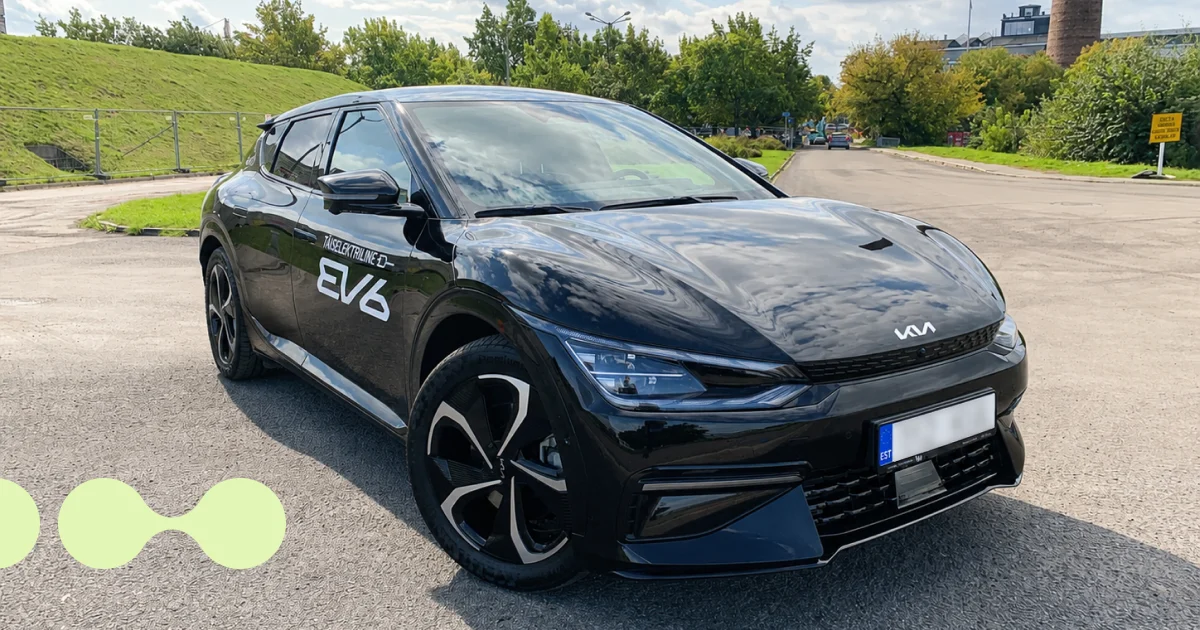
If you want the quickest stop on this most popular EV list, look at the 800V cars. The Kia EV6 and its cousins, the Hyundai Ioniq 5 and Ioniq 6, all run the same 800V architecture and a roughly 80 kWh battery, and Kia quotes about 18 minutes from 10 to 80% on a 350 kW charger.
That is quick, especially considering the WLTP range for the car is 546 km so you’ll be gaining ~405 kilometres of range in that 18 minutes of EV charging time. Long enough to use the bathroom and answer a couple of emails, not long enough to get bored.
The catch is that you need a charger capable of 350 kW to see it, and the EV6’s curve peaks above 230 kW only in the lower part of the battery before tapering off.
How far can an electric car go on one charge? The surprise of 2026 is the new BMW iX3. The Neue Klasse iX3 brought BMW onto an 800V platform with a peak charge of 400 kW, and despite carrying a huge 108.7 kWh battery, it still completes 10–80% in around 21 minutes. More usable range added per minute than almost anything else here, adding about 560 kilometres in that 21 minutes, which is the figure that actually matters on a long drive.
Tesla sits just behind this group. The Tesla charging time for a Long Range Model 3 or Model Y lands around 27 to 28 minutes for 10–80%, peaking at 250 kW. Tesla never published a tidy 10–80% number, so those come from independent testing, but the Supercharger network’s reliability often matters more than the raw minutes. Adding 440km and 410km in range, respectively, is good enough if you know the charging network actually works.
The Good Enough Charging EVs: i4, Škoda, Cupra, Born, And The Buzz
Most of the popular European EVs land in a comfortable 25 to 30 minute band, and for daily use that is perfectly fine – especially if the range added is actually meaningful. The BMW i4 eDrive40 takes 30 minutes for 10–80% from its 205 kW peak, the kind of stop that pairs with a proper coffee and a stretch, replenishing about 415 km to the range.
Škoda’s Enyaq and the newer Elroq, both built on the Volkswagen Group MEB platform, do around 28 minutes when specified with the larger 77 kWh battery and the up-to-175 kW charging hardware, both adding around 400km at that time. Although rear-drive versions peak lower than the all-wheel-drive ones, so check the exact trim before deciding on your next EV per their charging capabilities.
The Cupra Born is one of the quicker MEB-platform cars, helped by a 2025 battery upgrade to a 59 kWh pack that now peaks at 165 kW and charges in roughly 25 minutes, adding 300km during that charge. The Volkswagen ID. Buzz, despite being shaped like a small building, manages 26 minutes for its 86 kWh battery thanks to a 185 kW peak. And with that, it gets 330km of WLTP range added.
None of these will embarrass the 800V cars, but still suit most drivers.
The EVs That Charge Slower, And Why It Sometimes Doesn’t Matter
Then there are the cars that take their time. The BYD Dolphin peaks at just 88 kW on DC, so a 10–80% top-up runs closer to 40 minutes, the slowest fast-charge here. But that’s also because it has a battery of 60 kWh for such a small car, which means it adds 300 km in that 40 minutes.
The Kia EV3, hamstrung by its 400V system, needs 31 minutes despite a large battery – getting a 420km top up. The Renault 5 maxes out at 100 kW on its 52 kWh version adding ~285 km of range in about 30 minutes. And the Dacia Spring, Europe’s cheapest EV, charges at 40 kW at best, getting ~135km of range added in about 29 minutes. And that’s only if the original buyer paid for the DC option at all.
Here is the thing, though. These are city cars and commuters.
A Spring owner charges at home or at work and almost never fast-charges, so its leisurely 40 kW peak charging power barely registers in real life. The slow DC speed is a road-trip penalty, and these cars were… not really built for the road trips at all.
How Long To Charge An Electric Car At Home?
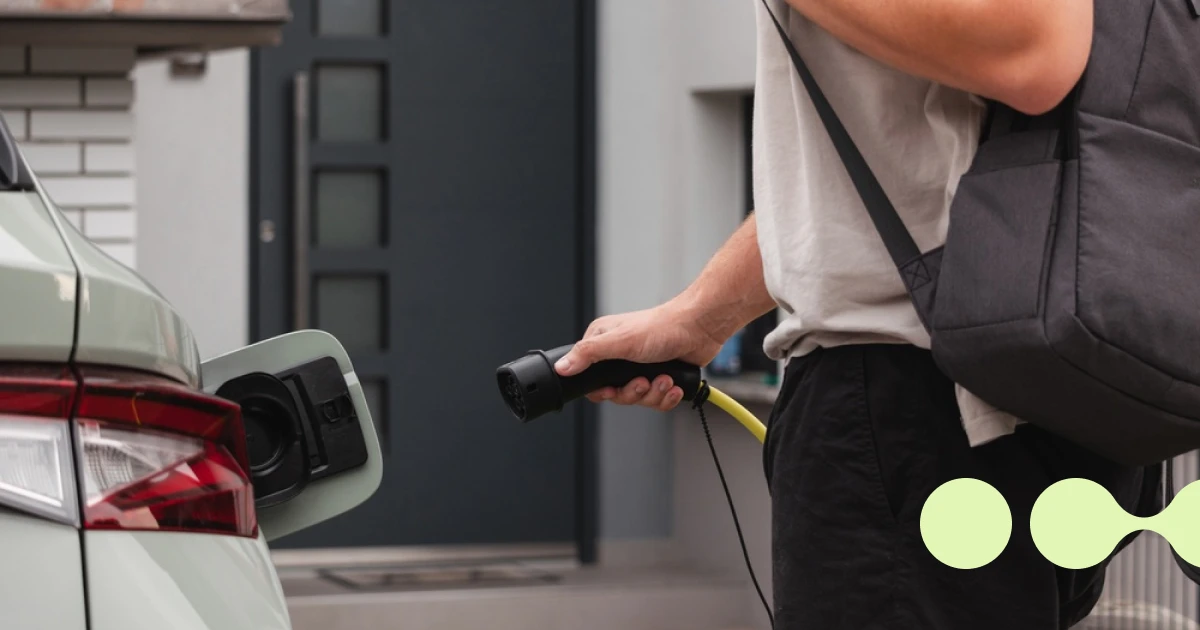
For most drivers, most of the time, this is the real question. It is also the side of how long does it take to charge an electric car that owners actually live with, day in and day out. The good news: you sleep through it. Plug in when you get home, unplug in the morning, and the DC numbers above stop mattering at all.
Almost every car on this list accepts 11 kW on a three-phase home supply, which fully charges a typical 80 kWh battery in roughly eight to nine hours. On a single-phase supply, common in many homes, you are limited to about 7,4 kW, and that same car needs closer to eleven or twelve hours. Still an easy overnight. The small batteries are quicker still: a Dacia Spring tops up in about four and a half hours, a Renault 5 in five or six.
You do not need an EV charging time calculator for the rough version. Take the usable battery in kWh, divide by your charger’s kW, and add ten or fifteen percent for charging losses. A 60 kWh battery on an 11 kW wallbox is around six hours, and the arithmetic for how long to charge electric car at home really is that simple.
Two cars here break the 11 kW ceiling. The Volvo EX30 and the new BMW iX3 offer an optional 22 kW onboard charger, which halves home charging time if your supply can deliver it. Most domestic supplies cannot, so treat it as a nice-to-have you may never fully use.
Here’s What Actually Decides Your EV Charging Time
Plenty of drivers search how long does it take an electric car to charge and get a single tidy brochure figure back. The real number carries a few asterisks. A few factors move it away from the brochure, and they are worth knowing before you judge a car by its headline time.
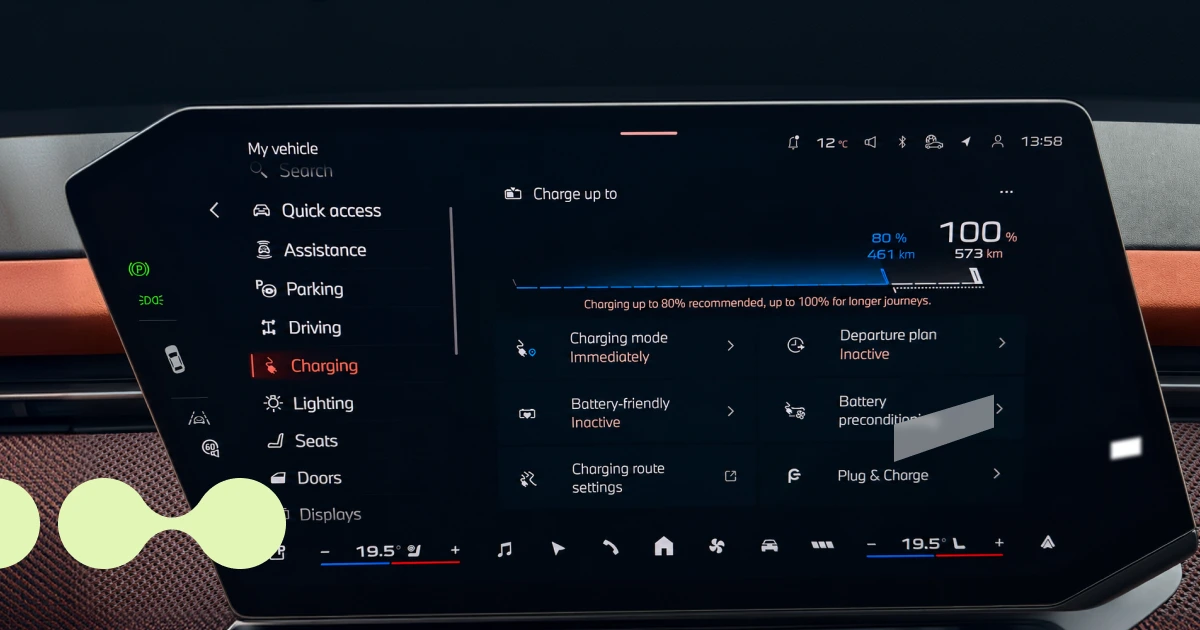
The state-of-charge window. Fast charging is quick from 10 to 80% and then slows sharply, because topping the last 20% gently protects the battery. This is why every maker quotes 10–80% and not 0–100%. Chasing the final fifth at a fast charger wastes your time and the charger’s.
Then the temperature. A cold battery charges slowly until it warms up, and charging in winter can add real minutes to an unprepared car. The fix is EV battery preconditioning: warming the battery on the way to the charger so it can take full power on arrival. Most modern EVs do this automatically once you navigate to a charge point. Skip it on a −10°C morning, and a pack that should have charged in twenty minutes can easily need double that before it warms through.
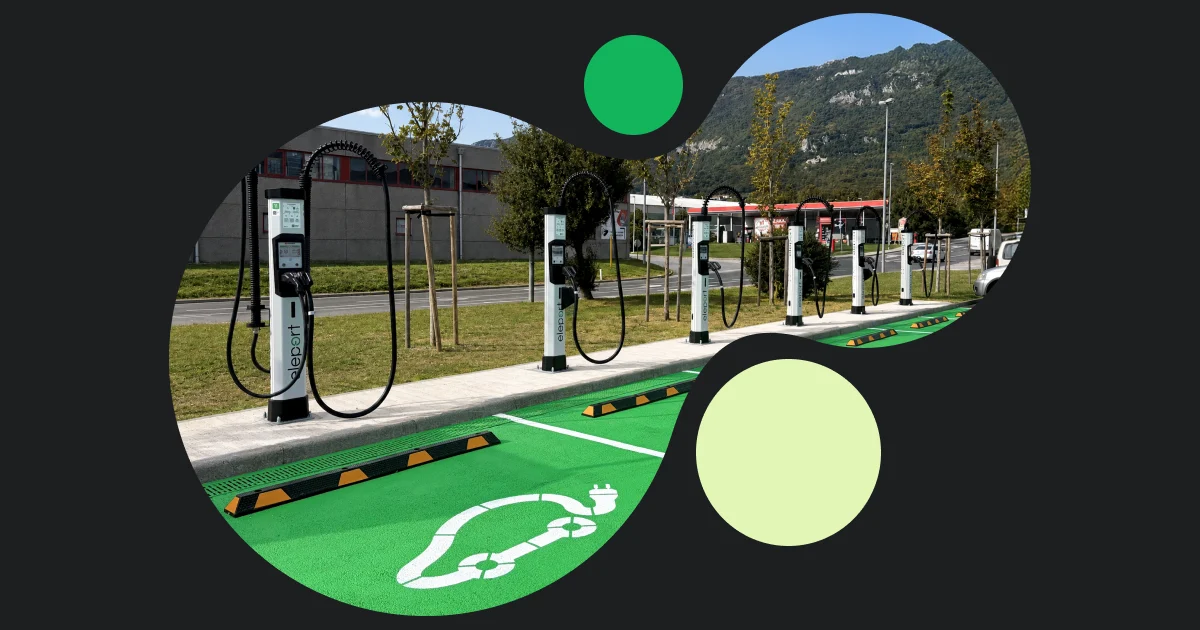
Then the charger itself. Plugging a 175 kW-capable car into a 50 kW fast charger caps you at 50 kW, and plugging an 88 kW BYD Dolphin into a 350 kW charger still gets you only 88 kW. The slower of the two always wins, so an honest EV charging time depends on matching car to charger. The good news in 2026 is that high-power chargers like the ultra-fast chargers from Eleport are now common across Europe, so the limiting factor is increasingly the car, not the post.
Matching Charging Speed To How You Actually Drive
So how long does an electric car take to charge in 2026? On a fast charger, you’ll go 10-80% anywhere from 18 minutes for a Kia EV6 or Hyundai Ioniq to 40 for a BYD Dolphin, with most popular models clustered in a sensible 25 to 30 minute band adding 300-400km. Unless you are playing with the incoming Flash Charging technology that gets you 10-80% in about 7 minutes. At home, it is an overnight job for nearly all of them, and you are asleep for the slow part.
The number that should guide a purchase is not the absolute fastest charge but whether the car’s speed suits how you drive. A motorway commuter wants an 800V car and its 18-minute stops. A city runabout does not, and pretends otherwise only on paper. That is the practical read on how long does it take to charge an electric car.
Chargers have mostly caught up. The cars have spread into fast and slow camps, and the smarter thing to ask before you buy is not raw charging speed but how often your week will actually leave you waiting on a plug. For a lot of drivers, especially those that tailored their EV based on their daily driving needs, the answer is: hardly ever.